
About Henry Sylvester Williams
Lived 1869 – 1911 (aged 42). Henry Sylvester Williams was a writer, historian, barrister, politician and jurist.
Henry Sylvester Williams (24 March 1867 or 15 February 186926 March 1911) was a Trinidadian lawyer, activist, councillor and writer who was among the founders of the Pan-African movement.
As a young man, Williams travelled to the United States and Canada to further his education, before subsequently moving to England, where he founded the African Association along with Alice Kinloch and Thomas Josiah Thompson in 1897 to "promote and protect the interests of all subjects claiming African descent, wholly or in part, in British colonies and other place, especially Africa, by circulating accurate information on all subjects affecting their rights and privileges as subjects of the British Empire, by direct appeals to the Imperial and local Governments."
In 1900, Williams organised the First Pan-African Conference, held at Westminster Town Hall in London. In 1903 he went to practise as a barrister in Southern Africa, becoming the first black man to be called to the bar in the Cape Colony.
Early life The date and place of birth for Williams is contested. He was born 24th March 1867, Endeavour, St. James, Barbados or in 1869 in Arouca, Trinidad, He was the eldest son of Elizabeth Payne and Henry Bishop Williams, a Carpenter (wheelwright) (Barbados Church Registers) from Barbados. Williams grew up in Arouca, a village where the majority of residents were of African descent.
In 1895, he went to London and entered King's College London, but although it is known he studied there, there is no record of his enrolment at that time.
In his book on the life of Williams, Owen Mathurin notes: "Williams was not as fortunate as some of his fellow Trinidadians who had come to study for professions at the expense of wealthy parents or as young winners of a government scholarship who received singular remittances." It was therefore not until 1897 he enrolled as a student of Gray's Inn to read for the bar. He satisfied the entrance requirements by passing a preliminary examination in Latin, English and History.
Williams wrote to newspapers and journals on matters touching on Pan-African interests and during this time earned some money through lecturing for the Church of England Temperance Society. This took him to all parts of the British Isles speaking under the auspices of parish churches. He also lectured on thrift for the National Thrift Society whose chairman, Dr Greville Walpole, wrote that Williams's "heroic struggle to make ends meet won his admiration because the little he was able to earn by his lectures simply defrayed the cost of living."
The then 29-year-old Williams became friendly with 32-year-old Agnes Powell, who worked as a secretary with the Temperance Society. She was the eldest of a family of three sons and four daughters of Captain Francis Powell of Kent, who was prominent in local Masonic and Conservative political circles. Williams and Agnes Powell married in 1898 in the face of the strongest opposition of her father, who refused to give his consent and thereafter refused to receive Williams. They had five children; the first, Henry Francis Sylvestre, was born the following year.
Henry Sylvester Pan-African perspective
Some time after June 1897, Williams formed the African Association (later called the Pan-African Association). His good friend, Trinidad attorney Emmanuel Mzumbo Lazare, who at the time was in London taking part in Queen Victoria's 60th anniversary celebrations as an officer of the Trinidad Light Infantry Volunteers, mentioned to Williams a South African woman, Mrs A. V. Kinloch, whom Lazare had heard discuss "under what oppressions the black races of Africa lived" at a meeting of the Writers' Club in London. Williams himself subsequently met Kinloch, who was touring Britain on behalf of the Aborigines' Protection Society (APS), speaking in particular about South Africa. The meeting of these minds resulted in the formation of the African Association. Stating that "the time has come when the voice of Black men should be heard independently in their own affairs", Williams gave his first address as honorary general secretary in the common-room at Gray's Inn, and Kinloch was the association's first treasurer.
Some English people felt the Association would not last three months but by 1900 Williams was ready to hold the first Pan-African Conference (subsequent gatherings were known as Congresses). The three-day gathering took place at Westminster Town Hall on 23, 24, and 25 July with delegates comprising "men and women of African blood and descent" from West and South Africa, the West Indies, the United States and Liberia. W. E. B. Du Bois, who was to become the movement's torchbearer at subsequent Pan-African Congresses, was a participant and his Address to the Nations with its prophetic statement "The problem of the twentieth century is the problem of the colour-line" came to be regarded as the defining statement of the conference.
After this Williams set about spreading the word and he embarked on lecture tours to set up branches in Jamaica, Trinidad and the United States. On 28 June 1901 the Trinidad branch of the Pan African Association was formed, with branches in Naparima, Sangre Grande, Arima, Manzanilla, Tunapuna, Arouca and Chaguanas. He spent two months here and after his departure for the US even more local branches were formed. However, after this the profile of the Association suffered because he was not able to give it his full attention.
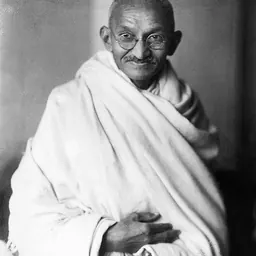
Returning to London that year, he published a monthly journal called the Pan-African, which lasted only a few issues. He finished his bar exams and, like Mahatma Gandhi around the same time, went on to practise in South Africa, staying there from 1903 to 1905. Williams was the first black man to be admitted to the bar in the Cape Colony, on 29 October 1903, having presented to the court in Cape Town a certificate issued on 20 September confirming his credentials: Mr. Sylvester Williams was admitted as a barrister in the Supreme Court of Cape Colony last month. He is a West Indian. He was educated for the most part at Dalhousie University, Canada, where he spent eight years and took his degree. Afterwards he became a member of Gray's Inn, London. He has practised for several years in London, mainly at the Old Bailey. – Indian Opinion, 12 November 1903. He knew that non-whites were badly treated, but still he took this step. He was soon agitating for the rights of blacks. He also presided over the opening of a coloured preparatory school staffed by West Indians. He was eventually boycotted by the Cape Law Society for it was felt he was "preaching seditious doctrines to the natives against the white man".
Return to London On his return to London, Williams decided to run for public office, as he felt there should be an African spokesman in Parliament and his South African experience had given him the knowledge he needed to speak competently on these affairs. The blacks and coloureds were "my people" and on his arrival he gave the Colonial Office his views. "We should not be deprived of equal justice because of the colour of our skins," he said.
Williams joined the Fabian Society and the National Liberal Club, but did not make it to Parliament. He and John Archer were among the first people of African descent to be elected to public office in Britain.
However, service as a councillor did not take him away from his interest in and devotion to Africa. He became involved with Liberian affairs and went there in 1908 at the invitation of president Arthur Barclay.
In 1908, he returned to Trinidad, where he rejoined the bar and practised until his death four years later.
Williams died on 26 March 1911, at the age of 42. He was buried at Lapeyrouse Cemetery, Port of Spain.
Legacy
The University of the West Indies, St. Augustine, Trinidad and Tobago, held a conference on "Henry Sylvester Williams and Pan-Africanism: A Retrospection and Projection" on 7–12 January 2001.
A memorial plaque on the site of his former London home at 38 Church Street, Marylebone, was unveiled on 12 October 2007.
Williams was named 16th on a 2003 list of the "100 Great Black Britons".
Don’t just read it —
keep it.
Full-length biographies made to live with: read them, listen on the way to work, watch them tonight.
- E-book
- Audio
- Video
Instant download · yours to keep · every purchase keeps this site free
Important facts
People in Henry Sylvester Williams's life
Named in this biography and alive at the same time







Related people
Same field, nearest in time



Contemporaries
People whose lives overlapped Henry Sylvester Williams's

Frequently asked questions
Who was Henry Sylvester Williams?
Trinidadian politician, lawyer and writer (1869-1911)
When was Henry Sylvester Williams born?
Henry Sylvester Williams was born on 15 February 1869 in Arouca.
When did Henry Sylvester Williams die?
Henry Sylvester Williams died on 26 March 1911.
What was Henry Sylvester Williams's occupation?
Henry Sylvester Williams was a writer, historian, barrister, politician and jurist.
Sources & further reading
· Wikipedia: Henry Sylvester Williams
· DBpedia: Henry Sylvester Williams
Cite this page
APA: Biography.guide. (2026). Henry Sylvester Williams. https://biography.guide/henry-sylvester-williams/
MLA: "Henry Sylvester Williams." Biography.guide, https://biography.guide/henry-sylvester-williams/.
Chicago: "Henry Sylvester Williams." Biography.guide. https://biography.guide/henry-sylvester-williams/.
Data last updated: 2026-09-22 · Spot an error? Report a correction.
Page generated 2026-09-27 05:27 UTC