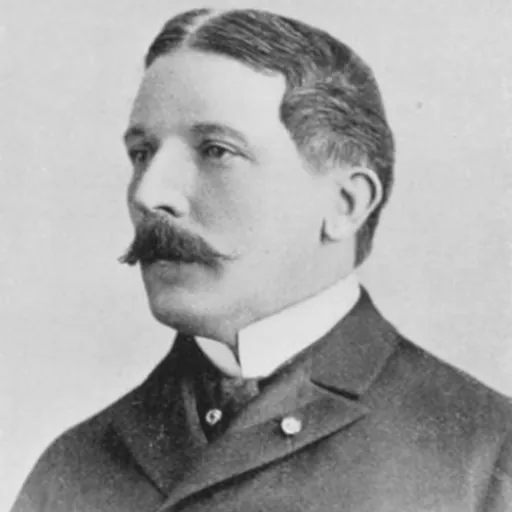
About Henry S. Dewey
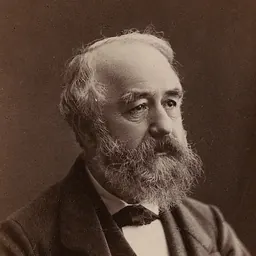
Lived 1856 – 1932 (aged 75). Henry S. Dewey was an American lawyer, politician and military personnel.
Henry Sweetser Dewey (1856–1932) was an American jurist and politician who served as a judge of the Boston Municipal Court and Judge Advocate General of Massachusetts.
Early life Dewey was born on November 9, 1856, in Hanover, New Hampshire, to Major General Israel Dewey and Susan Augusta (Sweetser) Dewey. Dewey left the Army in 1880 and proceeded to read law in the office of Ambrose Ranney. He was reelected in 1885, 1886, and 1887. From 1889 to 1891 he was a member of the Massachusetts House of Representatives.
In 1896 he was appointed as a special justice for the Boston Municipal Court. In 1899 he was made an associate justice of the Boston Municipal Court. Dewey was known for being outspoken on the bench as well as sympathetic towards defendants. Police officers were known to not seek search warrants from him because Dewey would ask them after the search if they had found anything. Dewey was especially sympathetic towards people arrested for drunkenness, as he viewed alcoholism as more of an illness than a crime. In 1902, The Boston Daily Globe called Dewey "the best-known and most interesting man in [Boston]". On December 10, 1902, Dewey resigned from the bench to return to private practice.
On January 4, 1900, he joined the military staff of Governor Winthrop M. Crane as Judge Advocate General. In 1904, Democrat William Lewis Douglas defeated Bates and chose to remove all of Bates' staff, including Dewey.
Run for mayor
In 1905, Dewey ran for mayor of Boston. He faced Speaker of the Massachusetts House of Representatives Louis A. Frothingham and state senator Edward B. Callender in a three way Republican primary. Frothingham was declared the winner over Dewey by 275 votes. After a recount, this number was reduced to 249. On November 21, Dewey announced that he would run as an independent. He finished third behind Democrat John F. Fitzgerald and Frothingham with 12.5% of the vote.
Commitment In 1909, Dewey announced that he was running as a "theocratic candidate for governor". On October 3, he made a 12-hour speech on Boston Common regarding his political theories. Massachusetts Secretary of the Commonwealth William M. Olin found Dewey's nomination papers to not be in legal form and he was not placed on the ballot.
In 1909, Dewey filed a $76 million libel suit against the executive committee of the Good Government Association (Laurence Minot, Eliot N. Jones, John Mason Little, George R. Nutter, and Nathaniel Thayer III) for statements made during his mayoral campaign. On June 9, the jury decided in favor of the defendants after only 35 minutes of deliberation. Following his legal defeat, Dewey tried to have writs of replevin issued against almost every criminal and superior court judge as well as Governor Eugene Foss, Lieutenant Governor Frothingham, Mayor Fitzgerald, Speaker of the Massachusetts House of Representatives Joseph H. Walker, Massachusetts Attorney General James M. Swift, State Treasurer Elmer A. Stevens, Secretary of the Commonwealth Albert P. Langtry, and Suffolk County District Attorney Joseph C. Pelletier. He also tried to have arrest warrants issued against a number of religious and public figures, including Foss, Swift, Langtry, Fitzgerald, Pelletier, Cardinal William Henry O'Connell, Bishops William Lawrence and Alexander Hamilton Vinton, Police Commissioner Stephen O'Meara, and attorney Henry F. Hurlburt.
On February 9, 1912, Dewey was found to be mentally ill and was committed to Boston State Hospital by Judge Robert Grant. He remained there until his death on May 12, 1932.
Don’t just read it —
keep it.
Full-length biographies made to live with: read them, listen on the way to work, watch them tonight.
- E-book
- Audio
- Video
Instant download · yours to keep · every purchase keeps this site free
Important facts
People in Henry S. Dewey's life
Named in this biography and alive at the same time




Related people
Same field, nearest in time

Contemporaries
People whose lives overlapped Henry S. Dewey's




Frequently asked questions
Who was Henry S. Dewey?
American jurist and politician
When was Henry S. Dewey born?
Henry S. Dewey was born on 9 November 1856 in Hanover (NH).
When did Henry S. Dewey die?
Henry S. Dewey died on 12 May 1932 in Boston.
What was Henry S. Dewey's occupation?
Henry S. Dewey was a lawyer, politician and military personnel.
What nationality was Henry S. Dewey?
Henry S. Dewey was American.
Sources & further reading
Cite this page
APA: Biography.guide. (2026). Henry S. Dewey. https://biography.guide/henry-s-dewey/
MLA: "Henry S. Dewey." Biography.guide, https://biography.guide/henry-s-dewey/.
Chicago: "Henry S. Dewey." Biography.guide. https://biography.guide/henry-s-dewey/.
Data last updated: 2026-09-20 · Spot an error? Report a correction.
Page generated 2026-09-27 05:09 UTC