
Henry Pering Pellew Crease
Colonial BC Supreme Court Judge; British Columbia Attorney General
About Henry Pering Pellew Crease
Lived 1823 – 1905 (aged 82). Henry Pering Pellew Crease was a Canadian lawyer, judge, politician and barrister.
Sir Henry Pering Pellew Crease (20 August 1823 – 27 November 1905) was a British lawyer, judge, and politician, in the colonies of Vancouver Island and British Columbia. He was the first Attorney General of the united Colony of British Columbia, and sat on its Supreme Court for 26 years.
Early life Crease was born at Ince Castle, in Cornwall, the son of a Royal Navy captain. He attended Mount Radford School in Exeter, where he was a contemporary of Joseph Trutch. He earned his BA from Clare College, Cambridge and then studied law at the Middle Temple. Though called to the bar in June 1849, he did not immediately pursue his career in law. Instead he joined his parents in an unsuccessful canal building endeavour in Upper Canada. After only a short turn as a barrister on his return to England, he took a job in Cornwall managing a tin mine owned by Great Wheal Vor United Mines, which ended with his employer suing him.
By the time Crease left again for Canada in April 1858, he had married Sarah Lindley and had three young daughters, Susan, Mary, and Barbara. Sarah was the daughter of the famous botanist, John Lindley. She was also a talented scientific illustrator and artist, and would go on to create many drawings and watercolours of early BC. Unable to find work in Toronto, Henry decided to try his luck in Victoria, and arrived there in December. Like Moody, Crease remained nostalgic for the ethnic traditions of Britain and opposed the mercantile Hudson's Bay Company's control over the new colony.
When the colonies were joined in 1866 Crease became the first Attorney General of the new united colony. In 1868 he moved to the new colony's new capital of Victoria, where he built a new home, Pentrelew, on Fort Street.
British Columbia Supreme Court In 1870 he was appointed a judge of the Supreme Court of British Columbia and retired from his government post. Crease was suspicious of both Canadian Confederation because it threatened greater government control and threatened local preferences. "I believe that England is sick of her Colonies," he wrote, "and to be a Colonist, whatever your POSITION & CHARACTER when at Home – is to lose Caste the moment you become a bona fide settler." Crease had once employed Hall as his agent in a dispute with trespassers who illegally logged on land he and his friend Robert Burnaby owned near Hall's Ranch. Hall was found guilty of manslaughter: and his land was signed over to his attorney to pay for his defence.
In 1884, Crease overturned the Chinese Population Regulation Bill, which imposed an annual tax of ten dollars on each Chinese resident in Canada who was over the age of ten years. He ruled that the provincial government had acted beyond its constitutional authority in passing the act, which was within only federal powers of taxation. The next year, as a member of the Royal Commission on Chinese Immigration, Crease wrote that "The real fact is, and the more completely it is recognized the better, that we cannot do without a certain number of Chinese for manual labour and for domestic servants," but warned that Chinese immigrants "will never assimilate with the Anglo-Saxon race, nor is it desirable that they should … They do not regard British Columbia as their home and when they die send their bones home to be buried in China."
By sitting on several Royal commissions, the Exchequer Court of Canada, and the British Columbia Supreme Court, Crease remained an influential figure after his defeat in the Thrasher case. However, federal Justice Minister Sir Charles Hibbert Tupper was not impressed with Crease's judgment and advocated Crease's retirement in a letter to British Columbia Supreme Court Chief Justice Theodore Davie. He died in 1905 and was buried at Ross Bay Cemetery in Victoria.
Don’t just read it —
keep it.
Full-length biographies made to live with: read them, listen on the way to work, watch them tonight.
- E-book
- Audio
- Video
Instant download · yours to keep · every purchase keeps this site free
Important facts
People in Henry Pering Pellew Crease's life
Named in this biography and alive at the same time




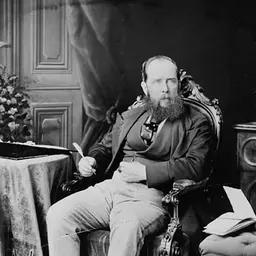
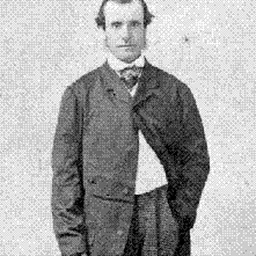

Related people
Same field, nearest in time


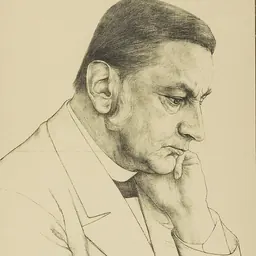

Contemporaries
People whose lives overlapped Henry Pering Pellew Crease's



Frequently asked questions
Who was Henry Pering Pellew Crease?
Colonial BC Supreme Court Judge; British Columbia Attorney General
When was Henry Pering Pellew Crease born?
Henry Pering Pellew Crease was born on 20 August 1823 in Cornwall, Ince Castle.
When did Henry Pering Pellew Crease die?
Henry Pering Pellew Crease died on 27 November 1905 in Victoria.
What was Henry Pering Pellew Crease's occupation?
Henry Pering Pellew Crease was a lawyer, judge, politician and barrister.
What nationality was Henry Pering Pellew Crease?
Henry Pering Pellew Crease was Canadian.
Sources & further reading
· Wikipedia: Henry Pering Pellew Crease
· DBpedia: Henry Pering Pellew Crease
Cite this page
APA: Biography.guide. (2026). Henry Pering Pellew Crease. https://biography.guide/henry-pering-pellew-crease/
MLA: "Henry Pering Pellew Crease." Biography.guide, https://biography.guide/henry-pering-pellew-crease/.
Chicago: "Henry Pering Pellew Crease." Biography.guide. https://biography.guide/henry-pering-pellew-crease/.
Data last updated: 2026-09-20 · Spot an error? Report a correction.
Page generated 2026-09-27 05:18 UTC