
About Henry Oliver
Lived 1865 – 1965 (aged 100). Henry Oliver was a naval officer.
Admiral of the Fleet Sir Henry Francis Oliver, (22 January 1865 – 15 October 1965) was a Royal Navy officer. After serving in the Second Boer War as a navigating officer in a cruiser on the Cape of Good Hope and West Coast of Africa Station, he became the first commanding officer of the new navigation school in the early years of the 20th century. He went to be commanding officer first of the armoured cruiser and then of the new battleship before becoming Director of the Intelligence Division at the Admiralty.
During the First World War, Oliver was sent to Antwerp where, with Belgian support, he blew up the engine rooms of 38 stranded German merchant vessels. He became Naval Secretary to Winston Churchill, First Lord of the Admiralty, and then chief of the Admiralty War Staff before serving as Deputy Chief of the Naval Staff. In that capacity, he was closely involved in directing the Allied forces at the Battle of Jutland. He served as commander of the 1st Battlecruiser Squadron in the Grand Fleet in the last year of the war.
After the war, Oliver commanded, in rapid succession, the 2nd Battle Squadron, the Home Fleet and the Reserve Fleet. After that he became Second Sea Lord and Chief of Naval Personnel and implemented the extensive expenditure cuts recommended by the Committee on National Expenditure chaired by Sir Eric Geddes and the large reductions in numbers of ships agreed under the terms of the Washington Naval Treaty. His last appointment was as commander-in-chief of the Atlantic Fleet.
Naval career Early career Born the fifth son of Robert Oliver and Margaret Oliver (née Strickland) at Lochside near Kelso, Oliver joined the Royal Navy as a cadet in the training ship Britannia on 15 July 1878. He joined the armoured frigate Agincourt, flagship of the Second-in-Command of the Channel Squadron, in September 1880 and, having been promoted to midshipman on 21 January 1881, he transferred to the corvette Amethyst on the South America Station in March 1882. Promoted to sub-lieutenant on 21 January 1885, he joined the battleship Triumph, flagship of the Pacific Station, in October 1886. he joined the survey ship Stork and then qualified as a navigator. he became navigating officer on the battleship Majestic, flagship of the Vice-Admiral Commanding the Channel Squadron, in September 1900. Oliver became the first commanding officer of his proposed new navigation school Mercury that year. he went on to be commanding officer of the armoured cruiser Achilles in the Home Fleet in February 1907 and then became Naval Assistant to Admiral Fisher, now the First Sea Lord, in November 1908. Appointed a Companion of the Order of the Bath on 3 June 1913, he was promoted to rear-admiral on 7 December 1913 and became Director of the Intelligence Division at the Admiralty later that month. When Admiral Sir John Jellicoe was appointed First Sea Lord in December 1916, Oliver became Deputy Chief of the Naval Staff and a Lord Commissioner of the Admiralty and in that capacity was closely involved in directing the allied forces at the Battle of Jutland in May 1916. Appointed a Knight Commander of the Order of St Michael and St George on 12 January 1918, he became commander of the 1st Battlecruiser Squadron in the Grand Fleet with his flag in the battlecruiser Repulse in March 1918. and in February 1919 he was given temporary command of the Battle Cruiser Force. He became commander of the 2nd Battle Squadron in March 1919. When the Grand Fleet was disbanded in April 1919, the older ships were reformed as the Home Fleet and placed under Oliver's command with his flag in the battleship King George V. he became commander-in-chief of the Atlantic Fleet in August 1924. and advanced to Knight Grand Cross of the Order of the Bath on 4 June 1928 before retiring in January 1933. He attended the funeral of King George V in January 1936.
In retirement Oliver became deputy chairman of the Royal National Lifeboat Institution. He died at his home in London on 15 October 1965. Order of the Sacred Treasure, 1st class (Japan) – 2 November 1917
Don’t just read it —
keep it.
Full-length biographies made to live with: read them, listen on the way to work, watch them tonight.
- E-book
- Audio
- Video
Instant download · yours to keep · every purchase keeps this site free
Important facts
People in Henry Oliver's life
Named in this biography and alive at the same time
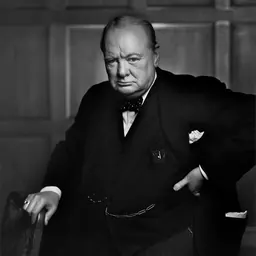
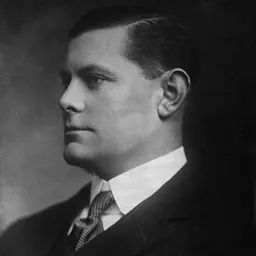





Related people
Same field, nearest in time
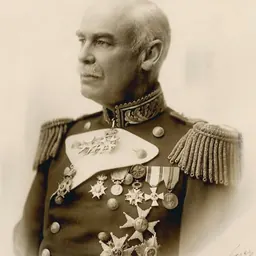

Contemporaries
People whose lives overlapped Henry Oliver's

Frequently asked questions
Who was Henry Oliver?
Royal Navy admiral of the fleet (1865–1965)
When was Henry Oliver born?
Henry Oliver was born on 22 January 1865 in Kelso.
When did Henry Oliver die?
Henry Oliver died on 15 October 1965 in London.
What was Henry Oliver's occupation?
Henry Oliver was a naval officer.
Sources & further reading
Cite this page
APA: Biography.guide. (2026). Henry Oliver. https://biography.guide/henry-oliver/
MLA: "Henry Oliver." Biography.guide, https://biography.guide/henry-oliver/.
Chicago: "Henry Oliver." Biography.guide. https://biography.guide/henry-oliver/.
Data last updated: 2026-09-20 · Spot an error? Report a correction.
Page generated 2026-09-27 05:18 UTC