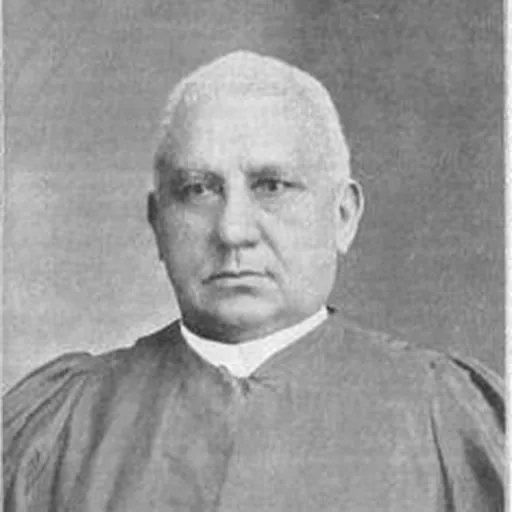
Henry McNeal Turner
Union Army chaplain and African Methodist Episcopal Church bishop
About Henry McNeal Turner
Lived 1834 – 1915 (aged 81). Henry McNeal Turner was an American priest, religious leader and missionary.
Henry McNeal Turner (February 1, 1834, South Carolina, U.S. – May 8, 1915, Ontario, Canada) was an American minister, politician, and the 12th elected and consecrated bishop of the African Methodist Episcopal Church (AME). After the American Civil War, he worked to establish new A.M.E. congregations among African Americans in Georgia. Born free in South Carolina, Turner learned to read and write and became a Methodist preacher. He joined the AME Church in St. Louis, Missouri, in 1858, where he became a minister. Founded by free blacks in Philadelphia, Pennsylvania, in the early 19th century, the A.M.E. Church was the first independent black denomination in the United States. Later Turner had pastorates in Baltimore, Maryland, and Washington, DC.
In 1863 during the American Civil War, Turner was appointed by the US Army as the first African-American chaplain in the United States Colored Troops. After the war, he was appointed to the Freedmen's Bureau in Georgia. He settled in Macon and was elected to the state legislature in 1868 during the Reconstruction era. An A.M.E. missionary, he also planted many AME churches in Georgia after the war. In 1880 he was elected as the first Southern bishop of the AME Church, after a fierce battle within the denomination because of its Northern roots.
Angered by the Democrats' regaining power and instituting laws in the late nineteenth century South, Turner began to support and emigration of blacks to the African continent. This movement started before the Civil War, though Turner was the chief figure in the late nineteenth century to support such emigration to Liberia; most African-American leaders of the time were pushing for rights in the United States.
Early life Henry McNeal Turner was born free in 1834 in Newberry, South Carolina, to Sarah Greer and Hardy Turner, who were both of mixed African-European ancestry. Some sources say he was born in Abbeville, South Carolina. Greer married a free African woman. Henry Turner grew up with his mother Sarah (Greer) Turner and maternal grandmother. He found a job as a custodian for a law firm in Abbeville.
Early career At the age of 14, Turner was inspired by a Methodist revival and swore to become a pastor. He received his preacher's license at the age of 19 from the Methodist Church South in 1853 (the national church had divided into North and South units in 1844 over slavery and other issues). Turner traveled through the South for a few years as an evangelist and exhorter, a position usually reserved for young, unmarried men.
In 1858 he moved with his young family (he had married two years earlier) to Saint Louis, Missouri. The demand for slaves in the South had made him fear that members of his family might be kidnapped and sold into slavery, as has been documented for hundreds of free blacks. The Fugitive Slave Law of 1850 had increased incentives for the capture of refugee slaves and offered few protections for free blacks against illegal capture. It required little documentation by slave traders or people hired as slavecatchers to prove a person's slave status.
In St. Louis, Turner became ordained as a minister in the African Methodist Episcopal Church (AME), which had been founded in Philadelphia, Pennsylvania, as the first independent black denomination in the United States. He studied the classics, Hebrew and divinity at Trinity College.
In the late nineteenth century, Turner witnessed state legislatures in Georgia and across the South passing measures to disfranchise blacks, largely by raising barriers to voter registration. He became a proponent of black nationalism and began to support emigration of American blacks to the African continent. He thought it was the only way they could make free and independent lives for themselves. When he traveled to Africa, he was struck by the differences in the attitude of Africans who ruled themselves and had never known the degradation of slavery.
Church leadership While serving as chaplain, Turner had written extensively about the Civil War as a correspondent for The Christian Recorder, the weekly newspaper of the AME Church. Later he wrote about the condition of his parishioners in postwar Georgia.
When Turner joined the AME Church in 1858, its members lived mostly in the Northern and border states, as it had been founded earlier in the century in Philadelphia and the mid-Atlantic area. Its total members numbered 20,000. By 1896 it had a total of more than 452,000 members nationally, the majority in the South, where most blacks lived at the time.
In 1880, Turner was elected as the twelfth bishop of the A.M.E. Church. He was the first elected bishop who was from the South, and he campaigned hard within the denomination.
During the 1890s, Turner sailed four times to Liberia and Sierra Leone. The former, at one time an American colony, had gained independence. The latter was still a British colony. As bishop, Turner organized four annual AME conferences in Africa to introduce more American blacks to the continent and organize missions in these two English-speaking jurisdictions.
Turner died in 1915 while visiting Windsor, Ontario. He was buried at South-View Cemetery in Atlanta. Other civil rights leaders have also been buried here.
After his death, W.E.B. Du Bois wrote in The Crisis magazine about him:
Turner was the last of his clan, mighty men mentally and physically, men who started at the bottom and hammered their way to the top by sheer brute strength, they were the spiritual progeny of African chieftains, and they built the African church in America. In 2002, scholar Molefi Kete Asante listed Henry McNeal Turner on his list of 100 Greatest African Americans. Henry McNeal Turner High School, Atlanta, Georgia
Don’t just read it —
keep it.
Full-length biographies made to live with: read them, listen on the way to work, watch them tonight.
- E-book
- Audio
- Video
Instant download · yours to keep · every purchase keeps this site free
Important facts
People in Henry McNeal Turner's life
Named in this biography and alive at the same time

Related people
Same field, nearest in time



Contemporaries
People whose lives overlapped Henry McNeal Turner's




Frequently asked questions
Who was Henry McNeal Turner?
Union Army chaplain and African Methodist Episcopal Church bishop (1834–1915)
When was Henry McNeal Turner born?
Henry McNeal Turner was born on 1 February 1834 in Newberry.
When did Henry McNeal Turner die?
Henry McNeal Turner died on 9 May 1915 in Windsor.
What was Henry McNeal Turner's occupation?
Henry McNeal Turner was a priest, religious leader and missionary.
What nationality was Henry McNeal Turner?
Henry McNeal Turner was American.
Sources & further reading
· Wikipedia: Henry McNeal Turner
· DBpedia: Henry McNeal Turner
Cite this page
APA: Biography.guide. (2026). Henry McNeal Turner. https://biography.guide/henry-mcneal-turner/
MLA: "Henry McNeal Turner." Biography.guide, https://biography.guide/henry-mcneal-turner/.
Chicago: "Henry McNeal Turner." Biography.guide. https://biography.guide/henry-mcneal-turner/.
Data last updated: 2026-09-22 · Spot an error? Report a correction.
Portrait: Wikimedia Commons · author & licence
Page generated 2026-09-27 05:01 UTC