
Henry McCollum and Leon Brown
American exonerated men
About Henry McCollum and Leon Brown
Born 1964.
Henry Lee McCollum (born March 26, 1964) and Leon Brown (born November 24, 1967) are two African American men who were wrongfully convicted and sentenced to death for a murder they did not commit.
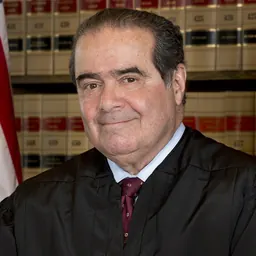
McCollum and Brown were two intellectually disabled teenage brothers, 19 and 15 years old respectively, when a local of Robeson County, North Carolina, implicated them in the 1983 rape and murder of 11-year-old Sabrina Buie. In spite of no physical evidence connecting McCollum or Brown to the crime, interrogators coerced both teens into signing false confessions. At their trials, police and prosecutors suppressed evidence that may have resulted in their acquittals; both were convicted of murder and rape and sentenced to death. U.S. Supreme Court Justice Antonin Scalia later cited McCollum's case as a prime justification for the existence of capital punishment.
McCollum and Brown challenged their convictions for decades. Both men earned a retrial in the 1990s, which resulted in McCollum again being convicted of murder and re-sentenced to death, while Brown was convicted only of rape and re-sentenced to life imprisonment. Following further challenges to their convictions, the North Carolina Innocence Inquiry Commission became involved in their case. Between 2010 and 2014, DNA testing of crime scene evidence revealed that a completely separate man named Roscoe Artis was the actual perpetrator, while McCollum and Brown were innocent. They were both exonerated in 2014. Overall, McCollum and Brown spent almost 31 years in prison. Following their exonerations, McCollum and Brown were awarded $75 million USD, the largest award for a wrongful conviction in United States history.
Background McCollum and Brown were born in Jersey City, New Jersey, to Mamie Brown, who was a native of Robeson County and had moved to Jersey City with her mother. McCollum and Brown were raised by their grandmother and other relatives in Jersey City housing projects.
Both brothers were identified as having intellectual disabilities early in life. As a child, McCollum was placed in a school for the "educably mentally retarded." When he was 16, a psychologist at McCollum's school suggested moving McCollum to a group home. McCollum dropped out of high school with a second-grade reading level, while Brown could barely read or write by the time of the arrests in 1983. McCollum and Brown had both relocated to Red Springs, North Carolina, where their mother lived, by 1983.
Murder of Sabrina Buie On September 23, 1983, 11-year-old Sabrina Buie left her home in Red Springs. Early news reports stated that Buie left her home to visit an arcade; Buie's sister, who was 4 at the time of the murder, would later claim that the last time she saw Buie was when Buie told her she was going to return a bicycle belonging to Leon Brown. Her father Ronnie formally reported her missing after she did not return home by September 25. The following day, her body was found with some of her clothes removed. She had been raped and suffocated with her own underwear. The police chief of Red Springs, Luther W. Haggins, described Buie's murder as "one of the most brutal murder cases I've investigated."
The search for Buie lasted two days and involved 20 police officers. At the crime scene, police recovered several pieces of physical evidence, including a cigarette butt, beer cans, articles of Sabrina's bloodied clothing, bloodstained sticks, and a bloodstained board of plywood. Authorities recovered additional physical evidence in a nearby field, where police believed the actual murder occurred before Buie's body was moved to the location where it was found.
Confessions, arrests, and murder of Joann Brockman On September 28, police invited Henry McCollum to the Robeson County police station for questioning. McCollum then underwent an hours-long interrogation, during which the police told McCollum that a witness placed him at the crime scene. They also used racial slurs towards McCollum and assured him that if he signed a form waiving his Miranda rights and confessed, he could leave. McCollum did not have an attorney present during the interrogation. The three others accused had airtight alibis or were otherwise proven to have not been connected to the crime, and one was out of state at the time of Buie's murder.
There were numerous inconsistencies between McCollum's confession and Brown's confession, which conflicted in details regarding who was involved in the crime, how McCollum and Brown met the victim, how they committed Buie's murder, and why the other boys implicated in their confessions were unable to be tied to the crime due to their alibis. and habitual sexual offender who lived near the Buie family and "within feet" of where Buie's body was found. Artis's history of sexual assaults on women dated back to 1957, and at the time of Buie and Brockman's murders, he was suspected in the 1980 rape and murder of 30-year-old Bernice Moss in Gaston County, North Carolina. Before the commutation of his death sentence in Brockman's case, Artis repeatedly told another North Carolina death row inmate that McCollum and Brown were innocent of Buie's murder. Both shortly before and after McCollum and Brown's exonerations, Britt's enthusiastic prosecution of the brothers would come under scrutiny, given that, despite the fact that Britt had prosecuted Artis for Brockman's very similar murder earlier in the year, Britt had overlooked compelling evidence that implicated Artis in the murder of Buie.
The prosecution team's main pieces of evidence against McCollum and Brown were the signed confessions. Another witness for the prosecution, 17-year-old L.P. Sinclair, claimed to have heard McCollum and Brown talking about wanting to rape Buie prior to the crime and that McCollum confessed to the crime after the murder. Under cross-examination, however, Sinclair admitted that police had interviewed him three times before McCollum and Brown's arrests and that he never implicated either teenager in his interviews. His attorneys said he was deeply affected and traumatized by each execution of other North Carolina death row inmates. He was "severely depressed" and would become suicidal during other inmates' executions. His attorneys also said other inmates targeted McCollum for violence and abuse due to his alleged victim being a young girl. McCollum experienced the executions of 42 North Carolina death row inmates during his stay and once said, "I'm tired. I don't know when they are going to kill me." After hearing the evidence, rather than granting the brothers a new trial, the judge declared McCollum and Brown innocent. Many of his and Brown's family members were present, including McCollum's father James, who stated after the hearing, "We waited all these long years for this. Thank you, Jesus." At the time of McCollum and Brown's request for a pardon, their prosecutor, Joe Freeman Britt, still opposed their request for a pardon and compensation.
Analysis and aftermath The News & Observer and The New York Times pointed out how the notoriety around McCollum and Brown's case led to its heavy and racialized politicization in the area. The North Carolina Republican Party used McCollum's booking photograph in campaign mailings meant to generate fear in locals, including campaign fliers as recently as 2010 accusing legislators in the North Carolina Democratic Party of being "soft on crime" for passing the Racial Justice Act, which allowed North Carolina death row inmates to challenge their death sentences based on evidence of racism.
Roscoe Artis died at the age of 82 while serving a life sentence in North Carolina's Warren Correctional Institution on December 15, 2020.
Don’t just read it —
keep it.
Full-length biographies made to live with: read them, listen on the way to work, watch them tonight.
- E-book
- Audio
- Video
Instant download · yours to keep · every purchase keeps this site free
Important facts
People in Henry McCollum and Leon Brown's life
Named in this biography and alive at the same time


Contemporaries
People whose lives overlapped Henry McCollum and Leon Brown's


Frequently asked questions
Who is Henry McCollum and Leon Brown?
American exonerated men
When was Henry McCollum and Leon Brown born?
Henry McCollum and Leon Brown was born on 26 March 1964 in Jersey City, New Jersey.
Sources & further reading
· Wikipedia: Henry McCollum and Leon Brown
· DBpedia: Henry McCollum and Leon Brown
Cite this page
APA: Biography.guide. (2026). Henry McCollum and Leon Brown. https://biography.guide/henry-mccollum-and-leon-brown/
MLA: "Henry McCollum and Leon Brown." Biography.guide, https://biography.guide/henry-mccollum-and-leon-brown/.
Chicago: "Henry McCollum and Leon Brown." Biography.guide. https://biography.guide/henry-mccollum-and-leon-brown/.
Data last updated: 2026-09-20 · Spot an error? Report a correction.
Page generated 2026-09-27 04:59 UTC