
About Henry M. Mathews
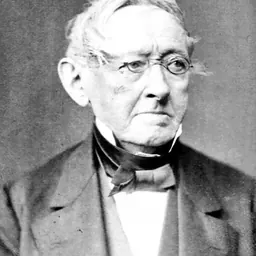
Lived 1834 – 1884 (aged 50). Henry M. Mathews was an American lawyer and politician.
Henry Mason Mathews (March 29, 1834 – April 28, 1884) was an American military officer, lawyer, and politician in the U.S. State of West Virginia. Mathews served as the seventh attorney general of West Virginia (1873–1877) and the fifth governor of West Virginia (1877–1881), being the first former Confederate elected to the governorship in the state. Born into a Virginia political family, Mathews attended the University of Virginia and afterward practiced law before the outbreak of the American Civil War. When Virginia seceded from the United States, in 1861, he volunteered for the Confederate States Army and served in the western theater as a major of artillery. Following the war, Mathews was elected to the West Virginia Senate, but was denied the seat due to state restrictions on former Confederates. Mathews participated in the 1872 state constitutional convention that overturned these restrictions, and in that same year was elected attorney general of West Virginia. After one term, he was elected governor of West Virginia.
Mathews was identified as a Redeemer, the southern wing of the conservative, pro-business Bourbon faction of the Democratic Party that sought to oust the Radical Republicans who had come to power across the postwar South. However, Mathews took the uncommon practice of appointing members from both parties to important positions, causing his administration to be characterized as "an era of good feelings." He sought to attract industry to the state, and courted immigration. His administration faced challenges related to the Long Depression, most notably the outbreak of the Great Railroad Strike of 1877 in Martinsburg, West Virginia, as a labor protest to wage cuts. After several failed attempts to quell the strike with state militia, Mathews called on President Rutherford B. Hayes for federal assistance, which brought national attention to the strike that spread to other states in what would be the first national labor strike in United States history. Mathews' handling of the strike, and his portrayal of the strikers, was criticized by labor activists at the time, and his calling for Federal assistance was questioned, though the involvement of the federal government in breaking up the strike has come to be seen as inevitable by modern historians. In later life, Mathews served as president of the White Sulphur Springs Company (now The Greenbrier resort).
Early life
Henry Mason Mathews was born on March 29, 1834, in Frankford, Virginia, U.S., (located in modern-day West Virginia) to Eliza Shore (née Reynolds) and Mason Mathews. His family had been politically prominent in western Virginia for several generations, and his father was a merchant and politician who served in the Virginia House of Delegates. His ancestry was Scotch-Irish and/or Welsh.
Mathews received a primary education at the local Lewisburg Academy, and afterward attended the University of Virginia, earning a Bachelor of Arts in 1855 and a Master of Arts in 1856. He was a member of the Beta Theta Pi fraternity. On the completion of his graduate degree, Mathews entered Lexington Law School and studied under John W. Brockenbrough, graduating in 1857 with a degree of Bachelor of Laws.
Mathews became active in local politics in the years proceeding the outbreak of the American Civil War, organizing for Democratic presidential candidate John C. Breckinridge during the 1860 presidential campaign. Breckinridge lost the national vote to Abraham Lincoln, who did not receive a single vote in Mathews' home county of Greenbrier. Nevertheless, Greenbrier was generally opposed to secession in the United States and voted against it in the Virginia Secession Convention of 1861.
Military service
Brigadier General Alexander W. Reynolds, uncle of Major Henry Mason Mathews
Mathews chose to follow his home state of Virginia on its joining of the Confederate States of America. Along with his two brothers, he volunteered for the Confederate States Army (CSA) in 1861 at the rank of private. Early in the war he was assigned to recruiting and enlisting duties Virginia. When general Stevenson's division advanced to Baker's Creek for the Battle of Champion Hill, Mathews was left in Vicksburg as the chief of his department.
Throughout the war, Mathews frequently ran into difficulties with the Confederate military. He contemplated leaving the army in 1863, and also in that year applied for a transfer from his uncle's brigade to Richmond, Virginia, though the results of this request are unclear. In the fall of 1864, he was arrested by orders of General Robert E. Lee due to a misunderstanding of a courier's message regarding ordnance movement. Lee dismissed the charges on receipt of Mathews' explanation.
Political career Political rise While at war Mathews' reputation as a leader had spread at home. In a post-war state dominated by the Republican party, Mathews, a Democrat, was elected to the West Virginia Senate in 1865 but was denied the seat due to the restriction that prohibited former Confederates from holding public office. Mathews was sent as a Democratic delegate to the Constitutional Convention of 1872 to overhaul the 1863 Republican-drafted state constitution. The drafting of this new constitution enabled Mathews' rise in the politics of the state. The following year, 1873, he was elected attorney general of the state under Governor John J. Jacobs, succeeding Joseph Sprigg, and served one term in which his popularity within his party rose.
Governor of West Virginia In his inaugural address, Mathews emphasized unity and progress in the wake of war, promising:
The legitimate results of the war have been accepted in good faith, and political parties are no longer aligned upon the dead issues of the past. We have ceased to look back mournfully, and have said "Let the dead past bury its dead," and with reorganized forces have moved up to the living issues of the present.
Mathews' address was well-received across the state. The Republican Morgantown Post praised the "broad, manly, and liberal address, which possesses, to our mind, an honesty of purpose, and a freedom from disguise, that is truly refreshing." His inaugural celebration, which included "flowers and flags and banners and music, feasting and revelry,"
On assembling his cabinet, Mathews sought to reduce post-war political tension. He appointed both Republican and Democratic party members to his cabinet, a move that was uncommon in the post-war political climate.
Mathews responded by sending another militia company—this time with no rail workers were among them—to address the growing strike, but he was informed that this company too would not act against the strikers. Mathews finally complied with the urging of his administration to request Federal troops from newly elected President Rutherford B. Hayes. Mathews' decision to call for federal support garnered significant national notice to the strikes. Local newspapers were highly critical of the governor's characterization of the strikes to Hayes as an "insurrection" rather than an act of desperation, with one notable paper recorded a striking worker's perspective that, "[he] had might as well die by the bullet as to starve to death by inches." Mathews' decision to call for federal assistance has been vindicated by historians, who have come to view federal involvement as inevitable.
In 1880, Mathews was again required to dispatch the militia, this time to Hawks Nest, West Virginia, to stop the state's first major coal strike, as miners from Hawks Nest were being threatened with violence to cease productivity by a rival constituent.
Relocating the capitol West Virginia State Capitol in Charleston, West Virginia. Charleston was made the state's permanent state capital during Mathews' administration. From 1863, when West Virginia was formed, through 1875, the capital of West Virginia had alternated between Wheeling and Charleston, with its location largely dependent on political party control of the state, with Republicans favoring Wheeling and Democrats favoring Charleston. Early in Mathews' administration, a vote was held to determine a permanent location for the capital, which was currently located in Wheeling. Three options of Charleston, Clarksburg, and Martinsburg were presented (Wheeling was not listed as a voting option). During the campaigning, state Democrats employed a young Booker T. Washington to engage in a speaking tour to consolidate Black opinion in favor of Charleston. Charleston won the vote, and has remained the state capital since. The argument dragged on throughout the 1800s and the debt was not retired until 1939.
During Mathews' administration, Attorney General Robert White secured a decision by the United States Supreme Court in favor of levying taxes against the burgeoning railroad industry, which to that point had not paid any taxes to the State of West Virginia. This decision resulted in an influx of thousands of dollars into the State treasury.
Race issues Before the Civil War, western Virginia had a relatively low slave population compared to the eastern part of the state, or the South as a whole (4% in western Virginia as compared to about 30% in the South). Mathews was raised in one such slaveholding western Virginia household. Mathews' precise views on race and slavery are unclear, though he was a member of several local political conventions that issued statements and resolutions opposing racial equality, both before and after the Civil War. He was also a delegate to the state convention that drafted the 1872 West Virginia Constitution which codified policies of segregation in the state. During Mathews' political career he was identified as a Redeemer – the Southern faction of the Bourbon Democrats. Redeemers dominated Southern politics in most areas from the 1870s to 1910 and were generally led by wealthy former planters, businessmen, and professionals who sought to expel the freedmen, carpetbaggers, and scalawags from Southern government and reestablished white supremacy in the South. However, West Virginia historian Otis K. Rice objects to this characterization of the West Virginia Redeemers:
This fails to do justice to the flexibility of West Virginia Bourbons. The West Virginia Democrats who followed the Republican founders of the state included Governors Mathews, Jackson, Wilson, Fleming, and MacCorkle. These men were ready to adjust to changing political conditions and to the 13th, 14th, and 15th amendments to the federal Constitution, which conferred freedom, citizenship, and the right to vote and hold office upon former slaves.
From 1865 to 1957, West Virginia passed eleven Jim Crow laws under Democratic leadership. None of these were passed during Mathews' administration. In 1881, following the ruling of the Strauder v. West Virginia Supreme Court case, Mathews reversed a 1873 state law that prohibited Black citizens from serving on juries. In his closing address to the West Virginia legislature in January 1881, Mathews urged his fellow statesmen to adopt a progressive attitude towards the divisive issues that precipitated the Civil War: It is necessary . . . to fully realize that institutions under which some of us were reared and which have left an enduring impress on our character, -- which have influenced not only our habits of living, but also our opinions and habits of thought -- are now of the past and no longer factors of existing social or political problems; that while the fundamental principles of our republican institutions are forever true and sufficient for all time, yet they must be adapted to the changed conditions produced by the result of the civil war, an increasing population and an advancing civilization. West Virginia should be aligned with the most progressive of her sister States, between whose institutions and her own there is no longer any conflict . . .
Fast notes that the "liberal-minded" spirit of Mathews' administration received a setback during the campaign of his predecessor, Jacob B. Jackson, under whom "he old sores of war were torn upon and bled afresh."
Later life
Mathews retired from politics in 1881, at which point he returned to his law practice. He additionally served as president of the White Sulfur Springs Company (now The Greenbrier resort) following its post-war reopening. The resort became a place for many Southerners and Northerners alike to vacation, and the setting for many famous post-war reconciliations, including the White Sulphur Manifesto, which was the only political position issued by Robert E. Lee after the Civil War, that advocated the merging of the two societies. The resort went on to become a center of regional post-war society.
Henry M. Mathews died unexpectedly on April 28, 1884, and is buried in the Old Stone Church cemetery in Lewisburg, West Virginia.
Legacy As West Virginia governor Mathews established a state immigration bureau to attract new workers to the state, expanded the coal and oil industries, improved transportation, and funded a state geological survey. His administration at large has been characterized as "an era of good feeling," due to his appointing of Republicans to office during his Democratic tenure.
Historian Mary L. Rickard, in the Calendar of the Henry Mason Mathews Letters and Papers in the State Department of Archives and History (1941), offered a critical analysis of his administration: "At this time there was less wealth per capita in West Virginia than in 1865, the result of which had a pronounced effect upon State politics. Those highest up in the social scale held the highest political positions and the entire organization became dangerously corrupt."
Because Mathews was the first state governor to call on federal troops in response to the Great Railroad Strike of 1877, this action has been recognized as a catalyst that would help to transform the United States National Guard.
Don’t just read it —
keep it.
Full-length biographies made to live with: read them, listen on the way to work, watch them tonight.
- E-book
- Audio
- Video
Instant download · yours to keep · every purchase keeps this site free
Important facts
Family & relationships
People in Henry M. Mathews's life
Named in this biography and alive at the same time



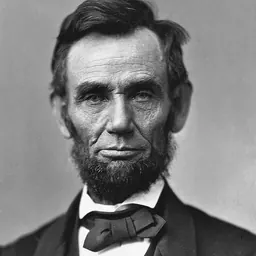
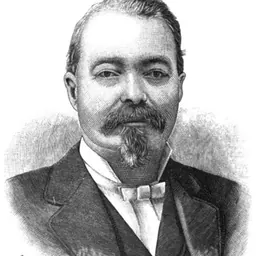
Related people
Same field, nearest in time
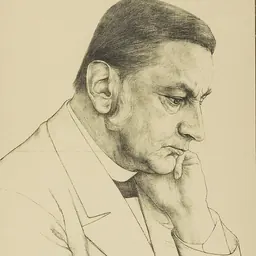


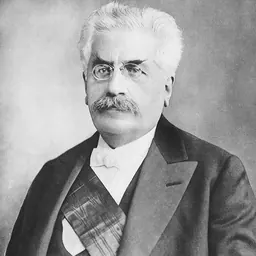

Contemporaries
People whose lives overlapped Henry M. Mathews's


Frequently asked questions
Who was Henry M. Mathews?
American military officer, lawyer, and politician (1834–1884)
When was Henry M. Mathews born?
Henry M. Mathews was born on 29 March 1834 in Greenbrier County.
When did Henry M. Mathews die?
Henry M. Mathews died on 28 April 1884 in Lewisburg.
What was Henry M. Mathews's occupation?
Henry M. Mathews was a lawyer and politician.
What nationality was Henry M. Mathews?
Henry M. Mathews was American.
Sources & further reading
Cite this page
APA: Biography.guide. (2026). Henry M. Mathews. https://biography.guide/henry-m-mathews/
MLA: "Henry M. Mathews." Biography.guide, https://biography.guide/henry-m-mathews/.
Chicago: "Henry M. Mathews." Biography.guide. https://biography.guide/henry-m-mathews/.
Data last updated: 2026-09-20 · Spot an error? Report a correction.
Page generated 2026-09-27 05:31 UTC