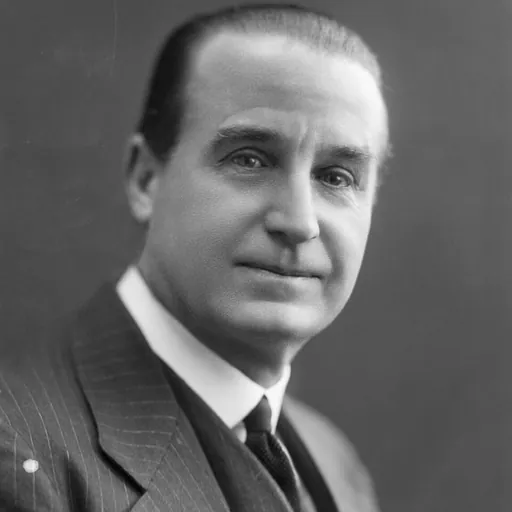
About Henry Lytton
Lived 1865 – 1936 (aged 71). Henry Lytton was a British actor, singer and stage actor.
Sir Henry Lytton (born Henry Alfred Jones; 3 January 1865 – 15 August 1936) was an English actor and singer who was the leading exponent of the starring comic patter-baritone roles in Gilbert and Sullivan operas from 1909 to 1934. He also starred in musical comedies. His career with the D'Oyly Carte Opera Company spanned 50 years, and he is the only performer ever knighted for achievements in Gilbert and Sullivan roles.
Lytton was born in London; he studied there with a painter but then went on the stage in defiance of his family's wishes. At the age of 19 he married Louie Henri, an actress and singer who helped him gain a place in a D'Oyly Carte touring company in 1884. After briefly playing in other companies, he and his wife rejoined D'Oyly Carte. He had an early breakthrough in 1887 when the Savoy Theatre star George Grossmith fell ill, and the 22-year-old Lytton went on for him in Ruddigore. Lytton starred in D'Oyly Carte touring companies from 1887 to 1897, playing mostly the comic patter roles in the Gilbert and Sullivan (and other) operas. From 1897 to 1903 he appeared with the company continuously at the Savoy Theatre, playing a range of baritone parts, from romantic leads to character parts in new operas and revivals. During this time his brief and costly attempt at theatrical production in London led to his abandoning thoughts of being an impresario.
The D'Oyly Carte company left the Savoy Theatre in 1903, and Lytton appeared in half a dozen West End musical comedies over the next four years, including The Earl and the Girl, The Spring Chicken and The Little Michus. He also wrote for, and performed in, music hall and wrote a libretto. During the two D'Oyly Carte repertory seasons at the Savoy between 1906 and 1909, Lytton rejoined the company, again playing a variety of baritone roles, but mostly not the principal comedian patter roles.
Beginning in 1909, and continuously to 1934, he was the principal comedian of the D'Oyly Carte Opera Company in London and on tour. He retired from acting a year later.
Life and career
Early years
Lytton was born as Henry Alfred Jones on 3 January 1865 in Pembroke Square, Kensington, London, the son of Henry Jones (1829–1893), a jeweller, and his second wife Martha Lavinia, née Harris. According to his highly unreliable memoirs he was educated at St Mark's School, Chelsea, and took part there in amateur theatricals and boxing. He studied art with the painter W. H. Trood. It is unclear whether the studies were part-time or full time, or during his schooldays or later.
In 1881 Lytton made his first appearance on the professional stage at the Philharmonic Theatre, Islington, in the comic opera A Trip to China, or The Obstinate Bretons, in the cast of which was his future wife, Louie Henri, daughter of William Webber, of London. |group=n They married in early 1884, both aged 19, at St Mary Abbots church, Kensington.
Henri played an important part in Lytton's early theatrical career, coaching him in acting, and playing the piano to help him learn his musical parts. In February 1884 the two joined one of the impresario Richard D'Oyly Carte's touring companies. She played the small role of Ada in the first provincial tour of Gilbert and Sullivan's Princess Ida; he sang in the chorus and understudied the principal comic role of King Gama. According to his memoirs, Henri had obtained an audition for him, passing him off as her brother – "H. A. Henri" – in the mistaken belief that married couples were not welcome in Carte's companies. Any pretence was quickly abandoned, but Lytton kept the stage name Henri until 1887. Henri and Lytton rejoined the D'Oyly Carte tour when it resumed in February 1885, continuing until May. The tour ended in December, and the following month the couple's first child, Ida Louise, was born. After this, they joined with other out-of-work actors and travelled from town to town in Surrey for just over two months, performing a drama (All of Her), a comedy (Masters and Servants), and Charles Dibdin's ballad opera The Waterman. Lytton's memoirs record that they made little money, and the struggling young actors sometimes went hungry. Between theatrical engagements Lytton took odd jobs, including putting his artistic training to use by painting decorative plaques. He was taken on by another of Carte's touring companies from September to December 1885, after which he and Henri were in the 1885 Christmas pantomime at the Theatre Royal, Manchester. In May 1886 they were in the chorus of The Lily of Leoville in Birmingham, and then of Erminie at the Comedy Theatre, London.
At the end of 1886 Lytton was engaged by Carte to appear at the Savoy Theatre. Eric Lewis, who had been understudying George Grossmith in the starring comic patter roles since 1882, left the D'Oyly Carte company. Lytton was appointed to replace him, understudying the role of Robin Oakapple in the new Savoy opera, Ruddigore,
Recordings, film and broadcasts
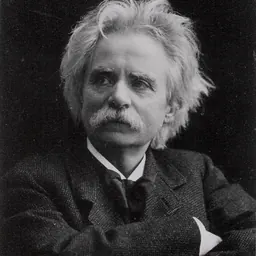
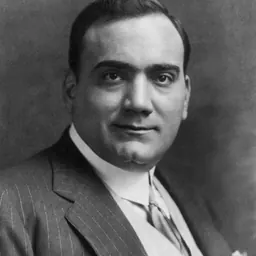
Lytton featured prominently in early gramophone recordings. As early as 1902–03 the Gramophone Company (HMV) was promoting him as one of its stars along with performers ranging from Enrico Caruso, Edvard Grieg and Joseph Joachim to Dan Leno, Marie Lloyd and George Robey. His recordings between 1901 and 1905 include "My Cosy Corner Girl" from The Earl and the Girl, which was something of a best-seller. Twenty-five of his recordings were collected on the 1982 LP set "The Art of Henry Lytton". It contains eight Gilbert and Sullivan numbers from five operas, and songs from three other shows in which he appeared – Merrie England, A Princess of Kensington and The Earl and the Girl – and three he did not appear in – A Country Girl, The Toreador and The Girl from Kay's. The set also contains four non-show songs, including one of his own composition. (The Gilbert and Sullivan tracks are: "Time was when love and I were well acquainted" (The Sorcerer); "None shall part us" (Iolanthe, with Louie Henri); "If you give me your attention" and "Whene'er I spoke sarcastic joke" (Princess Ida); "As some day it may happen" and "On a tree by a river" (The Mikado); "In enterprise of martial kind" (The Gondoliers); and "When I was a lad" (H.M.S.) Pinafore). The other tracks are "Imagination" and "The Yeomen of England" (Merrie England); "Four jolly sailormen" (A Princess of Kensington) "Two little chicks", "Me and Mrs Brown", "Quarrelling" and "Peace, peace" (A Country Girl); "Everybody's awfully good to me", "When I marry Amelia" and "Archie, Archie" (The Toreador); "By the shore of the Mediterranean" and "My cosy corner girl" (The Earl and the Girl); "Make it up" (The Girl from Kay's) and four stand-alone songs: "He was a sailor" (anon), "The dotlet of my eye" (music by Johann Strauss II), "You'd better ask me" (by Hermann Lohr) and Lytton's own "The laughing song". By the time HMV began using D'Oyly Carte principals in its recordings of the Savoy operas in the mid-1920s, Lytton's voice was not thought suitable for the gramophone, and he was included in only Princess Ida in 1924 (acoustic) and 1932 (electrical), The Mikado in 1926, The Gondoliers in 1927, and H.M.S. Pinafore in 1930, his other roles being sung by Baker. When the 1930 H.M.S. Pinafore was released, Cardus wrote in The Manchester Guardian, "It was high time something was done to send down to posterity the genius of the greatest of all surviving artists in Gilbert and Sullivan. The omission of Lytton's voice from the Iolanthe was a blunder of the first importance … there is no mistaking the Lytton accent, the old kindly yet pungent tones".
Lytton sang Ko-Ko in a 1926 BBC radio broadcast of two half-hour excerpts from The Mikado, and appeared in the same role in a four-minute-long silent promotional film for the D'Oyly Carte production in the same year. In January 1933 the BBC broadcast the last night of the D'Oyly Carte London season, which marked Lytton's last appearance in the West End. He sang Ko-Ko in Act 1 of The Mikado.
Notes, references and sources
Don’t just read it —
keep it.
Full-length biographies made to live with: read them, listen on the way to work, watch them tonight.
- E-book
- Audio
- Video
Instant download · yours to keep · every purchase keeps this site free
Important facts
People in Henry Lytton's life
Named in this biography and alive at the same time




Related people
Same field, nearest in time

Contemporaries
People whose lives overlapped Henry Lytton's



Frequently asked questions
Who was Henry Lytton?
British actor and singer (1865-1936)
When was Henry Lytton born?
Henry Lytton was born on 3 January 1865 in London.
When did Henry Lytton die?
Henry Lytton died on 15 August 1936 in Earl's Court.
What was Henry Lytton's occupation?
Henry Lytton was an actor, singer and stage actor.
What nationality was Henry Lytton?
Henry Lytton was British.
Sources & further reading
Cite this page
APA: Biography.guide. (2026). Henry Lytton. https://biography.guide/henry-lytton/
MLA: "Henry Lytton." Biography.guide, https://biography.guide/henry-lytton/.
Chicago: "Henry Lytton." Biography.guide. https://biography.guide/henry-lytton/.
Data last updated: 2026-09-22 · Spot an error? Report a correction.
Portrait: Wikimedia Commons · author & licence
Page generated 2026-09-27 05:03 UTC