
Henry Khudyakov
Artist
About Henry Khudyakov
Lived 1930 – 2019 (aged 88).
Henry Fyodorovich Khudyakov (or Ghenrik, Russian: Генрих Фёдорович Худяков, 5 December 1930, Chelyabinsk, Russia – 10 January 2019, Jersey City, New Jersey) was a Russian-American painter and Poet. He completed high school in Moscow in 1948 and graduated from Leningrad University with a degree in Philology in 1959. He wrote poetry in Soviet Russia as part of the Samizdat movement, creating poems that were both visually and audibly artistic. Henry emigrated to New York City in 1974, where he shifted his creative expression to mixed media on canvas, clothing and other objects. Henry Khudyakov’s works are part of the collections of the Museum of Modern Art in New York (MoMA), Center Pompidou in Paris and others. He spent his later years living in Jersey City, New Jersey where he died on January 10, 2019.
Early life Henry Khudyakov's father worked at a national security sensitive enterprise and his mother was a literature teacher. As a child he showed interest in literature and began writing poetry. He read books on theosophy and anthroposophy and developed an interest in Gnosticism. Henry Khudyakov embarked on a career as an artist in 1959 when as a final year student at the Department of Philology of the Leningrad University he worked on developing theoretical grounding for his visual search as part of his poetic experimentation.
Poetry and the Samizdat Movement
In the 1960s Henry Khudyakov released self-published books with poems under the pseudonym Aftograf: Cats —Bears Third One in addition to the Redundant Katsaveiki By Twos of All Flesh A book with poems in Japanese style titled "Haiku"
Cut off from official publication channels, his handwritten and typewritten books existed as part of the self-publishing movement, samizdat, outside the Soviet printed media, thus using a social ban as an opportunity for creative action.
He held exhibitions of his visually innovative poetry in the studios of various Moscow artists as early as the mid-1950s. "Koshki-Mishki ili zhe Tretii K Lishnim" (Kitty-bears or the Third to the Odd Ball, 1963), one of his early books was typed on carbon paper in ten copies, accompanied by a manifesto and handwritten commentary and copyrighted by his own publishing company. Khudyakov did not own a typewriter, as it was very difficult to obtain one in the Soviet Union, and had to type the book at a secret Moscow aviation institute where he worked as a translator, until he was caught and fired. The book mainly consisted of visual poems, representing a new interpretation of Russian morphology. One of his handwritten books, Katsaveiki (Shot Fur-trimmed Jackets), was reprinted in facsimile in the international edition of SMS, No. 3 by William Copley in 1968.
Emigrating to U.S.A. In 1974, the artist emigrated to the United States where he continued to work in the fields of visual art and experimental poetry, combining various art forms. Although he favored brightly colored painting, collage, and clothing design, these often contain verbal elements, such as his favorite, the ubiquitous logo “I [love] N.Y.” where the word “love” is replaced by a heart symbol. The atmosphere of the New York art scene of the 1970s, which was dominated by the East Village movements, naturally provided a basis for Khudyakov’s further evolution as an artist. The East Village art scene, which brought together beatniks, performance artists, musicians, members of the Fluxus community, as well as gave birth to such celebrities as Jeff Koons, Keith Haring and Jean- Michel Basquiat, in many ways resonated with Henry Khudyakov. During this period, the artist’s tools were enriched by "found objects" from the streets of New York. He used them to produce his neckties, shoes, jackets, and shirts which acted as manifestos of his "ideal" world. Acquiring a new skin, made of badges, bottle caps, foil, adhesive tape, stickers, rhinestones, straws, sponges and toys, he would turn mundane objects into precious artifacts, offering new authenticity and new vision.
Don’t just read it —
keep it.
Full-length biographies made to live with: read them, listen on the way to work, watch them tonight.
- E-book
- Audio
- Video
Instant download · yours to keep · every purchase keeps this site free
Important facts
People in Henry Khudyakov's life
Named in this biography and alive at the same time


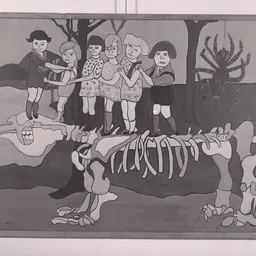
Contemporaries
People whose lives overlapped Henry Khudyakov's
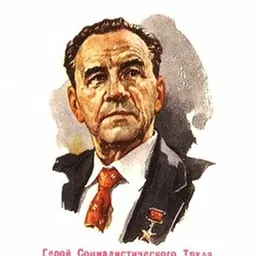
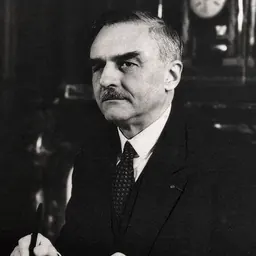
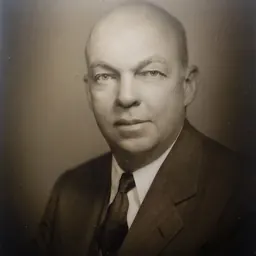
Frequently asked questions
Who was Henry Khudyakov?
artist (1930-2019)
When was Henry Khudyakov born?
Henry Khudyakov was born on 5 December 1930 in Chelyabinsk.
When did Henry Khudyakov die?
Henry Khudyakov died on 10 January 2019 in Jersey City.
What nationality was Henry Khudyakov?
Henry Khudyakov's recorded nationality: Russian language.
Sources & further reading
Cite this page
APA: Biography.guide. (2026). Henry Khudyakov. https://biography.guide/henry-khudyakov/
MLA: "Henry Khudyakov." Biography.guide, https://biography.guide/henry-khudyakov/.
Chicago: "Henry Khudyakov." Biography.guide. https://biography.guide/henry-khudyakov/.
Data last updated: 2026-09-20 · Spot an error? Report a correction.
Page generated 2026-09-27 05:09 UTC