
About Henry John Boulton
Lived 1790 – 1870 (aged 79–80). Henry John Boulton was a lawyer and judge.
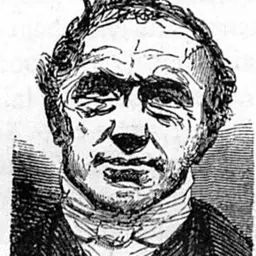
Henry John Boulton, (1790 – June 18, 1870) was a lawyer and political figure in Upper Canada and the Province of Canada, as well as Chief Justice of Newfoundland.
Boulton began his legal career under the tutelage of John Beverly Robinson, one of the leaders of the Family Compact, succeeding Robinson first as Solicitor General of Upper Canada, and then as Attorney General. After election to the Legislative Assembly of Upper Canada in 1830, Boulton opposed William Lyon Mackenzie, who in turn considered him one of the worst supporters of the Family Compact. His opposition to Mackenzie led to his dismissal by the British government from the post of Attorney General, but he was then appointed Chief Justice of Newfoundland, a separate colony from Upper Canada. After a tumultuous term as Chief Justice, he was again dismissed by the British government and returned to Upper Canada.
By the time of his return from Newfoundland, Boulton had become a strong Reformer, supporting Robert Baldwin and the quest for responsible government. At the end of the Baldwin-Lafontaine ministry, he retired from public life and devoted himself to his legal practice.
He died in Toronto, Ontario, in 1870, aged 80.
Early life and family
Boulton was born at Little Holland House, Kensington, England, the son of G. D'Arcy Boulton, in 1790. Some time later, the family settled in New York state and then moved to Upper Canada around 1800. He studied law at York, Upper Canada (now Toronto, Ontario) and then at Lincoln's Inn in London. In 1818, he married Eliza Jones, daughter of Ephraim Jones, a Loyalist who was a member of the Legislative Assembly of Upper Canada, opposed to slavery. The couple would have eight children.
One of Boulton's brothers, George Strange Boulton, was also a member of the Legislative Assembly and served on the Legislative Council. Another brother, D'Arcy Boulton Jr., also a lawyer, built and lived at The Grange, one of the earliest substantial brick residences in York.
Family Compact member
Boulton was called to the English bar and, in 1816, the bar of Upper Canada. He was appointed Solicitor General in 1818, at age 28, and then Attorney General in 1829. The appointments illustrated the nature of the Family Compact.
Boulton's father, D'Arcy Boulton, had been the Solicitor-General of Upper Canada. When he was later appointed Attorney General, John Beverley Robinson succeeded him as Solicitor General. Robinson was the brother-in-law of one of D'Arcy Boulton's sons. When D'Arcy Boulton was appointed to the bench in 1818, Robinson succeeded him as Attorney General and John Henry Boulton was appointed Solicitor General. When Robinson in turn was appointed to the bench in 1829, John Henry Boulton was appointed Attorney General.
The string of appointments indicated the patronage nature of the position under the informal control of the Family Compact. However, even critics of the Family Compact acknowledged that Robinson and the Boultons carried out the office with fairness.
While he was Solicitor-General, Boulton ended up being charged with being an accessory to a duel, which also illustrated the pervasiveness of politics at that time. The matter arose in early 1828, when a Reform journalist, Francis Collins, was prosecuted by Attorney-General Robinson for libellous utterances in his newspaper. The case came on before Justice Willis, who was an opponent of the government. Collins attacked the prosecution, arguing that Robinson had failed to do his duty by not prosecuting his colleague, Boulton, for having acted as a second at a duel some years before. Justice Willis seized on this allegation and turned the case into a prosecution of Boulton, with Robert Baldwin, then a young leader of the budding Reform movement, acting as prosecutor. The matter became entirely political and ended when the Lieutenant Governor, Sir Peregrine Maitland, dismissed Justice Willis.
During his tenure as Solicitor-General, Boulton wrote a short book to encourage working-class British to consider emigrating to Canada.
Member of the Legislative Assembly alt=A painting of the Parliament Buildings of Upper Canada, depicted in brown in the background facing leftward while people mingle along a road and creek in the foreground. In 1830, Boulton was elected to represent Niagara in the Legislative Assembly of Upper Canada. Although he campaigned as an independent, Reformers considered him a "ministerialist", a supporter of the Tories. In his capacity as Attorney General, he was involved in several disputes with members of the growing Reform movement, to the point that William Lyon Mackenzie, one of the leading Reformers, put Boulton at the head of his "Black Book" of corrupt officials. Mackenzie described Boulton and his brother George Strange Boulton, "as bad as bad can be, perhaps the very worst members any country or nation can be afflicted with."
Once in Parliament, Boulton aligned himself with the ultra-Reformers led by Robert Baldwin. He declared in favour of responsible government, commenting that his "considerable experience of Colonial Office Government" had persuaded him that the Canadian people should have complete management over local affairs. The amendment helped convince moderate Reformers in Canada West to vote for the bill, which passed with majorities from both the English-speaking and the French-speaking members of the Assembly.
Towards the end of the Lafontaine-Baldwin ministry, Boulton began to drift away from them, proclaiming himself an independent member. He moved towards the nascent "Clear Grit" movement, of more radical Reformers, increasingly voting against the government. He argued that the Legislative Council should be elected, not appointed, and effectively proposed "rep by pop" (representation by population), in accordance with the growing population of Canada West.
Later life Boulton did not stand for election in the general election of 1851. He retired from politics but continued to practise law until about 1860. In 1855, he was the manager of the Canadian section at the Paris Exposition.
He died at Toronto, Ontario in 1870.
Publications
Don’t just read it —
keep it.
Full-length biographies made to live with: read them, listen on the way to work, watch them tonight.
- E-book
- Audio
- Video
Instant download · yours to keep · every purchase keeps this site free
Important facts
People in Henry John Boulton's life
Named in this biography and alive at the same time





Related people
Same field, nearest in time



Contemporaries
People whose lives overlapped Henry John Boulton's


Frequently asked questions
Who was Henry John Boulton?
Canadian politician
When was Henry John Boulton born?
Henry John Boulton was born in 1790 in Kensington.
When did Henry John Boulton die?
Henry John Boulton died on 18 June 1870 in Toronto.
What was Henry John Boulton's occupation?
Henry John Boulton was a lawyer and judge.
Sources & further reading
· Wikipedia: Henry John Boulton
Cite this page
APA: Biography.guide. (2026). Henry John Boulton. https://biography.guide/henry-john-boulton/
MLA: "Henry John Boulton." Biography.guide, https://biography.guide/henry-john-boulton/.
Chicago: "Henry John Boulton." Biography.guide. https://biography.guide/henry-john-boulton/.
Data last updated: 2026-09-20 · Spot an error? Report a correction.
Page generated 2026-09-27 05:26 UTC