
About Henry Horton
Lived 1923 – 1998 (aged 75). Henry Horton was a British cricketer, cricket umpire and association football player.
Henry Horton (18 April 1923 – 2 November 1998) was an English sportsman who played both association football and cricket. As a footballer, Horton played as a wing-half, beginning his career at Worcester City. He then played in the Football League for Blackburn in 1946, before joining Southampton as their record transfer in 1951. He would later play for Bradford Park Avenue, before ending his career with Hereford United. As a first-class cricketer, he began his career as an amateur at Worcestershire, playing a few matches without success. He would later play over 400 first-class matches as a professional for Hampshire, scoring over 21,500 runs. After the end of his playing career, he had two spells as coach of Worcestershire, and stood as a first-class umpire.
Football career Horton was born in April 1923 in Colwall, Herefordshire. He served in the Second World War with the Fleet Air Arm and was demobilised following the conclusion of the war in 1945. As a sportsman, he initially excelled as a footballer who played at wing-half. After playing for Worcester City, Horton joined First Division Blackburn Rovers for £2,000 in 1946. Blackburn were relegated to the Second Division during the 1947–48 season, where they were to remain for rest of Horton's time with the club. Writing in The Independent, Derek Hodgson described him as an "obdurate, intransigent" defender. His most notable goal for Southampton came as a defender against Blackpool at Bloomfield Road in the Fifth Round of the 1952–53 FA Cup, when Southampton were trailing 1–0. Having won a free kick on the edge of the Blackpool box in the 86th minute, Horton went forward and headed in Peter Sillett's free kick. He subsequently attracted attention from Joe Mallett at Leyton Orient and Norman Kirkman at Bradford Park Avenue, both former Southampton players in managerial positions.
Cricket career Worcestershire Horton began playing at first-class level as an amateur middle order batsman and occasional slow left-arm orthodox bowler for Worcestershire, making his first-class debut against the Royal Air Force at Worcester in 1946. In that season, he made his County Championship debut against Warwickshire at Edgbaston. In this match, his teammate Dick Howorth implored Warwickshire bowler Jack Marshall to allow him an easy delivery to score his first run from. Marshall bowled a slow half-volley, He played more extensively in 1947, making seven first-class appearances; Alongside Leonard Blunt, Syd Buller, and Norman Whiting, he was not re-engaged by Worcestershire following the 1949 season. After his first foray into first-class cricket, Horton had seemingly given up playing the game. he was persuaded to appear for Hampshire Club and Ground in 1952, making two centuries. making his senior first eleven debut against Leicestershire at Portsmouth in the 1953 County Championship. The following season he again featured in fourteen first-class matches,
With the end of his Football League career in 1955, Horton established himself in the Hampshire eleven. Horton scored two further centuries during the season.
Having success during the 1960 season, in which Horton scored 2,170 runs at an average of 43.40 and made seven centuries, however, he was not successful in the match. He would play an important role the following season as Hampshire won their first County Championship, proving a reliable run-getter throughout the season. Horton was granted a benefit season in 1964. His final season with Hampshire came in 1967, with him being released in September in order to take up the role of head–coach at Worcestershire.
Playing style and statistics Horton was essentially a defensive player, contrasting with the flamboyance of Marshall in the Hampshire side. The Independent likened him to a "passable imitation of a brick wall", such was the soundness of his defence. Horton was a strong fielder at short-leg,
Umpiring and coaching After retiring from playing football, Horton spent the winter months whilst still engaged by Hampshire as a games' master at a private school in Colwall. He was appointed Worcestershire coach for the 1968 season, He was subsequently added to the first-class umpires list by the Test and County Cricket Board for the 1973 season, alongside Barrie Meyer. Horton stood as an umpire until the 1976 season, standing in 72 first-class and one-day matches apiece. He was not reappointed to the first-class umpires list ahead of the 1977 season, and in July 1977 he returned to coach Worcestershire. His second spell lasted until 1979, He was later employed as the groundsman at the Royal Grammar School Worcester. Horton was never married. He was the younger brother of Joseph Horton, who played more than 60 times for Worcestershire in the 1930s and who died just four days after him.
Don’t just read it —
keep it.
Full-length biographies made to live with: read them, listen on the way to work, watch them tonight.
- E-book
- Audio
- Video
Instant download · yours to keep · every purchase keeps this site free
Important facts
People in Henry Horton's life
Named in this biography and alive at the same time


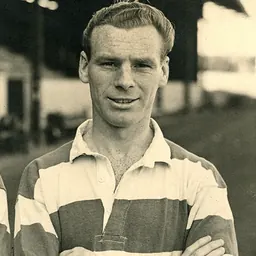



Related people
Same field, nearest in time



Contemporaries
People whose lives overlapped Henry Horton's

Frequently asked questions
Who was Henry Horton?
English cricketer (1923-1998)
When was Henry Horton born?
Henry Horton was born on 18 April 1923 in Colwall.
When did Henry Horton die?
Henry Horton died on 2 November 1998 in Birmingham.
What was Henry Horton's occupation?
Henry Horton was a cricketer, cricket umpire and association football player.
What nationality was Henry Horton?
Henry Horton was British.
Sources & further reading
· DBpedia: Henry Horton (sportsman)
Cite this page
APA: Biography.guide. (2026). Henry Horton. https://biography.guide/henry-horton/
MLA: "Henry Horton." Biography.guide, https://biography.guide/henry-horton/.
Chicago: "Henry Horton." Biography.guide. https://biography.guide/henry-horton/.
Data last updated: 2026-09-20 · Spot an error? Report a correction.
Page generated 2026-09-27 04:59 UTC