
About Henry Hilton
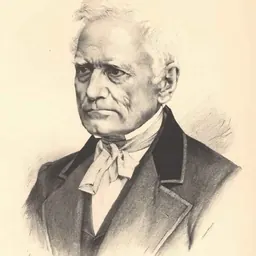
Lived 1824 – 1899 (aged 74). Henry Hilton was an American businessperson.
Henry Hilton (October 4, 1824 – August 24, 1899) was an American jurist and businessman. He became best known for the so-called "Hilton–Seligman Affair" in 1877, his refusal to admit financier Joseph Seligman to the Grand Union Hotel in Saratoga Springs, New York (no relation to Hilton Hotels & Resorts), reportedly because Seligman was Jewish, but also possibly because of a personal feud.
Biography Hilton was born in Newburgh, New York on October 4, 1824, the youngest son of a Scottish immigrant.
Campbell & Cleveland represented A.T. Stewart, "The Merchant Prince," and Hilton became Stewart's private counsel in 1850. In the 1850s Hilton married Ellen Banker, a cousin of Mrs. Stewart and the sister of James H. Banker, President of the Bank of New York. He was a judge of the Court of Common Pleas from 1858 to 1863, and also served as Parks Commissioner for a time.
Mr. Stewart died in 1876, and Hilton served as his executor, receiving a bequest of one million dollars for his services, which Mrs. Stewart paid by transferring the business of A.T. Stewart to him. In 1886 Mrs. Stewart died and Hilton again served as executor. Judge Hilton retired from A.T. Stewart in 1883. There are two different accounts of his success in business. According to his biography, Hilton improved the property, laying out of graveled carriage roads, a great mansion, stables, barns, gardens, lakes, a club house, a ballroom, and an athletic field. thumb leftAugustus Saint-Gaudens's Hiawatha stood in front of the house. The grounds were open to members of the public with permission from Judge Hilton. Hilton died at Woodlawn on August 24, 1899, "after a long illness." Following Hilton's death the property was left to decay, and was auctioned off as eight parcels in 1916. A portion of Woodlawn is now the campus of Skidmore College. Hilton is interred at Green-Wood Cemetery in Brooklyn, New York.
Hawkins controversy In May 1871, workers broke into the workshop of British artist Benjamin Waterhouse Hawkins in Central Park. Among other things, they destroyed a plaster skeleton of a Hadrosaur, modeled after the first dinosaur fossil unearthed in New Jersey 13 years earlier, and a statue of the dinosaur as it might have appeared in life. Hawkins' work was intended to be the focal point of a Paleozoic Museum in the park. Originally "Boss" Tweed was blamed for the destruction, but it now appears that Hilton acted on his own, possibly seeing the Paleozoic Museum as competition for the planned American Museum of Natural History. This vandalism was one of many strange acts perpetrated by Hilton, as he had a habit of whitewashing priceless artifacts, and believed that Hawkins' fascination with what he considered to be "dead animals" pointless considering that "there was enough to do among the living". As a result of the destruction, the museum was never built.
Don’t just read it —
keep it.
Full-length biographies made to live with: read them, listen on the way to work, watch them tonight.
- E-book
- Audio
- Video
Instant download · yours to keep · every purchase keeps this site free
Important facts
People in Henry Hilton's life
Named in this biography and alive at the same time

Related people
Same field, nearest in time


Contemporaries
People whose lives overlapped Henry Hilton's



Frequently asked questions
Who was Henry Hilton?
American businessman; Judge; Millionaire
When was Henry Hilton born?
Henry Hilton was born on 4 October 1824.
When did Henry Hilton die?
Henry Hilton died on 24 August 1899.
What was Henry Hilton's occupation?
Henry Hilton was a businessperson.
What nationality was Henry Hilton?
Henry Hilton was American.
Sources & further reading
Cite this page
APA: Biography.guide. (2026). Henry Hilton. https://biography.guide/henry-hilton/
MLA: "Henry Hilton." Biography.guide, https://biography.guide/henry-hilton/.
Chicago: "Henry Hilton." Biography.guide. https://biography.guide/henry-hilton/.
Data last updated: 2026-09-20 · Spot an error? Report a correction.
Page generated 2026-09-27 05:12 UTC