
About Henry Hajimu Fujii
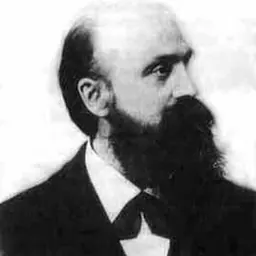
Lived 1886 – 1976 (aged 90). Henry Hajimu Fujii was a businessperson, farming, lapidary and spokesman.
Henry Hajimu Fujii (, August 17, 1886 – November 4, 1976) was a pioneer and Japanese American community leader in the state of Idaho. His primary vocation was in agriculture. In the 1930s, Fujii was recognized as a pioneer in large-scale onion farming, advancing the acreage scale of which a farmer could raise crops. In 1936, he established the Japanese Onion Growers Association and served as the organization's president for over 30 years.
As a Japanese immigrant living away from the West Coast of the United States, Fujii was not part of the Japanese American internment, maintaining a residence in Nampa, Idaho, throughout World War II. Although he, like most other Japanese Americans, was the subject of significant racial persecution in the mid-1940s, Fujii maintained strong community relationships and leadership. His community presence served as a significant contributor to the well-being and rights preservation for Asians in the northwestern United States. The Emperor of Japan awarded Fujii the 6th Order of the Rising Sun, Silver Rays, which represents the sixth highest of eight classes associated with this award. This decoration was presented as a way of acknowledging his efforts in furthering the relationships between Japan and the United States.
In his retirement, Fujii turned to rockhounding and amassed one of the most extensive gem and mineral collections in the northwestern United States. In 1974, Fujii donated a portion of his collection to the State of Idaho, with Governor Cecil D. Andrus personally accepting the donation. The remainder of Fujii's gem and mineral specimens were donated to the Idaho Museum of Mining and Geology in 1994, and is on permanent display as "The Fujii Collection" in Boise, ID.
Background Hajimu Fujii was born August 17, 1886, in Tottori Prefecture, Japan. He was the fifth son to Yasujiro and Tsune Fujii. As a boy, he helped raise rice and silkworms on their one-ox, farm. In high school, Fujii and a classmate decided to immigrate to America upon finishing school. Hajimu, whose name means "The Beginning," didn't pass his physical examination because of an eye infection, so his classmate, Katsuji Hashitani, went on to America alone. Fujii taught school for a year while returning to full health and borrowed $500 for his fare to America.
Within five years of arriving in the U.S., Fujii had paid back the $500 he had borrowed to come to America and amassed $500 in savings, as well as funding to return to Japan to get married. On December 29, 1911, he married Fumiko Mayeda at Takashiro, Tottori-ken, Japan. Fumiko Mayeda was born on July 12, 1891, at Kochi, Maniwa, Okayama Prefecture, Japan. She was the daughter of a history teacher Fujii had admired when he was a teacher. Fujii returned to the U.S. with his new bride, traveling aboard the SS Inaba Maru and arriving on April 23, 1912.
Japanese land law Fujii's ability to purchase land was partly due to his own efforts in fighting the alien land law that had been introduced in the Idaho State Legislature in 1915. Eight years after joining the Japanese Association of Western Idaho (JAWI), Fujii was elected president. His election was the beginning of a 26-year leadership for the JAWI. The association's usual activities involved such matters as arranging trips to Japan, marriages, funerals, and buying property.
One of the most serious matters of the JAWI was that of the Japanese land law. California, Oregon, Washington, and other western states had passed laws that prohibited Japanese from owning or leasing land. Idaho's five Japanese associations organized a federation and elected Fujii, as well as other representatives, to fight a similar law in Idaho. This team successfully lobbied to delay passage of the law, defeat it, and introduce a new law. This new law allowed renewable leases of up to five years. With its passage in 1923, Idaho remained the only state in the West where Japanese immigrants could lease land.
Don’t just read it —
keep it.
Full-length biographies made to live with: read them, listen on the way to work, watch them tonight.
- E-book
- Audio
- Video
Instant download · yours to keep · every purchase keeps this site free
Important facts
Related people
Same field, nearest in time
Contemporaries
People whose lives overlapped Henry Hajimu Fujii's



Frequently asked questions
Who was Henry Hajimu Fujii?
American community leader
When was Henry Hajimu Fujii born?
Henry Hajimu Fujii was born on 17 August 1886 in Nampa.
When did Henry Hajimu Fujii die?
Henry Hajimu Fujii died on 2 November 1976 in Nampa.
What was Henry Hajimu Fujii's occupation?
Henry Hajimu Fujii was a businessperson, farming, lapidary and spokesman.
Sources & further reading
· Wikipedia: Henry Hajimu Fujii
Cite this page
APA: Biography.guide. (2026). Henry Hajimu Fujii. https://biography.guide/henry-hajimu-fujii/
MLA: "Henry Hajimu Fujii." Biography.guide, https://biography.guide/henry-hajimu-fujii/.
Chicago: "Henry Hajimu Fujii." Biography.guide. https://biography.guide/henry-hajimu-fujii/.
Data last updated: 2026-09-25 · Spot an error? Report a correction.
Page generated 2026-09-27 05:12 UTC