
Henry Guernsey Hubbard
American entomologist and horticulturist
About Henry Guernsey Hubbard
Lived 1850 – 1899 (aged 48–49). Henry Guernsey Hubbard was an American zoologist, entomologist, scientific collector and horticulturist.
Henry Guernsey Hubbard (May 6, 1850 – January 18, 1899) was an American entomologist and horticulturist. He was both a field entomologist and an applied entomologist. He is most noted for the work he did to identify and control the agricultural pests in the Florida citrus industry. He was also an early pioneer in the study of cave insects.
Biography Hubbard was born on May 6, 1850, in Detroit, Michigan. His parents were Bela Hubbard and Sarah (Baughman) Hubbard. Bela was a native of Hamilton, N. Y. and in 1835 moved to Michigan where he became a prominent and wealthy citizen of Detroit. Bela had a strong scientific interest in geology, botany, forestry, arboriculture, and archaeology. This interest was passed along to his oldest son, Henry, who became familiar with the habits of the wild creatures in the neighborhood of Detroit at an early age.
Henry Hubbard was educated at a private school in Cambridge, Massachusetts and then spent several years studying with private tutors in Europe. He entered Harvard University in 1869 and worked closely with Hermann August Hagen, Carl Robert Osten-Sacken, and especially Eugene Amandus Schwarz, who became Hubbard's lifelong friend. Under their influence he was determined to become an entomologist when he graduated in 1873.
While on a trip with his uncle in 1877, Hubbard studied and collected termites in Jamaica. He next joined the Geological Survey of Kentucky as a naturalist in 1879, studying the fauna of Mammoth Cave and other caves in the region. The resulting paper, Two Days' Collecting in the Mammoth Cave (1880) was said to mark the beginning of the scientific study of cave life. He later wrote about cave fauna in Jamaica (1880) and Florida (1901). Other papers he published expressed a similar interest in the assemblages of insects found in unique micro-habitats such as tortoise burrows (1894), Yellowstone hot springs (1891), saguaro cactus (1899) and desert rodent burrows (1901).
In 1880, Hubbard was appointed a special agent for the United States Entomological Commission and he began an intensive study of the insect pests affecting the Florida citrus crops. In 1885 he published his best-known work, Insects Affecting the Orange. It remained the standard authority for many years and was praised as one of the most careful studies of insect pests yet published. He also developed a kerosene-soap emulsion that proved to be an effective control for scale insects and other citrus pests.
For the next few years he devoted himself to horticultural work, developing his garden and consulting with other horticulturalists. By 1889 he rededicated himself to entomology and made several collecting trips across the country. In 1889 he revisited Lake Superior; in 1890 Montana; in 1891 he and Schwarz traveled to the Wasatch Mountains in Utah, Lake Tahoe in California, and Yellowstone Park; and in 1892 they visited Oregon, Washington and British Columbia. In 1894 he accompanied Charles Valentine Riley on a collecting trip to the British West Indies. After Florida's "Great Freeze" in 1896, Hubbard studied the ambrosia beetles that infested the dead and dying citrus trees.
By 1896 Hubbard's health had declined significantly from tuberculosis that had infected him for several years. In an effort to improve his health, he spent much of his time in Arizona in 1897 and 1898, studying insects with his friend Schwarz. However, his health continued to deteriorate and he died in Florida on January 19, 1899.
Hubbard married Kate Lasier in 1887 and together they had four children.
Selected works Hubbard published approximately 68 papers, including: 1877: Notes on the tree nests of termites in Jamaica. 1878: (with Schwarz, E.A) The Coleoptera of Michigan. 1880: Two Days' Collecting in the Mammoth Cave. 1885: Insects Affecting the Orange 1891: Insect Life in the Hot Springs of Yellowstone National Park. 1894: The Insect Guests of the Florida Land Tortoise. 1897: The Ambrosia Beetles of the United States.
Don’t just read it —
keep it.
Full-length biographies made to live with: read them, listen on the way to work, watch them tonight.
- E-book
- Audio
- Video
Instant download · yours to keep · every purchase keeps this site free
Important facts
People in Henry Guernsey Hubbard's life
Named in this biography and alive at the same time


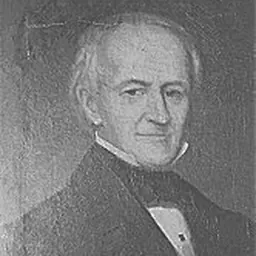

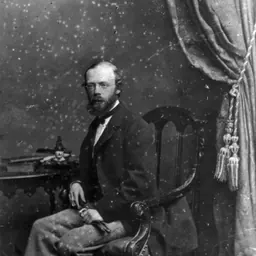

Related people
Same field, nearest in time


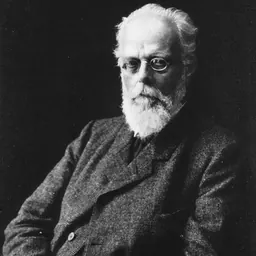
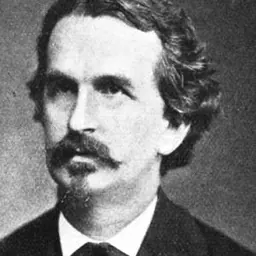
Contemporaries
People whose lives overlapped Henry Guernsey Hubbard's



Frequently asked questions
Who was Henry Guernsey Hubbard?
American entomologist and horticulturist (1850–1899)
When was Henry Guernsey Hubbard born?
Henry Guernsey Hubbard was born in 1850 in Detroit.
When did Henry Guernsey Hubbard die?
Henry Guernsey Hubbard died in 1899 in Crescent City.
What was Henry Guernsey Hubbard's occupation?
Henry Guernsey Hubbard was a zoologist, entomologist, scientific collector and horticulturist.
What nationality was Henry Guernsey Hubbard?
Henry Guernsey Hubbard was American.
Sources & further reading
· Wikipedia: Henry Guernsey Hubbard
· DBpedia: Henry Guernsey Hubbard
Cite this page
APA: Biography.guide. (2026). Henry Guernsey Hubbard. https://biography.guide/henry-guernsey-hubbard/
MLA: "Henry Guernsey Hubbard." Biography.guide, https://biography.guide/henry-guernsey-hubbard/.
Chicago: "Henry Guernsey Hubbard." Biography.guide. https://biography.guide/henry-guernsey-hubbard/.
Data last updated: 2026-09-20 · Spot an error? Report a correction.
Page generated 2026-09-27 05:04 UTC