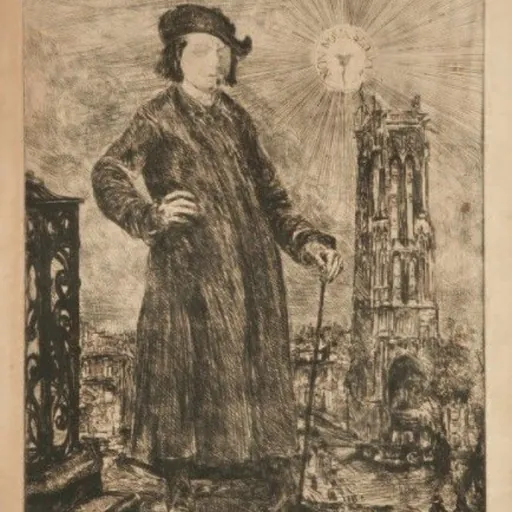
About Henry de Groux
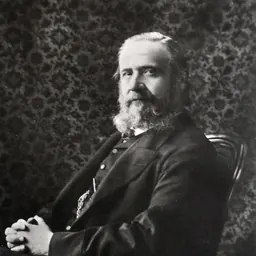
Lived 1866 – 1930 (aged 63). Henry de Groux was a Belgian and French painter, lithographer, sculptor, graphic artist and printmaker.
Henry de Groux (15 September 1866 – 12 January 1930) was a Belgian Symbolist painter, sculptor and lithographer. His 1889 painting Christ attacked by a mob made when he was only 22 years old established his reputation as an innovative Symbolist painter and ensured his admission to the progressive artistic circles in Brussels. He spent most of his active career in Paris. He produced many works depicting the horrors of the First World War in the latter part of his career.
Life De Groux was born in Brussels.
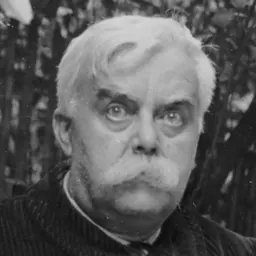
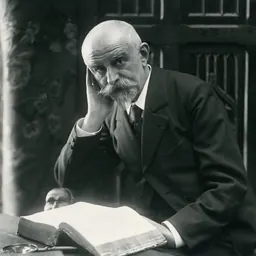
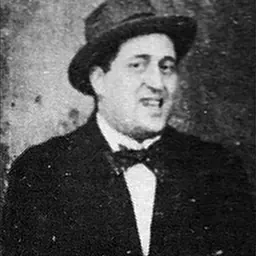
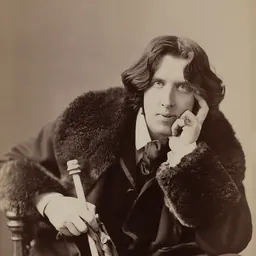
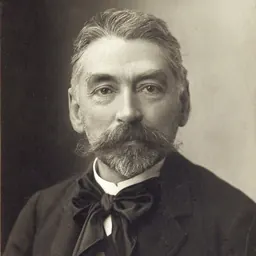
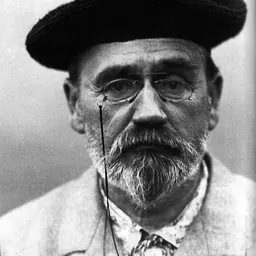
De Groux subsequently moved to Paris, where he befriended Émile Zola. During the social unrest resulting from the Dreyfus affair, de Groux acted as one of Zola's bodyguards. In Paris he met other artists such as Toulouse-Lautrec, Whistler, Gauguin, Ensor, Rodin and Debussy. He also frequented many writers, including his future son-in-law Émile Baumann, Stéphane Mallarmé, Guillaume Apollinaire, Oscar Wilde, Léon Bloy – with whom he maintained a fusional friendship – Verlaine, Zola, Heredia, Gide, Milosz, Remy de Gourmont and Joris-Karl Huysmans.
Henry de Groux exhibited all over Europe at the salons of Paris, Brussels, Ostend, Spa, Amsterdam, London and Florence. In the latter places he was interned in a psychiatric hospital. He escaped from it and walked all the way to back to Marseille.
He illustrated various literary works. He contributed lithographs to L'Estampe originale (1893) and L'Épreuve (1895).
De Groux had a reputation of a bohemian living a wild and disorderly life. In the preamble of Léon Bloy's book La Femme pauvre (The Poor Woman) de Groux is described as follows: "With the exception of our great painter Henry de Groux, who has descended as deeply as you and as heartily into my black pit?" (La Part Commune Edition, 1897).
His elder daughter Elisabeth de Groux was an engraver. She married Emile Baumann who after his father-in-law's death wrote a revealing biography titled The terrible life of Henry de Groux (1936).
De Groux died in Saint-Josse-ten-Noode on 12 January 1930.
Work As well as a painter, de Groux was a fervent diarist. Starting from 1892, he produced 18 volumes detailing his life as a European artist in the late 19th and early 20th centuries. In 2002, his descendants donated these volumes to the Institut national d'histoire de l'art; selected excerpts were published in 2007.
Apollinaire wrote of De Groux's exhibition in Paris at the Salon d'Automne 1911, saying the artist's work "...gives one the impression of an immense labor and a sensibility of the highest order..."
Gallery Paintings
Prints and graphics
Don’t just read it —
keep it.
Full-length biographies made to live with: read them, listen on the way to work, watch them tonight.
- E-book
- Audio
- Video
Instant download · yours to keep · every purchase keeps this site free
Important facts
People in Henry de Groux's life
Named in this biography and alive at the same time


Related people
Same field, nearest in time
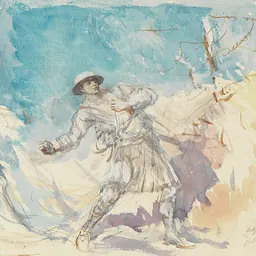


Contemporaries
People whose lives overlapped Henry de Groux's



Frequently asked questions
Who was Henry de Groux?
lithographer, painter, sculptor (1866-1930)
When was Henry de Groux born?
Henry de Groux was born on 16 November 1866 in Saint-Josse-ten-Noode.
When did Henry de Groux die?
Henry de Groux died on 17 January 1930 in Marseille.
What was Henry de Groux's occupation?
Henry de Groux was a painter, lithographer, sculptor, graphic artist and printmaker.
What nationality was Henry de Groux?
Henry de Groux was Belgian and French.
Sources & further reading
Cite this page
APA: Biography.guide. (2026). Henry de Groux. https://biography.guide/henry-de-groux/
MLA: "Henry de Groux." Biography.guide, https://biography.guide/henry-de-groux/.
Chicago: "Henry de Groux." Biography.guide. https://biography.guide/henry-de-groux/.
Data last updated: 2026-09-21 · Spot an error? Report a correction.
Portrait: Wikimedia Commons · author & licence
Page generated 2026-09-27 04:59 UTC