
About Henry Crowe
Lived 1897 – 1983 (aged 85). Henry Crowe was an Irish flying ace.
Air Commodore Henry George Crowe (11 June 1897 – 26 April 1983) was a World War I flying ace credited with eight confirmed aerial victories. He also survived being shot down six times in 11 days at one point. His career in the Royal Air Force took him through World War II, during which he ascended to air commodore.
Early life Crowe became interested in aviation early on, serving as secretary of the school aviation club at St. Helen's School. Although he was born in Ireland, he was educated in England, at Colwyn Bay, Dean Close School and at Cheltenham School in 1911. He returned to Ireland in 1913 for further schooling, attending Trinity College, Dublin as an engineering student. While there, he joined the Officers Training Corps.
World War I service
Infantry Henry George Crowe entered the Royal Military College, Sandhurst, as a Gentleman Cadet in November 1915. He graduated from Sandhurst and was commissioned a second lieutenant in the Royal Irish Regiment on 19 July 1916. Crowe joined the Royal Irish at Kemmel. He left 20 Squadron having been shot down six times in 11 days, but remained unscathed. By August 1918, he was undergoing pilots training.
Assignment to 2 Squadron as a pilot followed on 1 February 1920, Whilst stationed at Fermoy, County Cork, Crowe had occasion to become involved in military operations in the Munster region, although his official role was to provide lectures to the Army on air cooperation. On 1 August 1921, he was re-seconded again to the RAF, as a flying officer. On 17 November 1921, he was granted a permanent commission as flying officer. Four days later, he transferred to 39 Squadron in Iraq as a pilot. He then received three consecutive photo reconnaissance assignments, covering the next four years. On 17 October 1926, he became a flight commander in 14 Squadron in Amman, Jordan. He began RAF Staff College on 30 December 1928. and spent the next three years as Staff, Deputy Directorate of Organization. The next three years saw him serve as officer commanding of, successively, 23 and 74 Squadrons. A series of staff assignments followed this. The 20th saw him deputy director of war training and tactics. He was promoted to temporary air commodore on 1 June 1941. He shipped out to India in 1942, becoming deputy AOA, HQ Air Forces there on 27 August. From 16 November 1943 through 8 April 1944, he was an acting air vice-marshal with the permanent rank of air commodore. On 5 October of that year, he took command of No. 223 (Composite) Group
Commander of Order of the British Empire awarded 8 June 1944.
Chinese Cloud and Banner Decoration with Special Cravat awarded 25 June 1946.
Don’t just read it —
keep it.
Full-length biographies made to live with: read them, listen on the way to work, watch them tonight.
- E-book
- Audio
- Video
Instant download · yours to keep · every purchase keeps this site free
Important facts
People in Henry Crowe's life
Named in this biography and alive at the same time
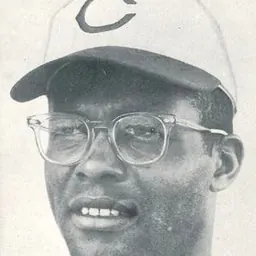
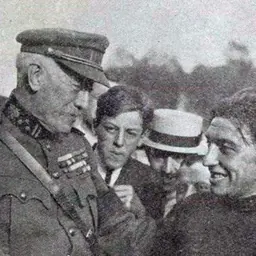

Related people
Same field, nearest in time


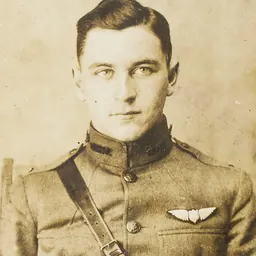

Contemporaries
People whose lives overlapped Henry Crowe's
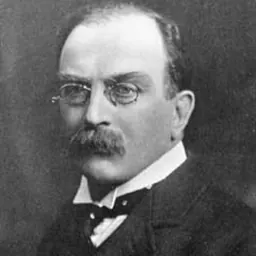


Frequently asked questions
Who was Henry Crowe?
Irish flying ace (1897–1983)
When was Henry Crowe born?
Henry Crowe was born on 11 June 1897 in Donnybrook.
When did Henry Crowe die?
Henry Crowe died on 26 April 1983 in Thornton-le-Dale.
What was Henry Crowe's occupation?
Henry Crowe was a flying ace.
What nationality was Henry Crowe?
Henry Crowe was Irish.
Sources & further reading
· DBpedia: Henry Crowe (RAF officer)
Cite this page
APA: Biography.guide. (2026). Henry Crowe. https://biography.guide/henry-crowe/
MLA: "Henry Crowe." Biography.guide, https://biography.guide/henry-crowe/.
Chicago: "Henry Crowe." Biography.guide. https://biography.guide/henry-crowe/.
Data last updated: 2026-09-20 · Spot an error? Report a correction.
Page generated 2026-09-27 05:12 UTC