
Henry C. Berghoff
Biography of Henry Berghoff
About Henry C. Berghoff
Lived 1856 – 1925 (aged 69).
Henry Carl Berghoff (January 6, 1856 – June 28, 1925) was a German American politician, lawyer, and businessman who co-founded the Herman Berghoff Brewing Company in 1887 and served as the 19th Mayor of Fort Wayne, Indiana from 1901 to 1906.
Berghoff was born January 6, 1856, in Dortmund, Kingdom of Prussia (now Germany), and immigrated to the United States in 1872, settling in Fort Wayne, Indiana in 1874. Along with three of his brothers, also German immigrants, he co-founded the Herman Berghoff Brewing Company in 1887, and in 1888, they opened their first Berghoff Brewery in Fort Wayne, serving Dortmunder-style Berghoff's Beer. Henry Berghoff held positions in and established various other local businesses throughout his career. A lifelong Democrat active in the party's local leadership, he also became involved with local Fort Wayne politics, serving three terms as Treasurer of Fort Wayne from 1883 to 1889 and as Comptroller of Fort Wayne from 1896 to 1901. He mounted an unsuccessful campaign for Indiana State Treasurer in 1890. In 1893, he assisted the county sheriff in putting down a local riot. From 1900 to 1902, he served as Chairman of the Allen County Democratic Committee.
In the 1901 Fort Wayne mayoral election, Berghoff received the Democratic nomination for Mayor of Fort Wayne. He went on to defeat Republican Charles E. Reese and Socialist Martin H. Wefel in the general election after a heated campaign in which his Republican opponents harshly criticized his German background. He took office upon being sworn in on May 9. As mayor, Berghoff presided over the opening of the first electric interurban railroad in Fort Wayne in 1901, the completion of the current Allen County Courthouse in 1902, the completion of the South Wayne Sewer at the end of 1902, and the appointment of the first Fort Wayne Board of Parks Commissioners in 1905. He took sweeping actions throughout his mayoralty to restrict immorality and crime in the city. Nevertheless, he came under controversy for his handling of the threat of a water famine in 1901, his refusal to approve the bond of Robert B. Dreibelbiss for his appointment to the Fort Wayne Municipal Court in 1902, and his approval of an ordinance granting a municipal franchise to the Fort Wayne Electric Light and Power company in 1904. In 1905, Berghoff was defeated in a bid for City Councilman-at-large. Berghoff left office on January 1, 1906, after serving a four-and-a-half-year term as mayor of Fort Wayne (the only mayor of Fort Wayne to do so).
After his mayoralty, Berghoff returned to business with the Berghoff Brewery and various other local establishments, most notably the German-American National Bank, which he had co-founded in 1905, and Rub-No-More Soap Company. Berghoff died in Fort Wayne on June 28, 1925 after suffering an apoplectic stroke, survived by his wife and several children.
Early life Skyline of Dortmund, Germany, where Berghoff was born on January 6, 1856. Henry Carl Berghoff was born January 6, 1856, in Dortmund, Germany (then Prussia), the son of Franz Anton and Lizette (Boelhauve) Berghoff. Franz Anton, a carpenter, was described by the Fort Wayne Journal-Gazette as "a prominent burgher" of the city.
In 1872, following the lead of his older brother Herman, Henry immigrated to the United States; following a two-year stay in Pittsburgh, the brothers settled in Fort Wayne, Indiana in 1874. They chose to settle in Fort Wayne supposedly after Henry was offered a job there when the train they were aboard made a stop in the city. The brand of beer Henry and his brothers sold under the Herman Berghoff Brewing Company was known as "Berghoff’s Beer." This Dortmunder-style beer was made with ingredients imported from Germany. In 1888, the brothers opened their first Berghoff Brewery in Fort Wayne. At the brewery, Berghoff's Beer was brewed and sold. On August 22, the brothers experienced a setback when the brewery caught fire, resulting in $50,000 in damages. Brewing resumed exactly a month later. Demand for their beer grew, and by 1890, the brothers were outputting 90,000 barrels of lager a year. In 1893, their brand was brought to national attention when Herman sold Berghoff's Beer at the Chicago World's Fair. In 1898, Herman opened a restaurant called The Berghoff, in Chicago, where it is still family owned and operated today. The restaurant served Berghoff's Beer. Around this time, the name of the Herman Berghoff Brewing Company was changed to the "Berghoff Brewing Company." He was re-elected as treasurer of Fort Wayne twice, running unopposed in the May 1885 general election and defeating Republican nominee Allan H. Dougall and Union Labor nominee Charles J. Sosenheimer in the general election of May 1887. Berghoff left office on August 31, 1889, after declining to seek a fourth term. He was succeeded by Sosenheimer. On April 24, 1885, during his re-election campaign for treasurer, Berghoff was involved in a physical altercation with Captain Christian Hettler at a Fort Wayne saloon. After Hettler criticized Berghoff's performance as treasurer and called him names, Berghoff, feeling insulted, struck Hettler in the neck. The two exited the building to continue the altercation after receiving a warning from the saloonkeeper that violence was unacceptable inside his saloon. Outside, the fight was broken up by mutual friends, and neither Berghoff nor Hettler received any serious injuries. Nevertheless, according to The Fort Wayne News And Sentinel, Berghoff left "a clean and exemplary record" as treasurer. In the general election, he endorsed Gall, who was victorious.
On Memorial Day in 1893, Fort Wayne railway workers went on strike, demanding their pay be increased from thirteen and a half cents an hour to fifteen cents an hour. The workers quickly resorted to rioting. Sheriff E. F. Clausmeier appointed multiple civilians to the position of deputy sheriff, including Henry Berghoff, to assist him with putting down the disturbances. On June 2, Berghoff spoke at the meeting that was held to review measures to put down the riots. The rioting ended that day after the strikers’ demands of wage increase were met.
In 1894, Berghoff was expected to receive the Democratic nomination for Indiana State Treasurer by acclamation; nevertheless, he declined to be considered one day prior to the August 15 Democratic State Convention in Indianapolis. The nomination ultimately went to former Indiana State Senator Morgan Chandler, who was defeated in the general election.
In May 1896, former Mayor Henry P. Scherer, a Democrat, was elected Mayor of Fort Wayne. After taking office on May 7, Scherer appointed Berghoff to succeed J. H. Simonson as comptroller of Fort Wayne. Berghoff took office on May 9, serving as comptroller for five years until Scherer's term expired on May 9, 1901. Upon the completion of his tenure, The Fort Wayne News And Sentinel stated that Berghoff did the city "excellent service as comptroller." While serving as comptroller, Berghoff was chosen to be a delegate to a meeting of the National Democratic Party in Indianapolis on August 7, 1896. He had expressly opposed this appointment, stating that he was still undecided on the question of bimetallism, the main issue of the 1896 U.S. Presidential Election. Berghoff ultimately did not attend, and the next day, he endorsed Democratic nominee William Jennings Bryan and the free silver movement.
On March 31, 1900, Berghoff was elected Chairman of the Allen County Democratic Committee, succeeding William Kaough. He served until March 15, 1902, when he was replaced by Walpole E. Colerick. While serving as chairman on November 5, 1900, Berghoff released a statement alleging that the local Republican Party paid African-American men from Cincinnati and Chicago to work on the construction of Fort Wayne streets and sewers, ultimately so that they could stay in the city and vote, albeit illegally, in the 1900 U.S. Elections. He stated that, if any of these men voted illegally, they would "be hauled to jail without ceremony," and that "jail yawns for any man who tries to cast an illegal vote." Berghoff claimed that he had the names, dates of arrival, and information on the residence of the would-be illegal voters. The Fort Wayne Daily News lambasted Berghoff's claims, stating that he seemed to ignore any possibility of illegal voting by the white companions of the African-American men. On top of racial discrimination, the Daily News accused Berghoff of voter intimidation. The newspaper declared that "the tone of his interview is such as to terrify those who are really entitled to vote," since the laborers that had come from outside Fort Wayne had returned home prior to Berghoff issuing his statement. It insisted that those who partook in voter intimidation should be arrested. Mocking Berghoff's earlier statement, the Daily News stated, "the jail yawns, for any man who attempts to intimidate a legal voter."
By 1901, Berghoff had also served as Chairman of the District Democratic Committee and as a Member of the Indiana Democratic Committee.
Mayor of Fort Wayne
Administration
Berghoff, who succeeded Henry P. Scherer, served as mayor of Fort Wayne from May 9, 1901, to January 1, 1906. Throughout his mayoralty, Berghoff, along with other city officials, annually wrote messages to the Common Council of Fort Wayne, informing them on the administrative business and condition of the city. Immediately after taking office as mayor of Fort Wayne at noon on May 9, 1901, Berghoff appointed W. H. Shambaugh as city attorney, Joseph Fox as comptroller, and Peter Eggeman, William Doehrmann, and Henry C. Zollinger as members of the Board of Public Works.
1901 Indiana District Turnfest On June 15, 1901, the biennial Indiana District Turnfest (a German gymnastic festival ) was held in Fort Wayne. Over 3000 people, from Indiana, Illinois, Ohio, and Kentucky, of German and Anglo descent, attended the event. Berghoff delivered a rousing speech at the event, praising Germans for their contributions to America, saying, "The Germans have done more toward the progress and up-building of this country in every avenue of commerce, of art, and of learning, than any or all other peoples on earth, and every intelligent American will admit it." Berghoff, "proud of being a German," emboldened the audience, whom he referred to as "we Germans in America," to not forget their "mother tongue," to preserve "the customs of their fathers," and that they "may well feel proud of our nation."
City water Berghoff's decisions surrounding city water proved crucial and controversial. The first challenge that Berghoff's administration encountered occurred in July 1901, with the threat of a water famine in Fort Wayne, after a fire destroyed the city's reservoir. It was not until February 1904 that the City Health Commissioner, Dr. A. H. Macbeth, alerted the public about the presence of typhoid bacteria in their drinking water. On September 23, 1902, the Allen County Courthouse was dedicated, and Berghoff was present at the courthouse's dedication ceremonies. Governor Winfield T. Durbin attended the dedication ceremonies, and President Theodore Roosevelt was scheduled to be present as well; he ultimately did not attend. The courthouse would go on to be added to the National Register of Historic Places in 1976, and became a National Historic Landmark in 2002.
At the end of 1902, the mayor officially announced the completion of the South Wayne Sewer. Nevertheless, he gradually changed his position, and in 1903 decided against the construction of a municipal plant, instead opting for a privately owned corporation to be the city's main lighting supply, stating, "there is so much corruption in American cities that public utilities can be more economically managed by private corporations." The Fort Wayne Sentinel criticized his actions as having "broke faith with the people." The News also stated their belief that the then-current cost of electricity would be less under the franchise.
State, ex. rel., v. Berghoff Governor Winfield T. Durbin, who appointed Robert Dreibelbiss to the Fort Wayne Municipal Court
In April 1902, Berghoff was involved in a legal controversy when the Indiana State Supreme Court, ruling against Berghoff in State, ex. rel., v. Berghoff, declared valid the appointment made by Indiana Governor Winfield T. Durbin of Robert B. Dreibelbiss. A Republican, Dreibelbiss had received an appointment as judge of the Fort Wayne Municipal (Police) Court, after the previous judge, George W. Louttit, a Democrat, had been removed from the bench on the grounds that the office had been created two days after the latter's election to the position. On August 9, 1904, Berghoff was involved in a physical altercation with a saloon keeper named Willis Doolittle, with the latter being upset that his petition for a new license had been opposed by the mayor with his filing of a remonstrance. After Doolittle became aggressive, Berghoff shoved him against a balcony rail. Doolittle claimed a possible fall could have killed him, and wanted to have the mayor arrested on charges of assault and battery with intent to kill. However, Allen County Prosecutor Underwood refused to prosecute Berghoff. thumb In 1905, Berghoff assisted in the creation of the Fort Wayne-based German-American National Bank, where he served in various roles, including vice president, head cashier, and as a member of the board of directors. During World War I, it was renamed to "Lincoln National Bank" due to anti-German sentiment.
Run for City Councilman-at-large and end of administration Berghoff, deciding against running for re-election as mayor, chose to pursue a Democratic nomination for City Councilman-at-large in September 1905. Five at-large seats were up for election, and thus five candidates from each party were nominated. He received one of the nominations. Berghoff's candidacy was heavily criticized by the Fort Wayne Sentinel, mostly due to his approval of the municipal lighting franchise of the Fort Wayne Electric Light and Power company in 1904.
In the 1905 mayoral election, Berghoff endorsed Democratic City Councilman William J. Hosey, who won the election. At the end of 1905, Mayor-elect Hosey wrote the mayor's annual message, instead of Berghoff, who was the incumbent mayor at the time. thumb After serving one four-and-a-half-year term as mayor (the only mayor of Fort Wayne to do so), Before leaving office, Berghoff warned Hosey that the mayoralty was no "bed of roses.” After being sworn in, Hosey paid tribute to the outgoing administration, expressing his hope that his administration would be as clean as his predecessor's.
Later life and death After serving as mayor of Fort Wayne and losing election for City Councilman-at-large, Berghoff left politics for good and returned to business. Subsequent to his mayoralty, Berghoff held positions at Wayne Oil Tank & Pump Company and the German-American National Bank; he additionally continued to serve as vice president of Summit City Soap Works, renamed to "Rub-No-More Soap Company" in 1912.
Berghoff also had more time to pay attention to the Berghoff Brewery in Fort Wayne. In 1908, his brother Hubert stepped down as vice president and manager of the Berghoff Brewing Company due to poor health, and their brother Gustav became company president. A year later, the company was reorganized, and its name was changed to the "Berghoff Brewing Association."
Berghoff died aged 69 on June 28, 1925, in Fort Wayne, Indiana, after suffering an apoplectic stroke three days before. On July 1, his remains were interred in Catholic Cemetery. His daughter Elsie was married to Edward C. Ehrman, the son of Edward J. Ehrman, who was a Fort Wayne City Councilman from 1898 to 1902, and Manager of Postal Telegraph Company. Berghoff's son, Fred, served as Chairman of the Fort Wayne Board of Public Safety, and another of his sons, Raymond, served as Allen County Coroner.
In addition to their home in Fort Wayne, Berghoff and his family owned a cottage on Sylvan Lake in Rome City, Indiana.
Don’t just read it —
keep it.
Full-length biographies made to live with: read them, listen on the way to work, watch them tonight.
- E-book
- Audio
- Video
Instant download · yours to keep · every purchase keeps this site free
Important facts
People in Henry C. Berghoff's life
Named in this biography and alive at the same time
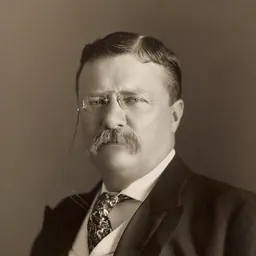
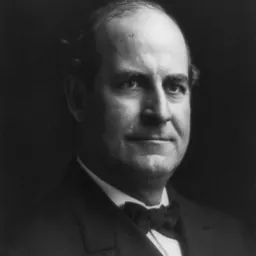


Contemporaries
People whose lives overlapped Henry C. Berghoff's
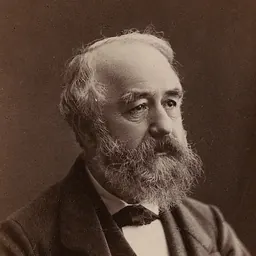




Frequently asked questions
Who was Henry C. Berghoff?
biography of Henry Berghoff
When was Henry C. Berghoff born?
Henry C. Berghoff was born on 6 January 1856 in Dortmund.
When did Henry C. Berghoff die?
Henry C. Berghoff died on 28 June 1925 in Fort Wayne, Indiana.
What nationality was Henry C. Berghoff?
Henry C. Berghoff's recorded nationality: German Americans.
Sources & further reading
· Wikipedia: Henry C. Berghoff
Cite this page
APA: Biography.guide. (2026). Henry C. Berghoff. https://biography.guide/henry-c-berghoff/
MLA: "Henry C. Berghoff." Biography.guide, https://biography.guide/henry-c-berghoff/.
Chicago: "Henry C. Berghoff." Biography.guide. https://biography.guide/henry-c-berghoff/.
Data last updated: 2026-09-25 · Spot an error? Report a correction.
Page generated 2026-09-27 05:11 UTC