
Henry Brown
African Methodist Episcopal minister
About Henry Brown
Lived 1823 – 1906 (aged 83). Henry Brown was a clergyman.
Henry Brown (April 17, 1823 – September 3, 1906) was an American minister of the African Methodist Episcopal Church, abolitionist, and leader of the Underground Railroad.
Early life and education Brown was born into slavery on a plantation in Raleigh, North Carolina on April 17, 1823.
In 1835 at the age of 12, Brown was separated from his family and moved to Ohio. In 1837, he was purchased as an indentured servant for a Quaker family in Indiana, where he was a farm laborer. He received his freedom through manumission at around the age of 20.
Brown was self-taught through reading literature and the Bible.
After moving to Springfield, Illinois in around 1848, Brown became an active leader and "conductor" in the Underground Railroad in Quincy and Springfield, assisting individuals escaping slavery and in pursuit of freedom.
After the American Civil War, Brown was a frequent guest speaker at public events, where he recalled memories of the war and celebrated the end of slavery in the United States. In 1873, he was the keynote speaker at Springfield's commemoration celebration of the Fifteenth Amendment to the United States Constitution.
Association with Abraham Lincoln In around 1848, Brown became acquainted with Abraham Lincoln, the future President of the United States. To supplement his "meager" income as a preacher, Brown worked for Lincoln and his family for over 12 years, serving in various roles as a handyman, shoemaker, and assistant until Lincoln and his family moved to Washington, D.C. in 1861 after he was elected president. Brown remained a friend of the Lincoln family after they moved.
After Lincoln's death in 1865, Brown received a telegram from the Lincoln family requesting that he take part in Lincoln's Springfield funeral procession. Brown was given the task of leading Lincoln's beloved driving horse, "Old Bob," in the procession, whose spot was immediately behind the hearse and in front of the carriage carrying Robert Todd Lincoln.
Personal life In 1847, Brown married Mary A. King in Paris, Illinois. They had five children, including a son, Thomas, who became one of the first African Americans admitted to practice law in Illinois. He is interred at Oak Ridge Cemetery in close proximity to the Lincoln Tomb.
Brown has been portrayed by reenactors of the Lincoln funeral procession.
Don’t just read it —
keep it.
Full-length biographies made to live with: read them, listen on the way to work, watch them tonight.
- E-book
- Audio
- Video
Instant download · yours to keep · every purchase keeps this site free
Important facts
People in Henry Brown's life
Named in this biography and alive at the same time
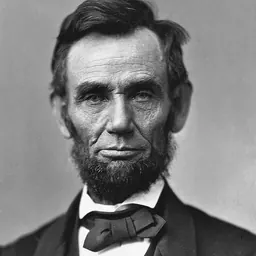
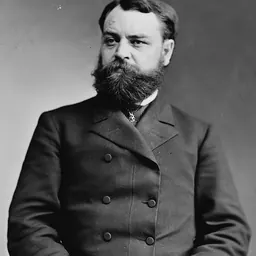

Related people
Same field, nearest in time



Contemporaries
People whose lives overlapped Henry Brown's




Frequently asked questions
Who was Henry Brown?
African Methodist Episcopal minister
When was Henry Brown born?
Henry Brown was born on 17 April 1823.
When did Henry Brown die?
Henry Brown died on 3 September 1906.
What was Henry Brown's occupation?
Henry Brown was a clergyman.
Sources & further reading
· DBpedia: Henry Brown (minister, born 1823)
Cite this page
APA: Biography.guide. (2026). Henry Brown. https://biography.guide/henry-brown-clergyman/
MLA: "Henry Brown." Biography.guide, https://biography.guide/henry-brown-clergyman/.
Chicago: "Henry Brown." Biography.guide. https://biography.guide/henry-brown-clergyman/.
Data last updated: 2026-09-20 · Spot an error? Report a correction.
Page generated 2026-09-27 05:20 UTC