
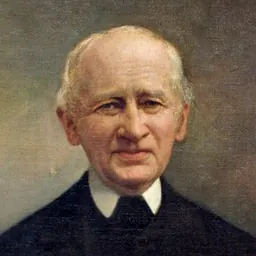
Henry Bell Gilkeson
American politician, lawyer, school administrator, and banker
About Henry Bell Gilkeson
Lived 1850 – 1921 (aged 71). Henry Bell Gilkeson was an American lawyer, politician and teacher.
Henry Bell Gilkeson (June 6, 1850 – September 29, 1921) was an American lawyer, politician, school administrator, and banker in West Virginia.
Gilkeson was born in Moorefield, Virginia (now West Virginia), the eldest child of a dry goods merchant, and was raised in Romney. Following his graduation from Hampden–Sydney College, Gilkeson became a schoolteacher and served as superintendent of the Hampshire County Schools district from 1877 to 1879. Gilkeson later studied law and started a law practice in Romney. Following the death of John Collins Covell in 1887, Gilkeson served as the principal of the West Virginia Schools for the Deaf and Blind until 1888.
Gilkeson served in the West Virginia Legislature as a state senator representing the 12th District in the West Virginia Senate (1890–93) and as a member of the West Virginia House of Delegates (1883–85 and 1909–11). Gilkeson served as the mayor of Romney beginning in 1885, and the first president of the Bank of Romney (1888–1913).
Early life and education Henry Bell Gilkeson was born in Moorefield, Virginia (now West Virginia) on June 6, 1850. He was the eldest child of Robert B. Gilkeson and his wife, Sarah E. Gilkeson, both of Scottish ancestry. His father was a prominent dry goods merchant in Romney, where Henry and his brother, Edward, were raised.
Gilkeson graduated from Hampden–Sydney College in Hampden Sydney, Virginia, in 1872. While a student, he was inducted as a member of the Beta Theta Pi fraternity. Gilkeson completed a special course in engineering at Yale University. He also received further education in Germany. Before 1886, Gilkeson was elected a member of the Romney Literary Society together with his brother.
West Virginia Schools for the Deaf and Blind From 1876 to 1888, Gilkeson served as a member and secretary of the fourth, fifth, and sixth Board of Regents of the West Virginia Schools for the Deaf and Blind, a position that enabled him to become familiar with the school's efforts to educate its deaf and blind students.
In 1887, upon the death of the schools' principal, John Collins Covell, Gilkeson was selected by the Board of Regents to serve as principal of the institution. The Board of Regents had reservations about selecting an immediate successor to Covell and requested that Gilkeson fill the position temporarily until the board could find a permanent replacement. Gilkeson left his lucrative law practice and accepted the position under the condition that he serve as interim principal while the Board of Regents sought a more suitable candidate to build upon Covell's initiatives and reforms. After he had spent a few weeks as acting principal, the Board of Regents reconvened and appointed him to stay on permanently. and 1909–11 legislative sessions. As the leadership of the House of Delegates was being determined at the 1884 Democratic Party State Convention in Wheeling, Gilkeson was a leading contender for a speaker candidacy, but fellow Romney native Robert White was selected as the party's candidate instead.
On August 13, 1890, the Twelfth Senatorial District Democratic Convention nominated Gilkeson to fill the vacant West Virginia State Senate seat of Samuel Lightfoot Flournoy. Gilkeson was elected to fill the seat during the general election of 1890 and served the remainder of Flournoy's senate term until 1893. At the time of his appointment, the Twelfth Senatorial District consisted of Grant, Hampshire, Hardy, Mineral, and Pendleton counties. In 1892, Gilkeson was appointed to the Committees on the Judiciary, Public Buildings and Humane Institutions, Federal Relations, Forfeited, Delinquent, and Unappropriated Lands, and Clerks Office. In addition to serving in the state senate, Gilkeson also held the position of mayor of Romney, West Virginia, beginning in 1885.
Banking and business career Photographed in 1937, the Wirgman Building in Romney housed the Bank of Romney from 1888 to 1965. The structure was razed in 1965 for the construction of the current Bank of Romney building. Gilkeson served on the board of directors as the first president of the Bank of Romney after it was granted its charter by the West Virginia Legislature on September 3, 1888, and was opened later on December 20, 1888. During Gilkeson's tenure as president, the Bank of Romney occupied two rooms on the ground floor of the Wirgman Building, where the city's previous bank, the Bank of the Valley of Virginia, was located prior to the American Civil War. In November 1906, Gilkeson, R. W. Dailey Jr., P. J. Ruckman, and Joshua Soule Zimmerman were incorporators of the Mill Mountain Orchard Company, which operated orchards along the top of Mill Creek Mountain west of Romney.
Later life and death Gilkeson resided in Romney for the majority of his life and was involved in most of the community's organizations as either a leader, officer, or stockholder. Gilkeson's wife, Mary Katherine, predeceased him in February 1910 following the effects of a surgical procedure she had undergone in Cumberland, Maryland.
In his later years, Gilkeson developed allergic rhinitis and experienced a "physical breakdown" following the death of his son, Robert William Gilkeson, on October 2, 1918, during the Meuse-Argonne Offensive of World War I and shortly before the Armistice with Germany.
In 1980, Gilkeson's son-in-law George Sloan Arnold bequeathed the $1.5-million George S. Arnold Trust to Hampden–Sydney College, his shared alma mater with his father-in-law and brother-in-law Robert William Gilkeson. In 1881, Gilkeson and his fellow trustees were instrumental in securing from Amos L. and Allie G. Pugh a house and a large, partially wooded land lot in Capon Bridge for use by the Presbytery as a centrally located manse in Hampshire County. He was also a commissioner of the General Assembly of the Presbyterian Church in the United States representing the Presbytery of Winchester, and attended the assembly's meeting in Jackson, Mississippi, May 15–25, 1902.
Marriage and family Gilkeson was married on November 19, 1884, to Mary Katherine Paxton (1853–1910), daughter of Jordan J. and E. J. Paxton of Iron Gate, Virginia. Their wedding ceremony was officiated by Reverend George W. Finley of Romney at the residence of Mary Ann Lipscomb at 1537 I Street, N.W. in Washington, D.C. Robert William Gilkeson (July 25, 1887 – October 2, 1918)
Don’t just read it —
keep it.
Full-length biographies made to live with: read them, listen on the way to work, watch them tonight.
- E-book
- Audio
- Video
Instant download · yours to keep · every purchase keeps this site free
Important facts
People in Henry Bell Gilkeson's life
Named in this biography and alive at the same time

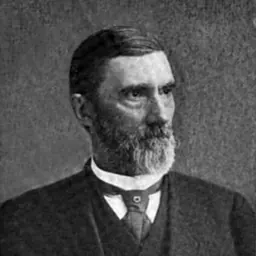


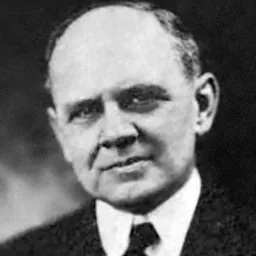

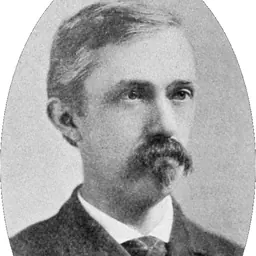

Related people
Same field, nearest in time
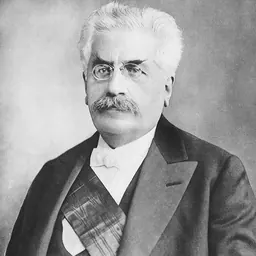


Contemporaries
People whose lives overlapped Henry Bell Gilkeson's



Frequently asked questions
Who was Henry Bell Gilkeson?
American politician, lawyer, school administrator, and banker (1850–1921)
When was Henry Bell Gilkeson born?
Henry Bell Gilkeson was born on 6 June 1850 in Moorefield.
When did Henry Bell Gilkeson die?
Henry Bell Gilkeson died on 29 September 1921 in Mountain Lake Park.
What was Henry Bell Gilkeson's occupation?
Henry Bell Gilkeson was a lawyer, politician and teacher.
What nationality was Henry Bell Gilkeson?
Henry Bell Gilkeson was American.
Sources & further reading
· Wikipedia: Henry Bell Gilkeson
· DBpedia: Henry Bell Gilkeson
Cite this page
APA: Biography.guide. (2026). Henry Bell Gilkeson. https://biography.guide/henry-bell-gilkeson/
MLA: "Henry Bell Gilkeson." Biography.guide, https://biography.guide/henry-bell-gilkeson/.
Chicago: "Henry Bell Gilkeson." Biography.guide. https://biography.guide/henry-bell-gilkeson/.
Data last updated: 2026-09-20 · Spot an error? Report a correction.
Page generated 2026-09-27 05:20 UTC