
Henriëtte van der Mey
Dutch journalist, feminist, suffragist
About Henriëtte van der Mey
Lived 1850 – 1945 (aged 94). Henriëtte van der Mey was a Dutch journalist, women's rights activist, writer, editor and suffragist.
Henriëtte van der Meij (also Henriëtte van der Mey; 21 December 1850 – 26 August 1945) was a leading figure in the first wave feminist movement in the Netherlands. At least one source identifies her as the first woman to work as a full-time journalist in that country.
Early life and education Henriette Rosina Dorothea van der Meij was born, the youngest of her parents' five children, in Harderwijk, at that time a prosperous fishing and trading town on the shores of the Zuiderzee (an inland sea subsequently sealed off, partially "reclaimed", and then renamed as the IJsselmeer). The family adhered to the mainstream Dutch Reformed Church.
20th-century In December 1902 she consulted Henriette Roland Holst: she received (and followed) the advice that it would be wiser not to go public over these matters. Meanwhile, in Amsterdam van der Meij became more closely involved in labour activist groups through the journalist-politician Pieter Lodewijk Tak and Henri Polak. She joined with them to campaign against night working for bakers. She laid the foundations for trades union backed education courses for female workers with the courses she organised in 1897 among members of the "Roosjessnijdsters- en -snijdersvereniging" (jewelry workers' trades union). One of the lecturers, teaching Dutch and Geography, was Carry Pothuis-Smit. For Henriëtte van der Meij these courses were the start of a long-running education partnership with the important "Algemene Nederlandse Diamantbewerkers Bond" (ANDB / Diamond Workers' Trades Union). In 1903, with Pothuis-Smit and support from the "Amsterdamsche Bestuurdersbond" (employers' organisation), van der Meij set about extending the women's education initiative into other industrial sectors including cocoa production, cigarette manufacturing and clothing/hat making. In 1904, organisation of these evening workers' education classes was taken over by the "Bond van Sociaal-Democratische Vrouwenclubs" and van der Meij withdrew into the background.
Although she herself never married, and despite her campaigning for equal workplace rights for women, van der Meij believed that marriage and motherhood were among the highest callings. That lay behind her promotion of women's education. Despite a personal dislike of public speaking she also allowed herself to be persuaded to address the International Women's Congress held in Berlin during 13–18 June 1904. (Her invitation came only after she had submitted the lecture text and asked that arrangements should be made for someone else to read it.) Her talk concerned the condition of women factory workers in the Netherlands and her own involvement in campaigns for legal protection of workers. After she had finished there were calls of "wieter, weiter" ("more, more") from the audience. Her advocacy of separate protection for women faced opposition from others, however, such as M.W.H. Rutgers-Hoitsema, who asserted that it risked restricting women's freedom. Many years later, in 1937, Henriëtte van der Meij would look back on that speech in Berlin as one of the most important performances of her life. That speech also increased her network of feminist contacts internationally. Later, in 1904, the socialist pioneer Clara Zetkin asked her to write an article for the women's magazine Die Gleichheit ("Equality") about the movement for political voting rights in the Netherlands.
After the interruption in the publication of Belang en Recht in 1906, van der Meij became a permanent employee of the "Sociaal Weekblad", for which she had already written earlier when it used to appear under the title "Vrouwenarbeid en Vrouwenorganisatie". From 1907, at the request of Henri Polak, she also took regular (well remunerated) work with a weekly column in the magazine of the ANDB under the heading "Social Affairs". She was one of a very small number of contributors who was not a member of the ANDB union. She wrote on matters such as international labour law, trades unions, domestic industry, women's wage levels and child labour. In 1927, by which time she was nearly eighty years old, it was announced that her regular contributions would end, although she would still write for the publication from time to time. Her contributions continued to appear until June 1934.
Don’t just read it —
keep it.
Full-length biographies made to live with: read them, listen on the way to work, watch them tonight.
- E-book
- Audio
- Video
Instant download · yours to keep · every purchase keeps this site free
Important facts
People in Henriëtte van der Mey's life
Named in this biography and alive at the same time


Related people
Same field, nearest in time
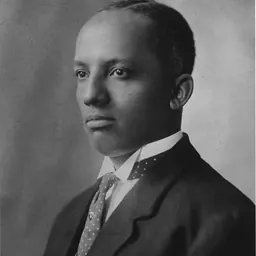

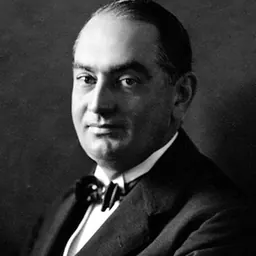
Contemporaries
People whose lives overlapped Henriëtte van der Mey's



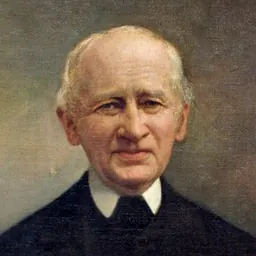
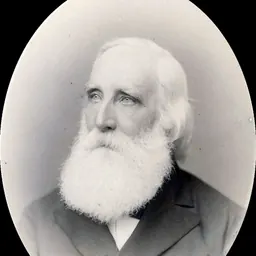
Frequently asked questions
Who was Henriëtte van der Mey?
Dutch journalist, feminist, suffragist (1850–1945)
When was Henriëtte van der Mey born?
Henriëtte van der Mey was born on 21 December 1850 in Harderwijk.
When did Henriëtte van der Mey die?
Henriëtte van der Mey died on 26 August 1945 in Laren.
What was Henriëtte van der Mey's occupation?
Henriëtte van der Mey was a journalist, women's rights activist, writer, editor and suffragist.
What nationality was Henriëtte van der Mey?
Henriëtte van der Mey was Dutch.
Sources & further reading
· Wikipedia: Henriëtte van der Mey
· DBpedia: Henriëtte van der Meij
Cite this page
APA: Biography.guide. (2026). Henriëtte van der Mey. https://biography.guide/henriette-van-der-mey/
MLA: "Henriëtte van der Mey." Biography.guide, https://biography.guide/henriette-van-der-mey/.
Chicago: "Henriëtte van der Mey." Biography.guide. https://biography.guide/henriette-van-der-mey/.
Data last updated: 2026-09-25 · Spot an error? Report a correction.
Page generated 2026-09-27 05:11 UTC