About Henriette Renié
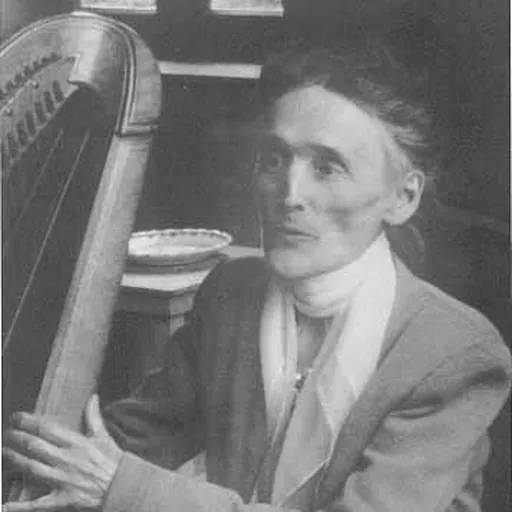
Lived 1875 – 1956 (aged 80). Henriette Renié was a French harpist, composer, music educator, musician and music arranger.
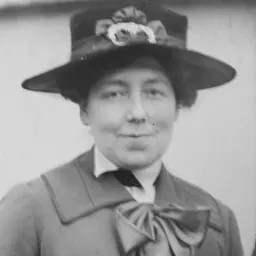
Henriette Renié (; 18 September 1875 – 1 March 1956) was a French harpist and composer who is known for her many original compositions and transcriptions, as well as codifying a method for harp that is still used today. She was a musical prodigy who excelled in harp performance from a young age, advancing through her training rapidly and receiving several prestigious awards in her youth. She was an exceptional instructor and contributed to the success of many students. She gained prominence as a woman in an era where fame was socially unacceptable for women. Her devotion to her religion, her family, her students, and her music has continued to influence and inspire musicians for decades.
Musical education Before the age of five, Henriette played piano with her grandmother. Renié was inspired to learn the harp after she heard her father perform a concert in Nice featuring Alphonse Hasselmans, a prominent harpist. She became inspired by the music and she decided that she wanted to play the harp under the instruction of Hasselmans. She began playing when she was eight, but she was still too short to reach the harp's pedals, so her father invented extended foot pedals to assist her.
In 1885, she became a regular student at the Paris Conservatoire. At ten, she won the second prize in harp performance. The audience unanimously voted to give her first prize, but the director of the Conservatoire, Ambroise Thomas, suggested she not receive it, because that would consider her a professional and she would no longer be able to receive lessons at the Conservatoire. Her performance at the concours is largely regarded as one of the greatest performances in the history of the Conservatoire. At a young age, she began performing for many prominent figures such as Queen Henriette of Belgium, Princess Mathilde, and the Emperor of Brazil.
Career In 1901, Renié completed the Concerto in C minor that she had begun composing while at the Conservatoire. On the advice of Dubois, she showed it to Camille Chevillard, who scheduled it for several concerts. She made strides in the world of women in music during these concerts as she received the first applause directed towards a woman for both her performance and composition. These concerts established Renié, not only as a virtuoso, but as a composer, and helped establish the harp as a solo instrument, inspiring other composers such as Gabriel Pierné, Claude Debussy, and Maurice Ravel to write for harp.
In 1912, Hasselmans and Renié were reconciled; he announced that he was physically unable to teach at the Conservatoire and wanted her to take his position, although no female professors were teaching advanced instrumental classes. However, the Conservatoire, as a governmental institution, required approval from the Ministry of Education for its appointments. During the French Third Republic, there was a movement to separate the church and the state and Renié vocally supported the Catholic Church. Thus, she was not hired and Marcel Tournier was given the position. This included a significant sum of money along with the prize, and had notable musicians on the jury over the years, including Ravel, Grandjany, and Pierné. In 1922, she was recommended for the Legion of Honour, but she was rejected for her religious beliefs. The next year, she gave a concert, featuring Légende, saying it was the last time she would play it, and died a few months later in March, 1956 in Paris, France.
Notable students
Marcel Grandjany Godefroy, Étude de concert (78 rpm Columbia D 6247 matrice L 383) An Evening At Town Hall With Mildred Dilling And Her Harp (1969 vinyl album, Urania USA)
Other records Trio pour harpe, violon et violoncelle – Œuvres pour harpe seule, Xavier de Maistre, harp; Ingolf Turban, violin; Wen-Sinn Yang, cello (1999, "Nouveaux interprètes" Harmonia Mundi HMN911692 / "Musique d'abord") Concertos pour harpe français – Xavier de Maistre, harp; Staatsorchester Rheinische Philharmonie, dir. Lü Shao-Chia (2002, Claves CD 50–2206) Concerto en ut mineur pour harpe et orchestre – Emmanuel Ceysson, Orchestre régional Avignon Provence, dir. Samuel Jean (September 2014, Naïve) Henriette Renié, musique de chambre, by the Trio Nuori (2018, Ligia Digital)
Don’t just read it —
keep it.
Full-length biographies made to live with: read them, listen on the way to work, watch them tonight.
- E-book
- Audio
- Video
Instant download · yours to keep · every purchase keeps this site free
Important facts
People in Henriette Renié's life
Named in this biography and alive at the same time



Related people
Same field, nearest in time


Contemporaries
People whose lives overlapped Henriette Renié's

Frequently asked questions
Who was Henriette Renié?
French musician (1875–1956)
When was Henriette Renié born?
Henriette Renié was born on 18 September 1875 in Paris.
When did Henriette Renié die?
Henriette Renié died on 1 March 1956 in Paris.
What was Henriette Renié's occupation?
Henriette Renié was a harpist, composer, music educator, musician and music arranger.
What nationality was Henriette Renié?
Henriette Renié was French.
Sources & further reading
Cite this page
APA: Biography.guide. (2026). Henriette Renié. https://biography.guide/henriette-renie/
MLA: "Henriette Renié." Biography.guide, https://biography.guide/henriette-renie/.
Chicago: "Henriette Renié." Biography.guide. https://biography.guide/henriette-renie/.
Data last updated: 2026-09-21 · Spot an error? Report a correction.
Portrait: Wikimedia Commons · author & licence
Page generated 2026-09-27 05:01 UTC