
About Henria Leech Williams
Lived 1867 – 1911 (aged 43). Henria Leech Williams was a British suffragist and suffragette.
Henria Leech Williams (6 January 1867 – 2 January 1911) was a British suffragette, who organised local meetings and attended suffrage demonstrations. She died two months after the 'Black Friday' demonstration, probably as a result of an underlying health condition being aggravated by the violent treatment she received.
Early life and family Henria Helen Leech Williams was born in Oswestry, Shropshire, in January 1867, to Henria Helen Williams (née Leech), a governess and school mistress. Her father Henry Williams worked as a Railway Signal Engineer. Williams was one of eight children
The family lived for some time in Nantwich, Cheshire. However, between 1881 and 1886, they moved to Cathcart, Glasgow where her father established the Henry Williams Railway Appliance Works.
In 1905, Williams moved to the village of Corbets Ley, Upminster. She purchased 'The Cottage' (now a grade II listed building), which until four years earlier had been a pub named 'The George'. It was a substantial home with three public rooms, four bedrooms, an attic, cellar, and outlying structures including a glasshouse, a stable, and a new two-bed cottage for her coachman, David Scott. The Cottage drawing room was described as having a notable "carved wood mantel & overmantel".
alt=Black and white image of a woman in a light coloured dress and dark hat lying on her side in the street with her hands over her face, while several men stand in threatening postures above her.
Her rescuer, Frank Whitty, later wrote a letter on his shame at the violent treatment of women instead of arrests by policy, in the WSPU newsletter Votes for Women, as follows:
Undaunted, the following Tuesday, 22 November 1910, Williams joined a delegation to protest to Mr. Asquith, the Prime Minister, outside 10 Downing Street. When they met him en route, it is claimed in some reports that Williams hit Asquith's face saying "You tax women as heavily as men, yet women are not represented in Parliament". Other reports simply refer to a fleeting conversation which was halted "before she could say much" when a policeman whistled for a cab to escort Asquith, "much to the chagrin of the discontented suffragette". Williams allegedly managed to smash a window in the cab before it moved away and was dragged off shouting "Traitor!" and "Coward". Williams died on 2 January 1911, and a coroner's inquest took place at her home the next day. Reverend Hyla Henry Holden was the jury foreman and the verdict was 'death by angina pectoris'. The press concluded that Williams taking part in suffragette militancy could be seen as "conduct not at all congenial to one who suffered from a weak heart". She had written to a brother only days before stating that she was still feeling the effects of that day.
Williams had the suffragette colours draping her coffin, and a wreath saying 'She hath done what she could,' and as it went to the St. Pancras Station midnight train to Glasgow, suffragettes came to pay respects. Soon after, in memory of Williams, on 15 January 1911, a Picea Pungens Glauca tree, was planted in Annie's Arboretum in the garden of the Blathwayt's home Eagle House, Batheaston, by fellow activist Annie Kenney.
The plaque read "In memory of Henriette (sic) Williams, injured while on a deputation to the Prime Minister, November 18, 1910; died January 2, 1911". This many years later inspired a creative writing story about the valour of the imprisonment of suffragettes.
Williams was buried in the family lair in Cathcart Cemetery in Glasgow, with the inscription "Henria Helen Leech. Born 6th January, 1867, died 2nd January, 1911."
It was noted that Williams' funeral had been attended by key leaders from the British suffrage movement, and there was a first-hand description of Williams' funeral by fellow suffragette Ruth Underwood in Votes for Women:
After a short church service, the funeral party drove to Cathcart Cemetery, where a second service was held by the open grave. Underwood wrote:
Don’t just read it —
keep it.
Full-length biographies made to live with: read them, listen on the way to work, watch them tonight.
- E-book
- Audio
- Video
Instant download · yours to keep · every purchase keeps this site free
Important facts
People in Henria Leech Williams's life
Named in this biography and alive at the same time



Related people
Same field, nearest in time

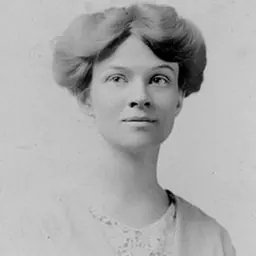

Contemporaries
People whose lives overlapped Henria Leech Williams's



Frequently asked questions
Who was Henria Leech Williams?
Suffragette (1867-1911)
When was Henria Leech Williams born?
Henria Leech Williams was born on 6 January 1867 in Oswestry.
When did Henria Leech Williams die?
Henria Leech Williams died on 2 January 1911 in Upminster.
What was Henria Leech Williams's occupation?
Henria Leech Williams was a suffragist and suffragette.
What nationality was Henria Leech Williams?
Henria Leech Williams was British.
Sources & further reading
· Wikipedia: Henria Leech Williams
· DBpedia: Henria Leech Williams
Cite this page
APA: Biography.guide. (2026). Henria Leech Williams. https://biography.guide/henria-leech-williams/
MLA: "Henria Leech Williams." Biography.guide, https://biography.guide/henria-leech-williams/.
Chicago: "Henria Leech Williams." Biography.guide. https://biography.guide/henria-leech-williams/.
Data last updated: 2026-09-20 · Spot an error? Report a correction.
Page generated 2026-09-27 05:14 UTC