
About Henri Gaudier-Brzeska
Lived 1891 – 1915 (aged 23). Henri Gaudier-Brzeska was a French painter, sculptor, draftsperson and artist.
Henri Gaudier-Brzeska (né Gaudier; 4 October 1891 – 5 June 1915) was a French artist and sculptor who developed a rough-hewn, primitive style of direct carving.
Biography Henri Gaudier was born in Saint-Jean-de-Braye near Orléans. In 1910, he moved to London to become an artist, even though he had no formal training. With him came Sophie Brzeska, a Polish writer 19 years his senior with whom he had met at the Bibliothèque Sainte-Geneviève in Paris, and with whom he began an intense relationship, annexing her surname, even though they never married. During this time his conflicting attitudes towards art are exemplified in what he wrote to Dr. Uhlmayr, with whom he had lived the previous year:
In 1913, he assisted with the illustrations of Haldane MacFall's book The Splendid Wayfaring along with Claud Lovat Fraser and Edward Gordon Craig. In 1913 Henri Gaudier-Brzeska met Alfred Wolmark, the Jewish artist and modelled a bronze bust of the young artist, and the two remained close friends.
Gaudier-Brzeska's drawing style was influenced by the Chinese calligraphy and poetry which he discovered at the "Ezuversity", Ezra Pound's unofficial locus of teaching. Pound's interaction with Ernest Fenollosa's work on the Chinese brought the young sculptor to the galleries of Eastern art, where he studied the ideogram and applied it to his art. Gaudier-Brzeska had the ability to imply, with a few deft strokes, the being of a subject. His drawings also show the influence of Cubism.
At the start of the First World War, Gaudier-Brzeska enlisted with the French army. He appears to have fought with little regard for his own safety, receiving a decoration for bravery before being killed in the trenches at Neuville-St.-Vaast. During his time in the army, he sculpted a figure out of the butt of a rifle taken from a German soldier, "to express a gentler order of feeling". He was killed in action during the war.
Relationship with Sophie Brzeska As a gesture of affection, Gaudier adopted the name of Sophie Brzeska, with whom he had a relationship, the character of which is not certain. They met at the Sainte-Geneviève Library in 1910. He was 18 at the time; she was 38. According to art collector and historian H.S. Ede, "Many were the delicious moments which they passed together, he with his head on her shoulder or she resting on his; the solace of kisses was not allowed, but their spirits were united in a radiant joy. They had their own troubles to talk about, and they discovered that they were both suffering from the same ills."
Legacy
Jim Ede bought a sizeable portion of Gaudier-Brzeska's work from Sophie Brzeska's estate after she died intestate. Her estate included numerous letters sent between Henri and Sophie. Ede used these as the basis for his book Savage Messiah on the life and work of Gaudier-Brzeska, which in turn became the basis of Ken Russell's film of the same name. The conclusion of the film shows many of his sculptures and demonstrates the greatness of the art he produced in his short lifetime.
Despite the fact that he had only four years to develop his art, Gaudier-Brzeska has had a surprisingly strong influence on 20th-century modernist sculpture in England and France. His work is in the permanent collections at the Tate Gallery, Kettle's Yard, the Princeton University Art Museum, the Harvard Art Museums, the University of Michigan Museum of Art, the Museum of Modern Art, the Philadelphia Museum of Art, the Victoria and Albert Museum, the Museum of Fine Arts, Budapest, the Fine Arts Museums of San Francisco, the Metropolitan Museum of Art, the Huntington Library, the Museum of Fine Arts, Boston, the Musée National d'Art Moderne in Paris, and the Musée des Beaux-Arts d'Orléans, among others.
The Nasher Museum of Art at Duke University held an exhibition entitled The Vorticists: Rebel Artists in London and New York, 1914–18 from 30 September 2010 through 2 January 2011, which included his work.
The relationship between Henri Gaudier and Sophie Brzeska was fictionalised in the stage play The Laughing Woman.
Gallery
Don’t just read it —
keep it.
Full-length biographies made to live with: read them, listen on the way to work, watch them tonight.
- E-book
- Audio
- Video
Instant download · yours to keep · every purchase keeps this site free
Important facts
People in Henri Gaudier-Brzeska's life
Named in this biography and alive at the same time
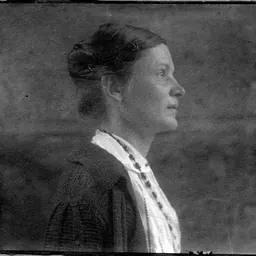
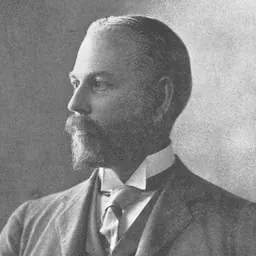


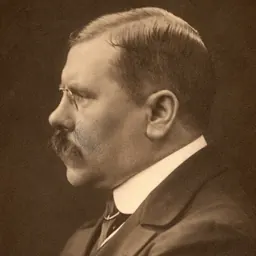

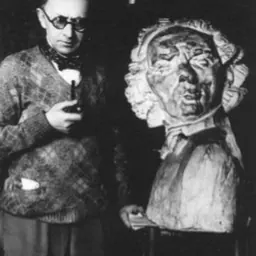
Related people
Same field, nearest in time



Contemporaries
People whose lives overlapped Henri Gaudier-Brzeska's


Frequently asked questions
Who was Henri Gaudier-Brzeska?
French painter and sculptor (1891-1915)
When was Henri Gaudier-Brzeska born?
Henri Gaudier-Brzeska was born on 4 October 1891 in Saint-Jean-de-Braye.
When did Henri Gaudier-Brzeska die?
Henri Gaudier-Brzeska died on 5 June 1915 in Neuville-Saint-Vaast.
What was Henri Gaudier-Brzeska's occupation?
Henri Gaudier-Brzeska was a painter, sculptor, draftsperson and artist.
What nationality was Henri Gaudier-Brzeska?
Henri Gaudier-Brzeska was French.
Sources & further reading
· Wikipedia: Henri Gaudier-Brzeska
· DBpedia: Henri Gaudier-Brzeska
Cite this page
APA: Biography.guide. (2026). Henri Gaudier-Brzeska. https://biography.guide/henri-gaudier-brzeska/
MLA: "Henri Gaudier-Brzeska." Biography.guide, https://biography.guide/henri-gaudier-brzeska/.
Chicago: "Henri Gaudier-Brzeska." Biography.guide. https://biography.guide/henri-gaudier-brzeska/.
Data last updated: 2026-09-20 · Spot an error? Report a correction.
Page generated 2026-09-27 05:21 UTC