
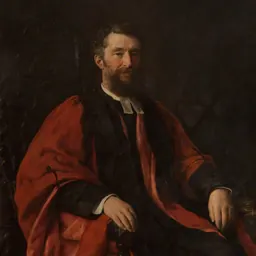
Henri Brenier
French explorer and colonial government administrator
About Henri Brenier
Lived 1867 – 1962 (aged 94). Henri Brenier was a French journalist, economist and explorer.
Henri-Antoine-Marie-Joseph-Anatole Brenier was a colonial-born French journalist, who became an explorer and geographer, and later became a government official for the French colonial empire.
He was also an economist, a merchant, and a book publisher who led several studies on the economy of French Indochina, and analyzed its economic index against the surrounding Asian colonies and independent states.
Brenier is perhaps most well known for his leadership of the Lyon Expedition (also later known as the Brenier Mission), an expedition into China for the Lyon Chamber of Commerce that covered over 20,000 kilometers and took several years to accomplish. At the beginning of World War I, Brenier was made director general of the Marseille Chamber of Commerce, where he hosted "events" and "social occasions" for many of Europe's top arms dealers.
Concurrently to that post, he was also assigned to the Government of France. Infamously, during the war, he was co-author of the Brenier-Artaud Memorandum, which urged the creation of a French colony in the Middle East called "Greater Syria." At the end of the war, and the founding of the League of Nations, Brenier's experience in the opium trade encouraged his placement as an Assessor to the Opium Advisory Committee (OAC), the League's effort to create a system of international laws and control in narcotics. He sat on the OAC in Geneva for nearly a full decade, having attended its very first meeting.
Early life and career as journalist Brenier was born into the height of the French colonial empire in Asia, when France still possessed a territory in the city of Shanghai called the French Concession of Shanghai, a district which was entirely colonized and Europeanized by the European empire. The French Concession was only one of many Foreign concessions in China. Brenier grew up around the shipping industry: his father, Georges-Albert Brenier, was the director of the Shanghai branch of Messageries Maritimes, the French merchant shipping company. After the team was selected and fully funded, Brenier left his position at the paper and set off, now assigned as the Secretary General for the expedition.
However, shortly after the team set off, the original mission leader, Consul Émile Rocher, got sick. Brenier took over the mission. He covered over 20,000 kilometers with his team into the interior and across China.
Brenier's findings stressed that there was a relatively small amount of trade occurring at the time between Yunnan and Tonkin. He also mapped the importance of the Chinese mines of Mongzi.
Career in the colonial government (1898–1914) In 1898, Brenier joined the General Government of Indochina, briefly serving as the deputy director for the colony's Directorate of Agriculture, Forestry, and Trade. Later in 1898, he was made the Chief of the Department of Economics. In this posting, Brenier developed an interest in the opium trade, both academically and professionally. His position in the colonial government was intricately linked to the Opium Regie, which was a government monopoly in the colony that was mandated to manufacture and sell "legal" opium.
The French historian Thomas Claire writes:"Henri Brenier, head of the Economic Affairs Department at the General Government, played a central role in the development of a systematic statistical practice in Indochina. His Essai d'atlas statistique de l'Indochine française, published in 1914, offered a numerical overview of Indochina, embellished with numerous infographics, taking into account, among other things, the geographical, demographic, financial, agricultural, commercial and industrial dimensions... Henri Brenier was also the specialist assigned to Indochina on the issue of opium, and appointed negotiator at the international conferences (Shanghai and The Hague)" Marseille at this time was France's primary port on the Mediterranean Sea. Everything for the war effort went through Marseille, which made the port and its surrounding waters a primary hunting ground for early German submarines. It was around this time that these merchants in Marseille acquired the moniker as merchants of death. According to Joseph Butler, Brenier hosted several "dinners" and "social occasions" at the Chamber, where arms dealers attended. The economic regions of France are the predecessors of the Regions of France, which were established in 1989.
The question of Syria In early 1916, Brenier joined with the President of the Marseille Chamber of Commerce, Adrien Artaud, in writing the Brenier-Artaud Memorandum, in which they argued for the creation of a French colony in the Middle East.
League of Nations At the end of the war, and the founding of the League of Nations, Brenier's experience in the opium trade encouraged his placement as an Assessor to the Opium Advisory Committee (OAC), the League's effort to create a system of international laws and control in narcotics. He sat on the OAC in Geneva for nearly a full decade, having attended its very first meeting.
World War II During World War II, some Frenchmen suggested selling colonial Indochina to the Empire of Japan to avoid extensive losses. Brenier, along with Auguste Isaac, the former President of the Lyon Chamber of Commerce, was firmly opposed to this idea.
In 1942, when the Japanese approached the city of Singapore, Brenier wrote in the Journal des débats: "It is truly not only from the economic, but also from the cultural and political viewpoints, a crossroads in world history."
Written works Sources:
Nonfiction and survey work
“Du Tonkin considéré comme voie de pénétration vers le Sze-Tchouan”, Bulletin de la Société de géographie commerciale de Paris (BSGCP), 1896. “Le Tonkin, principales cultures, richesses du sol, industries, commerce”, BSGCP, 1896. “La Mission Brenier”, Dépêche coloniale, Sept. 1897. La Mission lyonnaise d’exploration commerciale de la Chine, Lyon, A. Rey et Cie, 1898, 531 p. “Le bananier sauvage en Indochine, son utilisation possible comme textile”, Bulletin économique de l’Indochine (BECI), vol IV, 1901. Note sur le développement commercial de l’Indochine de 1897 a 1901 comparé avec la période quinquennale de 1892 à 1895, Hanoi, 1902. Le marché du sucre en Extreme-Orient, Hanoi, Schneider, 1903. “Répartition saisonnière des récoltes et pluviometrie en Indochine”, BECI, Nov-Dec 1908. [with Henri Russier, head of the Education Department in Cambodia], Géographie élémentaire de l’Indochine [with maps and diagrams by Lt. H. Bancel], Hanoi-Haiphong, 1909. Un livre anglais sur le Yun-nan [extract from BEFEO Jan. 1910], Hanoi-Haïphong, Imprimerie d’Extreme-Orient, in‑8, 1910. [with H. Russier] L’Indochine française, avec 56 gravures dans le texte et 4 cartes hors texte en couleur, Paris, Librairie Armand Colin, 1911. [map 1/2500.000 in] A.C. Baudenne, “A travers le Laos (Guide à l’usage des voyageurs)”, BECI, 1911. Essai d’atlas statistique de l’Indochine française, Hanoi-Haiphong, Gouvernement Général de l’Indochine, 1914. “Où en est la question de l’opium?”, BECI, n 106, 1914. Les ressources de l’Indochine et leur mise en valeur après la guerre, 1917. French Points of View, being letters to the British Press and others, Paris, 1921; facsimile Gyan Books, 2017, 67p. Le traité de Versailles et le problème des réparations: le point de vue français, 1921. Congrès de l’organisation coloniale: Présentation, 1922. Essai d’atlas statistique de la IXe Région économique: Basses-Alpes, Hautes-Alpes, Alpes-Maritimes, Bouches du-Rhône, Var, Vaucluse, Gard, Corse, 1927.
Poetry
Laques et cloisonnés: Sonnets, Paris, Éditions de la Revue des Poètes, 1931
Don’t just read it —
keep it.
Full-length biographies made to live with: read them, listen on the way to work, watch them tonight.
- E-book
- Audio
- Video
Instant download · yours to keep · every purchase keeps this site free
Important facts
People in Henri Brenier's life
Named in this biography and alive at the same time


Related people
Same field, nearest in time
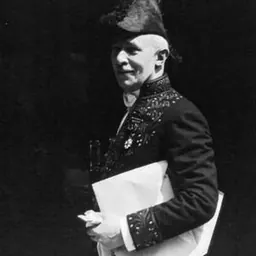
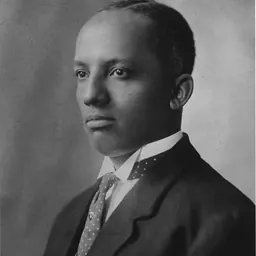
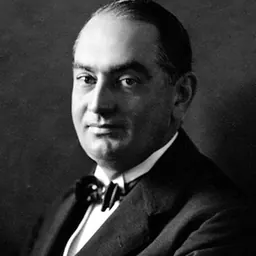

Contemporaries
People whose lives overlapped Henri Brenier's
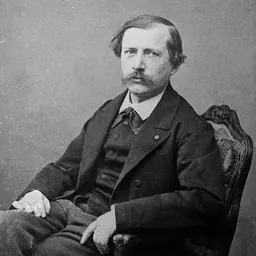


Frequently asked questions
Who was Henri Brenier?
French explorer and colonial government administrator (1867–1962)
When was Henri Brenier born?
Henri Brenier was born on 16 August 1867 in Shanghai.
When did Henri Brenier die?
Henri Brenier died on 18 February 1962 in Marseille.
What was Henri Brenier's occupation?
Henri Brenier was a journalist, economist and explorer.
What nationality was Henri Brenier?
Henri Brenier was French.
Sources & further reading
Cite this page
APA: Biography.guide. (2026). Henri Brenier. https://biography.guide/henri-brenier/
MLA: "Henri Brenier." Biography.guide, https://biography.guide/henri-brenier/.
Chicago: "Henri Brenier." Biography.guide. https://biography.guide/henri-brenier/.
Data last updated: 2026-09-20 · Spot an error? Report a correction.
Page generated 2026-09-27 05:31 UTC