
About Henia Pekelman
Lived 1903 – 1940 (aged 36–37). Henia Pekelman was a writer, autobiographer, manual labourer and zionist.
Henya M. Pekelman (; 1903 – August 20, 1940) was a Zionist pioneer and manual laborer of the Yishuv who immigrated to Mandatory Palestine in 1922. Her self-published book The Life of a Woman Worker in the Homeland is recognized as one of the most authentic sources on the life of women laborers in Palestine in the 1920s. She died by suicide in 1940.
Biography Pekelman was born in Mărculești in Bessarabia Governorate, Russian Empire (in present-day Moldova), to a religious Jewish family of merchants that placed great emphasis on education and diligence. After completing her primary education, she joined the effort of providing for the family. In 1922, after her father's death, she immigrated to Mandatory Palestine with her mother.
In Palestine, Pekelman worked in various manual labor jobs, including concrete casting and flooring. It was Ada Maimon, a fellow Mărculești native ten years her senior, who took her under her wing and suggested that she take on flooring as a profession.
In 1925, Pekelman was raped by Yeruham Mirkin, her acquaintance and neighbor. According to her autobiography, Mirkin blamed Pekelman for speaking ill of him to his boss. The rape resulted in the birth of her first daughter, Tikva, who died one month later, allegedly from poisoning.
Pekelman married Moshe Ba'al Taxa in 1927 and gave to her second daughter, Tzipora, the following year.
In 1935 she self-published her autobiography, The Life of a Woman Laborer in The Homeland, in which she described her childhood, adolescence, and first three years in Mandatory Palestine. At the top of her book she wrote:
On January 19, 1940, Pekelman threw herself to her death from the third-floor balcony of the Esther Cinema on Dizengoff Square. The re-publication was part of the "Critical Essays" series of the Heksherim Research Institute for Jewish & Israeli Literature & Culture, inin collaboration with the Ben-Gurion University. Following a reference to Pekelman's book in the book A Woman in Eretz-Yisra'el by Deborah S. Bernstein (Tel Aviv, Hakibbutz Hameuchad, 1987), Hess had found a copy of the book at the National Library of Israel, and was probably the first to request this copy.
The book's importance as a historical source In Henya Pekelman's stories, the pattern of her voice being silenced can be taken as a symbol for the general frequent silencing of women's voices in those times. Her book is regarded as one of the most authentic sources on laborer's life in Mandatory Palestine in the 1920s. its uniqueness lies in the fact that in it history speaks to us through the mouth of an ordinary person, contrary to most narratives covering political leaders and elite groups.
Another importance of the book is found in the social and political contexts in which it was written: Although at the beginning women were considered equal to men in various sectors of the economy, by the time the British mandate had begun, there was an expectation that they return to their traditional roles: childbirth, childcare, education and home care.
In her insistence on continuing to perform duties outside the home, such as fruit picking, dairy farming or tobacco field work, Pekelman sounds the voices of women who were excluded by a society that was essentially run by men.
Her daughter and granddaughter Tzipora, Pekelman's second daughter, moved to the Tel Aviv "Pioneers' House" and later on to Kibbutz Yagur. She married Shalom Bornstein and in 1945 gave birth to Pekelman's granddaughter, Ein-Yah Tamir, and divorced Bornstein. She then moved to Kibbutz Manara and married David Tamir.
Tzipora is reported to have hidden Pekelman's book from her daughter, an act that combined with the general disregard of the book by the press at the time.
Don’t just read it —
keep it.
Full-length biographies made to live with: read them, listen on the way to work, watch them tonight.
- E-book
- Audio
- Video
Instant download · yours to keep · every purchase keeps this site free
Important facts
People in Henia Pekelman's life
Named in this biography and alive at the same time
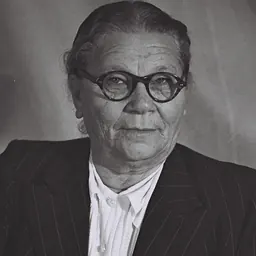
Related people
Same field, nearest in time
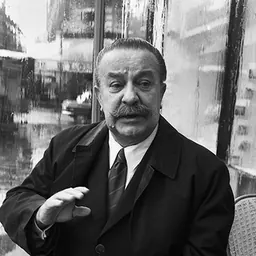




Contemporaries
People whose lives overlapped Henia Pekelman's
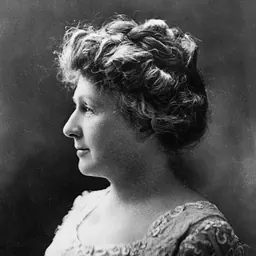
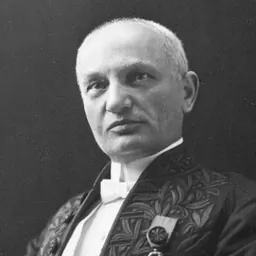
Frequently asked questions
Who was Henia Pekelman?
Zionist pioneer and manual labourer
When was Henia Pekelman born?
Henia Pekelman was born in 1903 in Mărculești.
When did Henia Pekelman die?
Henia Pekelman died on 19 January 1940 in Tel Aviv.
What was Henia Pekelman's occupation?
Henia Pekelman was a writer, autobiographer, manual labourer and zionist.
Sources & further reading
Cite this page
APA: Biography.guide. (2026). Henia Pekelman. https://biography.guide/henia-pekelman/
MLA: "Henia Pekelman." Biography.guide, https://biography.guide/henia-pekelman/.
Chicago: "Henia Pekelman." Biography.guide. https://biography.guide/henia-pekelman/.
Data last updated: 2026-09-22 · Spot an error? Report a correction.
Page generated 2026-09-27 05:33 UTC