
About Helmut Hentrich
Lived 1905 – 2001 (aged 95). Helmut Hentrich was a German architect.
Helmut Hentrich (17 June 1905 – 7 February 2001) was a German architect who became particularly known for his striking high-rise buildings in the 1960s and 1970s. The architectural firm he founded, Hentrich, Petschnigg und Partner (HPP), still exists under the name .
Life Education Born in Krefeld, Hentrich was the son of the civil engineer Hubert Hentrich. Already during his school years, he was interested in art, architecture and completed internships in the architectural offices of and Franz Brantzky.
After graduating from high school, Hentrich initially gave in to his father's urging and began studying law at the Albert Ludwigs University of Freiburg in Breisgau in 1922, but switched to the architecture faculty of the Technische Hochschule in Vienna (now Vienna University of Technology) in 1924 and a year later to the Technische Hochschule Berlin (now Technische Universität Berlin) to study under Hans Poelzig, Heinrich Tessenow and Hermann Jansen.
In Berlin, Hentrich became acquainted with modern architecture, which was on the rise, and worked in the architectural offices of Hugo Häring and Ludwig Mies van der Rohe during semester breaks, but it was above all Hans Poelzig who shaped his understanding of architecture. During his studies in Berlin, he met Albert Speer, and Rudolf Wolters, who also studied there. Hentrich passed his diploma main examination with distinction in 1928.
1929 until 1945 After graduating, Hentrich began a Referendariat in 1929. (as Regierungsbauführer) in order to qualify for civil service. He worked as a construction supervisor on the reconstruction of the Andreaskirche in Düsseldorf's old town. Also in 1929, he received the for the design of a College for the Art of Dance, with which his father had also been awarded in 1892, and earned his doctorate at the Vienna University of Technology with a thesis on modern dance theatre based on this design.
In the early 1930s he worked in Paris in the architectural practice of Ernő Goldfinger and in New York City in the architectural practice of Norman Bel Geddes and travelled extensively in the US, China, India and other countries.
Returning to Germany, Hentrich passed the second state examination to become a government architect (assessor) in 1933. He was to take up a position in the state building construction office Gussew (East Prussia), but chose the path of self-employment and opened an architectural office in Düsseldorf in the same year. After initially working with , Hentrich founded an office partnership with him in 1935 (Hentrich & Heuser) and was able to establish himself in Düsseldorf with competition successes and residential buildings.
Both won a competition for the Orsoy Deichtor in 1937 and increasingly took part in official competitions of the Organisation Todt or the Hitler Youth. The year before, Hentrich had already been accepted as a member of the Academy for Urban, Reich and Regional Planning. In 1938, he was represented at the Second German Architecture Exhibition of the National Socialists in the Munich Haus der Kunst with the Reichsautobahn-Rasthof Rhynern.
From 1938 onwards, Hentrich was a member of the working staff of (GBI) for the Reich capital Berlin (among others façade design of the Reich Insurance Office) and was a member of the "Arbeitsstab Wiederaufbauplanung" ("Reconstruction Staff Speer") created on 11 October 1943 for the cities destroyed in the war (among other things. reconstruction planning for his native town of Krefeld, or urban planning designs for the redesign of Hamburg by ). In 1941-1945, Hentrich was a member of the National Socialist German Workers' Party. In the final phase of World War II, Hentrich was included by Hitler in the Gottbegnadeten list of the most important architects, which saved him from wartime service.
In addition, Hentrich was chairman of the board of the Malkasten in Düsseldorf 1945-1955.
In 1960, Hentrich was appointed professor by the state government of North Rhine-Westphalia.
In 1972, the office partnership was transformed into a limited partnership. Two years later, Hentrich and Petschnigg transferred the management of the office to their two partners Hans Joachim Stutz and Rüdiger Thoma. They themselves retired to the office's advisory board, but continued to participate in the various projects.
Hentrich owned an important collection of antique and Islamic glass art, as well as Art Nouveau and Art Nouveau objects; this collection was donated to the Museum Kunstpalast as Glasmuseum Hentrich in 1963.
Hentrich died in Düsseeldorf at the age of 95.
Realisations 1934–1935: Einfamilienhaus für Schmitz-Egelhoff in Krefeld. 1935–1936: in Düsseldorf, Scheibenstraße / Inselstraße 34 (with Hans Heuser) 1937–1938: Hitlerjugend-Heim in Rheinhausen, Werthauser Straße (with Hans Heuser). 1937: Musterhaus zur Reichsausstellung Schaffendes Volk for sculptor Hellwig Reiss-Schmidt (b. 1904) in der Künstlersiedlung Schlageterstadt (today Golzheimer settlement), Franz-Jürgens-Straße 10 1937–1938: Deichtor in Orsoy (with Hans Heuser). 1951–1952: in Düsseldorf (with Hans Heuser) 1952–1953: in Pempelfort, Jägerhofstraße 29 (with Hans Heuser) 1952–1953: in Düsseldorf-Pempelfort, Kaiserstraße 42 1952: Bankhaus in Düsseldorf (with Hans Heuser) 1953–1954: Christuskirche in Düren 1954: Hentrichhaus, Malkasten, Düsseldorf-Pempelfort 1954–1957: Friedrich-Engelhorn-Hochhaus in Ludwigshafen 1955–1956: evangelische Petruskirche in Düsseldorf-Unterrath 1956: Aula der Rheinischen Friedrich-Wilhelms-Universität Bonn 1957–1960: Bürohochhaus für die Phoenix-Rheinrohr AG (genannt Dreischeibenhaus or Thyssen-Haus) in Düsseldorf 1960–1961: ehemaliges Kasino R 55 (Werkskantine) des Bayer-Werks Krefeld-Uerdingen (with Hubert Petschnigg), unter Denkmalschutz 2020 auf Antrag des Eigentümers abgerissen 1960–1963: Bayer-Hochhaus in Leverkusen. 1958–1960: BAT-Hochhaus in Hamburg 1961–1964: Unilever-Haus in Hamburg (today Emporio-Hochhaus) 1961–1964: KHD-Hochhaus (now trade fair tower) in Cologne 1961–1967: Conversion of the for the in Düsseldorf 1962–1970: Construction of the Westdeutscher Rundfunk in Cologne before 1963: Kaufhaus Merkur in Neuss. 1964–1965: Protestant Dietrich-Bonhoeffer-Kirche in Düsseldorf-Garath 1966: Administration building of the (torn down). 1967–1968: Administration building, Rheinallee 9, Düsseldorf-Heerdt ((staff polygon, protected)) 1967–1970: Verwaltungszentrum für Procter & Gamble in Schwalbach am Taunus 1968–1970: Hauptverwaltung für Rank Xerox in Düsseldorf 1963–1966: an der Esplanade in Hamburg 1965–1970: Standard Bank Center in Johannesburg 1970–1974: Hauptverwaltung des TÜV Rheinland e. V. in Köln-Poll 1971–1974: Diamond Sorting Building in Kimberley, Northern Cape 1972–1975: in Düsseldorf, Königsallee / Trinkausstraße 1971–1974: RWI-Haus in Düsseldorf 1973–1974: Haus Hentrich in Düsseldorf 1973–1976: Head office of the Rheinbraun in Cologne 1973–1978 and 2005: Tonhalle Düsseldorf before 1976: Conversion of a mill building in . 1977–1981: Marriott Riyadh Hotel in Saudi Arabia 1977–1980: Ministry of the Interior of the State of North Rhine-Westphalia in Düsseldorf 1978: Erweiterungsbau für das Fernmeldeamt Düsseldorf 1, Königsallee. 1979–1981: Sheraton Hotel in Essen 1980–1983: Forum Hotel in Mecca, Saudi Arabia 1980–1983: Handelsblatthaus in Düsseldorf 1981: . 1984:Post office and telecom exchange in . 1987: Zweit-Auslands-Telephone exchange in Frankfurt-Nied. 1987–1988: Conversion of the in Cologne 1988–1993: Trianon-Hochhaus of the BfG in Frankfurt 1990–1992: 1993–1996: Haus des Buches in Leipzig 1993–1996: Restoration and conversion of the "Tobacco Mosque" (former Yenidze cigarette factory) in Dresden 1994–1998: M. DuMont Schauberg-Haus in Cologne 1994–1995: Eurotower in Frankfurt 1995: Postamt Bielefeld 1. 1997–2001: Arena AufSchalke in Gelsenkirchen 1997–2000: Refurbishment and conversion of the Detlev-Rohwedder-Haus of the Federal Ministry of Finance in Berlin 2010: Facade conversion on "maxCologne" (former Lufthansa high-rise) in Cologne
Don’t just read it —
keep it.
Full-length biographies made to live with: read them, listen on the way to work, watch them tonight.
- E-book
- Audio
- Video
Instant download · yours to keep · every purchase keeps this site free
Important facts
People in Helmut Hentrich's life
Named in this biography and alive at the same time
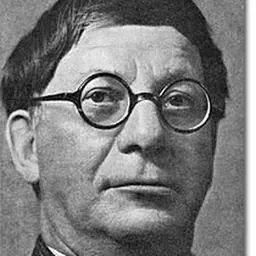
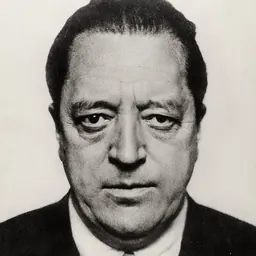
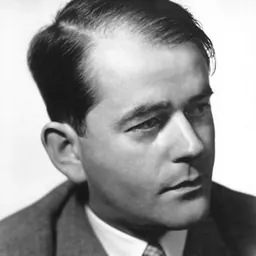


Related people
Same field, nearest in time
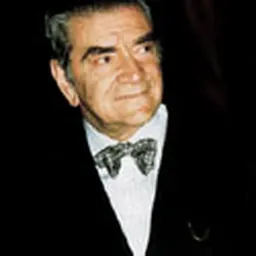
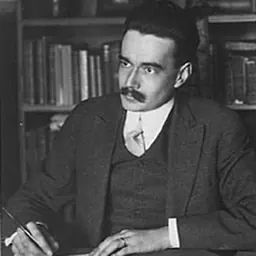
Contemporaries
People whose lives overlapped Helmut Hentrich's




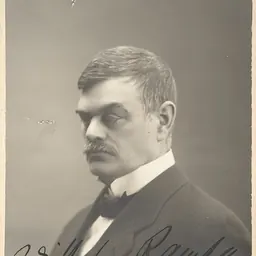

Frequently asked questions
Who was Helmut Hentrich?
German architect (1905–2001)
When was Helmut Hentrich born?
Helmut Hentrich was born on 17 June 1905 in Krefeld.
When did Helmut Hentrich die?
Helmut Hentrich died on 7 February 2001 in Düsseldorf.
What was Helmut Hentrich's occupation?
Helmut Hentrich was an architect.
What nationality was Helmut Hentrich?
Helmut Hentrich was German.
Sources & further reading
Cite this page
APA: Biography.guide. (2026). Helmut Hentrich. https://biography.guide/helmut-hentrich/
MLA: "Helmut Hentrich." Biography.guide, https://biography.guide/helmut-hentrich/.
Chicago: "Helmut Hentrich." Biography.guide. https://biography.guide/helmut-hentrich/.
Data last updated: 2026-09-20 · Spot an error? Report a correction.
Page generated 2026-09-27 05:14 UTC