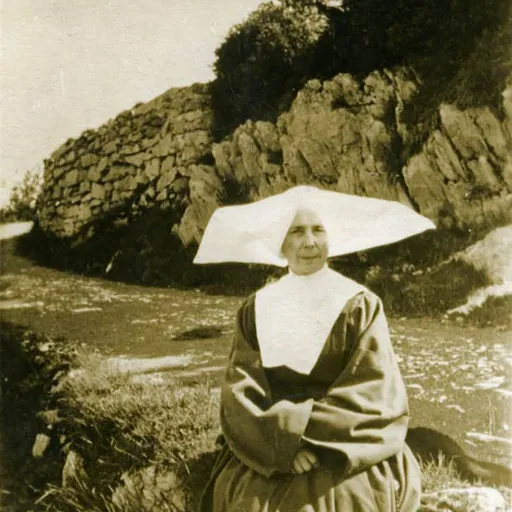
Hélène Studler
Nun and French Resistance member
About Hélène Studler
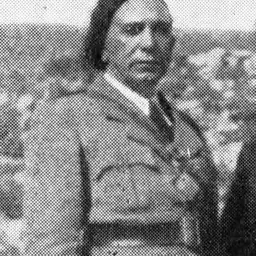
Lived 1891 – 1944 (aged 52–53). Hélène Studler was a French french resistance fighter, religious, resistance fighter and nun.
Hélène Studler, known as Sister Hélène, born Marie Josèphine Studler (8 March 1891 – 3 December 1944) was a religious sister in the French Resistance who helped over two thousand prisoner-of-war escapees and fugitives evade the German authorities during the Second World War, among them François Mitterrand, Boris Holban, and General Henri Giraud.
Born into an Alsatian family, Sister Hélène joined the Daughters of Charity of Saint Vincent de Paul in 1912. She was expelled from Metz, in Alsace–Lorraine, by the German authorities in 1914 and returned to the city in 1918, whereafter she worked at the Saint-Nicholas Hospice . During the Phoney War in 1939–1940, she retrieved personal items and liturgical objects from the evacuated French borderlands and visited soldiers confined to their bunkers.
Following the fall of France, Sister Hélène initially transported fugitives in the back of her Red Cross truck across the border between Moselle, which had been de facto annexed to Germany, and the occupied zone. From the end of summer 1940 to February 1942, she operated an escape network that took escapees across the border and directed them towards the zone libre, continuing her work despite being arrested in February 1941 and released in July for poor health.
In March 1942, she was forced to use her own escape network to reach Lyon, in the zone libre, where she recruited the guide that aided Giraud's escape from Königstein Fortress in April. Following the German and Italian invasion of the zone libre in November, Sister Hélène went into hiding in Clermont-Ferrand, where she died in 1944. She was awarded the Legion of Honour and by Giraud on her deathbed. A statue was erected in her honour outside the Saint Nicholas Hospice in 1947, entitled (Our Lady of the Prisoners).
Biography Marie Josèphine Studler was born on 8 March 1891 in Amiens to an Alsatian family. She recruited smugglers to help fugitives cross the border and, to cope with the growing number under her protection, she entrusted some to friends, from the end of summer 1940 building a network that she managed from her office at the hospice. The network had to be reconstituted several times in the face of arrests and consisted of individuals from across French society: young girls in the Red Cross, the bourgeoisie, labourers, shopkeepers, white-collar workers, priests, and religious figures. Alongside escapees from the POW camps, the network also helped Wehrmacht draft dodgers from Lorraine and British airmen who had been shot down in the region.
In February 1941, Sister Hélène's name was found on an escaped prisoner of war and she was arrested, alongside her colleague Sister Cécile Thil. She was interrogated 18 times in three days and demanded a doctor. The Frenchman declared her ill with a contagious disease and had her transferred to the Bon-Secours Hospital in Metz. She was sentenced to a year in prison, but, shortly before she was to be sent to Saarbrücken, a German doctor found her too weak and she was released to a convalescence home on 7 July. Sister Hélène returned to her office at the Saint-Nicholas Hospice soon after and resumed her activities in greater secrecy. On 15 December, she was contacted by a nurse that had sheltered then-Lieutenant François Mitterrand and taken him to Metz. That evening, Mitterrand rendezvoused with three other escapees and a member of Sister Hélène's network, who took them to meet a smuggler at Metz train station. The escapees and the smuggler boarded a train towards the border, bailing during a slowdown for roadworks, and crossed the border to Nancy where another member of Sister Hélène's network, a Brother of the Christian Schools, provided Mitterrand with false identity papers and directions to the zone libre.
Escape to the zone libre When the Gestapo learned of Sister Hélène's return, they sent three police officers to the hospice to arrest her. Sister Hélène answered the door, but the Gestapo officers didn't recognise her and she able to leave in civilian clothes after informing the Superior of the hospice, who subsequently received them and told the officers that she couldn't be found. On 6 March 1942, Sister Hélène turned to her own escape network and, trading her cornette and habit for civilian clothes and a handbag, she reached Lyon in the zone libre with the help of a Sudeten Czech customs officer. Upon arriving in Lyon, she was assigned to Saint-Joseph Hospital and frequented the centre for refugees from Lorraine. She continued to smuggle prisoners across the border, using more ad hoc methods due to increased police surveillance.
As of 1 April, the conspirators planning Giraud's escape from Königstein Fortress were yet to secure a guide that was to bring him false papers and civilian clothes and accompany him on his journey, with the date of the escape set for 17 April. By this time, Sister Hélène's reputation had spread and she was approached by Giraud's wife, Céline, and head of the Lyon Deuxième Bureau General François de Linarès. She examined the list of recent arrivals at the refugee centre and recognised the name of Roger Guerlach, a Reichswehr draft dodger from Moselle who had worked at the Saint-Nicolas Hospice. Sister Hélène found where Guerlach was living in Lyon and he was recruited by de Linarès to serve as the guide, with Giraud successfully reaching Lyon on 25 April. Through her friend Léon de Rosen, who was a delegate of the American Red Cross, she informed the Americans of Giraud's availability.
Following the German and Italian invasion of the zone libre in November and with her health deteriorating, Sister Hélène went into hiding at the Hôtel-Dieu in Clermont-Ferrand . Her nephew was arrested by the Gestapo in January 1943 and held as a hostage at Cherche-Midi prison, before being transferred to Saarbrucken in March. Unable to find her, the German authorities arrested the Superioress General of the Daughters of Charity Mother Laura Decq on 11 February. Sister Hélène was persuaded not to turn herself in and Mother Decq was released on 29 March, while her nephew was released in August. Her citation to the order of the French and Allied armies read: She was one of the essential elements of the Resistance and one of the pillars of the French cause in Lorraine. At the risk of her life, she enabled more than 2,000 French soldiers and many Lorrainers wanted by the police to escape from German prisons. Sister Hélène died of cancer on 3 December in Clermont-Ferrand, aged 53.
Commemoration
After the war, Giraud organised the return of Sister Hélène's remains from Clermont-Ferrand to Belletanche convent cemetery in Metz on 17 June 1946 and, that summer, more than 100,000 people came to pay their respects. A statue of (Our Lady of the Prisoners) by a POW aided by Sister Hélène's network was erected in her honour outside the Saint Nicholas Hospice in 1947 and a small square in Metz was named after her in 1950.
Boris Holban, who escaped captivity due to Sister Hélène's network, dedicated a book to her in 1999, entitled Hélène Studer, la passeuse de liberté (Hélène Studer, The Smuggler of Freedom). In 2017, the Spanish film Red de libertad (The Network of Freedom) was released, based on her story.
Legacy The Saint Nicholas Hospice in Metz. On the left is the Notre-Dame des Prisonniers statue. The number of fugitives from the German authorities that used Sister Hélène's escape network has been estimated at over two thousand. The following is a list of notable escapees that were assisted by the network: François Mitterrand Boris Holban Marius Maziers
Léon de Rosen
Decorations
Don’t just read it —
keep it.
Full-length biographies made to live with: read them, listen on the way to work, watch them tonight.
- E-book
- Audio
- Video
Instant download · yours to keep · every purchase keeps this site free
Important facts
People in Hélène Studler's life
Named in this biography and alive at the same time


Related people
Same field, nearest in time


Contemporaries
People whose lives overlapped Hélène Studler's


Frequently asked questions
Who was Hélène Studler?
nun and French Resistance member (1891–1944)
When was Hélène Studler born?
Hélène Studler was born in 1891 in Amiens.
When did Hélène Studler die?
Hélène Studler died on 3 December 1944 in Clermont-Ferrand.
What was Hélène Studler's occupation?
Hélène Studler was a french resistance fighter, religious, resistance fighter and nun.
What nationality was Hélène Studler?
Hélène Studler was French.
Sources & further reading
Cite this page
APA: Biography.guide. (2026). Hélène Studler. https://biography.guide/helene-studler/
MLA: "Hélène Studler." Biography.guide, https://biography.guide/helene-studler/.
Chicago: "Hélène Studler." Biography.guide. https://biography.guide/helene-studler/.
Data last updated: 2026-09-22 · Spot an error? Report a correction.
Portrait: Wikimedia Commons · author & licence
Page generated 2026-09-27 05:03 UTC