
About Helena Rosa Wright
Lived 1887 – 1982 (aged 94). Helena Rosa Wright was a British physician, missionary, gynecologist and sex therapist, known for Family planning and Sex education.
Helena Rosa Wright (17 September 1887 – 21 March 1982) was an English pioneer and influential figure in birth control and family planning both in Britain and internationally. With her husband she undertook missionary work in China for five years. She qualified as a medical doctor, later specialising in contraception medicine. Helena became renowned as an educator and also as a campaigner for government funded family planning services and became associated with international organisations promoting population control programmes. She was the author of several books and training guides on birth control, sex education and sex therapy.
Family background Helena's father, Henryk (Henry) Loewenfeld had arrived in England from Silesia, Austro-Hungarian occupied Poland in the early 1880s. Although almost penniless he soon became a wealthy businessman through a variety of ventures, including buying up rundown theatres in the West End of London and starting a brewery producing non-alcoholic beer in Fulham when the temperance movement had taken hold. He married an English woman, Alice Evans in 1884.
Helena was born in Tulse Hill, Brixton. Soon after her birth, the family were able to move into a large house, staffed by servants in Lowndes Square, Knightsbridge, West London. Helena was initially educated at home by governesses and attended Princess Helena College then located in Ealing followed by Cheltenham Ladies College in Gloucestershire. Her younger sister, Margaret Lowenfeld, also became a doctor and was a renowned pioneer in the fields of child psychology and psychotherapy. Later that year she started work in the outpatients department of Hampstead General Hospital in Camden Town, later transferring to the main hospital in Haverstock Hill as house surgeon. However, having been reported to the police due to her foreign name, she was required to resign her job at the hospital in May 1915. After a short break she took up an appointment as a house surgeon at the Hospital for Sick Children, Great Ormond Street. Meanwhile, she was active in the Student Christian Movement and was a member of the London Inter-Faculty Christian Union and had declared herself a pacifist. Her beliefs precluded her from joining the Royal Army Medical Corps but she worked as a civilian junior surgeon under military supervision at the Bethnal Green Hospital in east London.
Pioneer in birth control and sex education On her return after five years in China, Helena had become convinced her future vocation lay in enhancing the status of contraception medicine. She first sought out Marie Stopes whom by chance she had met in 1918, during a holiday at Lands End in Cornwall. Marie had mentioned her plans to open a birth control clinic in England, the first of its kind. By 1921, Marie had opened the Mothers' Clinic for Constructive Birth Control in Holloway, north London and then a second clinic in Walworth, south London which Helena visited. Helena discovered Marie had been badly affected by losing a protracted libel action she had initiated against the Roman Catholic Church. In Helena's view this had left Marie bitter, bordering on paranoia, as well as resentful towards the medical profession, almost exclusively male at the time, which had been opposed to her views that women should receive birth control advice from trained nurses rather than doctors. This approach was also at odds with Helena's own views.
Helena was paid just £2 per weekly session in 1928 for her work at the Kensington Centre. For income Helena relied on family money and in due course a private gynaecological practice she was building, temporarily based at her sister Margaret's consulting rooms prior to Helena and Peter being able to set up separate consulting practices in Weymouth Street, premises which she continued to occupy throughout her career.
The Second World War brought a rapid decline in FPA activity. Helena continued to work at her clinic but became concerned for the women who had enlisted and needed help due to pregnancy. She failed to persuade the War Office that the FPA should train medics but was able to offer her own support and a place to stay for women who became pregnant. After the war, the National Health Service failed to ensure family planning was included within the plans for health services provision which led to the FPA running virtually all birth control clinics and pregnancy diagnosis laboratories. Helena continued to experience opposition to the work of the FPA and resistance to her approach to birth control in many quarters well into the 1950s. However, in 1955 she was instrumental in obtaining the surprise support for the FPA from Iain Macleod, the then UK Minister for Health. This initiative was seen as a watershed in public opinion towards birth control and contraception. However, the fundamental change in public policy towards a government-sponsored family planning services in the UK had to wait until the 1974 reorganisation of the NHS when responsibilities for family planning were handed over to local health authorities. She retired from the FPA in 1957 but continued in private practice and to train foreign physician students in family-planning practices. Her 1968 book, Sex and Society, was described as "pioneering" through its promotion of voluntary fertility and the impact of this on society.
Semi retirement In 1975, at the age of 88, Helena handed over her private consulting practice in Weymouth Street to her successor. She continued to support the work of the IPPF, travelling abroad to conferences and to lecture including, for example, a visit to Sri Lanka in 1974 at the age of 87. She remained active into her 93rd year, travelling to FPA events in the UK, meeting IPPF delegates from abroad and being interviewed on the BBC. In addition to mentioning her parents, childhood and education she talks about the British birth control movement in the 1930s and 40s, referencing Marie Stopes and Eva Hubback.
Personal Family life In May 1916, while at Bethnal Green Hospital, she met Captain Henry Wardel Snarey Wright whom she always called Peter. He was a RAMC surgeon whom she married at the Savoy Chapel in the Strand, London on 17 August 1917. Their first son Beric Wright, who in time was also to become a renowned doctor, was born on 17 June 1918. Christopher Wright, their second son was born on 18 October 1920 just a year before their departure to China. Their third son, Michael, (10 April 1923), and fourth son Adrian, (6 September 1926), were both born during their time at Jinan.
In 1962 Helena also bought Brudenell House, a former rectory in Quainton, Oxfordshire. This was a weekend retreat for Helena and her close friend Bruce McFarlane the medieval historian based nearby at Magdalen College, Oxford. Helena had first met Bruce at Oxford in 1930 when he advised on her son Christopher's troubled education. He soon became a family friend and regular guest of the Wrights. During their marriage both Helena and Peter had relationships with several other people and in her professional role she was encouraging to those patients who consulted her about their extra-marital relationships. The architect Oliver Hill was one with whom she had an affair.
Don’t just read it —
keep it.
Full-length biographies made to live with: read them, listen on the way to work, watch them tonight.
- E-book
- Audio
- Video
Instant download · yours to keep · every purchase keeps this site free
Important facts
Family & relationships
People in Helena Rosa Wright's life
Named in this biography and alive at the same time
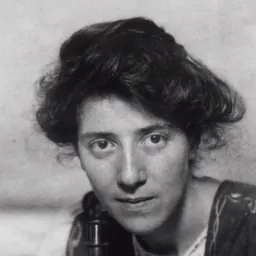

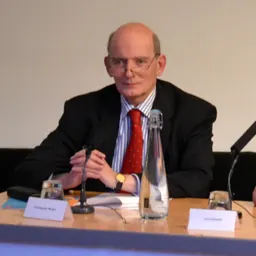


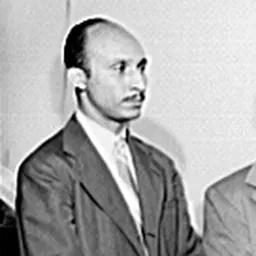


Related people
Same field, nearest in time

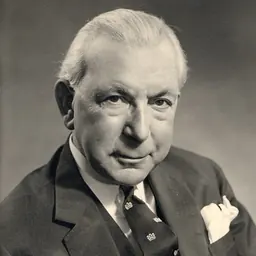
Contemporaries
People whose lives overlapped Helena Rosa Wright's



Frequently asked questions
Who was Helena Rosa Wright?
British pioneer of birth control (1887-1982)
When was Helena Rosa Wright born?
Helena Rosa Wright was born on 17 September 1887 in Brixton.
When did Helena Rosa Wright die?
Helena Rosa Wright died on 21 March 1982 in St John's Wood.
What was Helena Rosa Wright's occupation?
Helena Rosa Wright was a physician, missionary, gynecologist and sex therapist.
What was Helena Rosa Wright known for?
Helena Rosa Wright was known for Family planning and Sex education.
What nationality was Helena Rosa Wright?
Helena Rosa Wright was British.
Sources & further reading
· Wikipedia: Helena Rosa Wright
Cite this page
APA: Biography.guide. (2026). Helena Rosa Wright. https://biography.guide/helena-rosa-wright/
MLA: "Helena Rosa Wright." Biography.guide, https://biography.guide/helena-rosa-wright/.
Chicago: "Helena Rosa Wright." Biography.guide. https://biography.guide/helena-rosa-wright/.
Data last updated: 2026-09-20 · Spot an error? Report a correction.
Page generated 2026-09-27 05:31 UTC