
About Heinz Jost
Lived 1904 – 1964 (aged 60). Heinz Jost was a German lawyer, jurist, soldier and nazism.
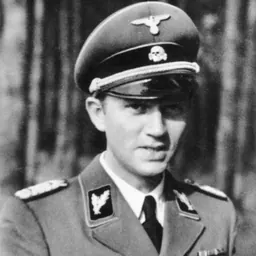
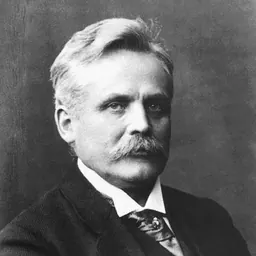
Heinz Jost (9 July 1904 – 12 November 1964) was a German SS officer and Holocaust perpetrator during the Nazi era. He was involved in espionage matters as the Sicherheitsdienst (Security Service; SD) section chief of office VI (foreign intelligence) of the Reich Security Main Office. Jost was responsible for genocidal massacres in Eastern Europe as commander of Einsatzgruppe A from March to September 1942.
After Germany's defeat, Jost was tried and convicted by a U.S. military court at the Einsatzgruppen trial. In December 1951, Jost was released from Landsberg Prison after his sentence was commuted to ten years and died in 1964.
Early life Heinz Jost was born in Holshausen, a section of the town of Homberg in northern Hesse in 1904, to a middle-class Catholic and nationalistic family. Heinrich Jost, Heinz's father, was a pharmacist and later became a fellow NSDAP member. Jost attended grammar school in Bensheim, graduating in 1923. As a student he became a member, and eventually became a leader, of the Jungdeutsche Orden (Young German Order), a nationalistic paramilitary movement. Jost studied law and economics at the University of Giessen and the Ludwig-Maximilians-Universität München. He completed his civil service examination in May 1927. Heinz's legal career began as a legally trained civil servant employed in Hesse. He later worked in the district court at Darmstadt.
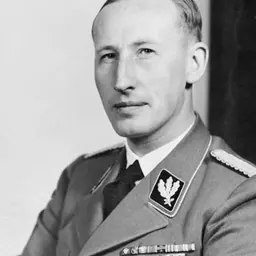
Career Jost joined the Nazi Party on 2 February 1928 In 1938, Jost was head of the Einsatzgruppe Dresden which occupied Czechoslovakia. In August 1939 Jost was tasked by Reinhard Heydrich with obtaining the Polish uniforms needed for the false flag attack on the station in Gleiwitz.
When the Reich Security Main Office (RSHA) was established in September 1939, Jost was appointed as chief of Amt VI (Office VI) Ausland-SD (foreign intelligence). One of the chief purposes of Amt VI was to counteract foreign intelligence services that might try to operate in Germany. He also served as an SS officer in the German invasion of Poland in 1939. Jost's place was taken by Brigadeführer Walter Schellenberg, a deputy of Heydrich. Heydrich had given Schellenberg the task of building up a case for Jost's removal. According to Schellenberg, Jost was lacking in bureaucratic skill and drive.
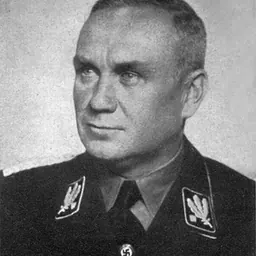
Jost was sent to command Einsatzgruppe A, whose previous commander Franz Walter Stahlecker, had recently been killed in a battle with partisans. Einsatzgruppe A was then operating in the Baltic States and in Belarus. Jost became Befehlshaber der Sicherheitspolizei und des SD (Commander of the Security Police and the SD) or BdS in Reichskommissariat Ostland, with his headquarters at Riga. Jost retained this position until September 1942. According to Jost, this position carried substantial responsibility:
During the time the territory under his jurisdiction was subject to army control, Jost as Chief of Einsatzgruppe A cooperated with the army command. When the territory came under civilian administration, he, as Commander in Chief of Security Police and SD received his orders from the Higher SS and Police Leader Friedrich Jeckeln. In both cases Jost was responsible for all operations conducted in his territory.
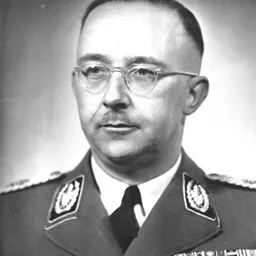
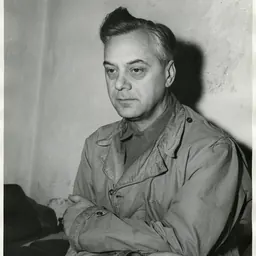
After his Einsatzgruppe command, Jost was able to secure a position with the occupation administration for the eastern territories that was run by Alfred Rosenberg, where he acted as a liaison officer between Rosenberg and the Wehrmacht commander in southern Russia, Ewald von Kleist. At his later trial, Jost claimed that he held this position until May 1944, when as a result of enmity from Heinrich Himmler, he was forced to enlist with the Waffen-SS as a second lieutenant. Himmler decided in January 1945, that Jost should be retired from the SS with a pension.
Trial and conviction
In April 1945, Jost was arrested in Gardelegen, in Saxony-Anhalt, and was charged by the U.S. military with murders committed by Einsatzgruppe A.
At trial (the 9th of the twelve, in total, trials convened, known as the Subsequent Nuremberg Trials), Jost tried to avoid responsibility for these crimes, by claiming the murders (or at least some of them) occurred before he came into command of the unit:
This defense was rejected by the tribunal:
Jost also claimed, through his attorney, that whatever he had done was justified by "self-defense, necessity, and national emergency". He further claimed he had nothing to do with carrying out the Führer's order (Führerbefehl) for the extermination of entire populations. These claims were rejected by the tribunal as being inconsistent with each other: "If, as a matter of fact, the defendant committed or approved of no act which could be interpreted either as a war crime or crime against humanity, the argument of self-defense and necessity is entirely superfluous."
Jost did testify that when in May 1942 he received an order from Heydrich to surrender Jews under 16 and over 32 for liquidation, he placed the order in his safe and declined to transmit it. The tribunal found the evidence contradicted him. According to Einsatzgruppen status report number 193, dated 17 April 1942, there was an execution in Kovno [ Kaunas], on 7 April 1942, of 22 persons "among them 14 Jews who had spread Communist propaganda".
In addition, the tribunal found, that on 15 June 1942, one of Jost's subordinates wrote to the RSHA, requesting shipment of a gas van (used by the Einsatzgruppen for executions by means of carbon monoxide asphixiation) and gas hoses for three gas vans on hand. Jost denied any knowledge of this letter but admitted that the subordinate in question had the authority to order equipment.
His sentence was reviewed by the "Peck Panel". In December 1951, Jost was released from Landsberg Prison after his sentence was commuted to ten years. He then worked in Düsseldorf as a real estate agent. He died in 1964 at Bensheim.
Don’t just read it —
keep it.
Full-length biographies made to live with: read them, listen on the way to work, watch them tonight.
- E-book
- Audio
- Video
Instant download · yours to keep · every purchase keeps this site free
Important facts
People in Heinz Jost's life
Named in this biography and alive at the same time


Related people
Same field, nearest in time



Contemporaries
People whose lives overlapped Heinz Jost's





Frequently asked questions
Who was Heinz Jost?
German SS functionary (1904–1964)
When was Heinz Jost born?
Heinz Jost was born on 9 July 1904 in Homberg (Efze).
When did Heinz Jost die?
Heinz Jost died on 12 November 1964 in Bensheim.
What was Heinz Jost's occupation?
Heinz Jost was a lawyer, jurist, soldier and nazism.
What nationality was Heinz Jost?
Heinz Jost was German.
Sources & further reading
Cite this page
APA: Biography.guide. (2026). Heinz Jost. https://biography.guide/heinz-jost/
MLA: "Heinz Jost." Biography.guide, https://biography.guide/heinz-jost/.
Chicago: "Heinz Jost." Biography.guide. https://biography.guide/heinz-jost/.
Data last updated: 2026-09-20 · Spot an error? Report a correction.
Page generated 2026-09-27 05:28 UTC