
Heinrich Tillessen
German assassin
About Heinrich Tillessen
Lived 1894 – 1984 (aged 89). Heinrich Tillessen was a German.
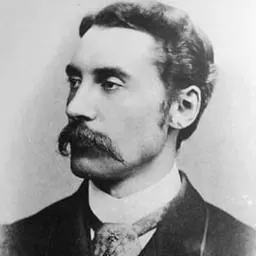
Heinrich Tillessen (27 November 1894 – 12 November 1984) was a German former naval officer who, along with his accomplice Heinrich Schulz, assassinated former Minister of Finance Matthias Erzberger, who endorsed the Treaty of Versailles.
The trial of Heinrich Tillessen was held in post-war Germany, and received widespread attention from the public and from legal experts, exemplifying numerous problems in the judicial processing of crimes committed before and during the Nazi period.
Youth The father of Heinrich Tillessen was an artillery officer with the rank of lieutenant general. Tillessen's mother, Karoline, was Dutch. Tillessen grew up with ten siblings (three brothers and seven sisters) in Cologne, Metz, and Koblenzall of which his father was stationed in. One of his brothers was Navy Admiral Werner Tillessen. The family was considered devout Catholics. When Tillessen's father retired in 1904, the family moved to Koblenz.
Career Following the death of his father and mother (1910 and 1911), Tillessen left high school and joined the Imperial German Navy as a midshipman on 1 April 1912. On 12 April 1913, he was promoted to Fähnrich zur See (petty officer). Until the beginning of World War I in 1914, he spent most of his time training in various specialties, including a placement on the training ship SMS Hertha.
During World War I, he served as a deck officer in smaller units, mainly in the Baltic Sea. He was promoted to Leutnant zur See (navy lieutenant) on 22 March 1915. On 13 July 1917, he was transferred to the 17th Torpedo Boat Half-Flotilla, where he was employed as a watch officer on the leading boat, under commander Hermann Ehrhardt. It was during this service that Ehrhardt impressed Tillessen as a strong leader and a charismatic officer.
As part of the surrender of the German navy, as commander, he led and transferred a torpedo boat to Scapa Flow in 1919. The stated goal of the group to murder key political figures, a series of killings that became known as the Feme murders. On April 30, 1921, at their own request, Tillesson and Schulz were called to Hermann Ehrhardt in Munich. Here, they worked at the headquarters of the OC in its initial stages of development. The chief of military operations in the Munich headquarters was Manfred von Killinger, Erzberger attempted to escape downhill but collapsed after 10 meters. The assailants pursued Erzberger, shooting him in the head at point-blank range. With the assistance of his political associates in Germany, Tillessen then acquired a fraudulent German passport and travelled to Spain at the end of 1925. He subsequently regained employment, established a livelihood, married and settled in Düsseldorf, Mannheim, and Heidelberg, before being admitted as an official member of the Nazi Party (member no. 3,575,464) on 1 September 1933 and the . On 4 September 1939, he was conscripted into the German Military, however, his service was terminated soon afterwards due to being declared unfit for service. During the Second World War, Tillessen served the German Admiralty in a land-based role and was eventually discharged in late 1944, with the rank of Lieutenant Commander. On 26 August 1946, exactly 25 years after the crime, the Baden Attorney General, Karl Siegfried Bader, submitted a complaint to the District Court of Offenburg in order to proceed with a criminal hearing before the Criminal Chamber. Nevertheless, the court rejected the negotiation of the principle hearing on 10 September 1946, citing that there was impunity in accordance with the Impunity Regulation of 1933: "For the court it is proved that the perpetrator committed the act out of exaggerated love for the country in order to lead Germany to a better future. Defence counsel, in dealing with the history of political assassinations and the differences of opinion concerning it, referred to the assassination of Gessler by Wilhelm Tell, which became a national epic." announced the acquittal of the accused. Specifically, the Court pointed out that it considered that the Impunity Regulation of 1933 was applicable. Nevertheless, the prosecution immediately appealed the verdict, thereby preventing the res judicata of the judgment (i.e. preventing the verdict from taking effect).
The judgement sparked a notable public reaction, with the press condemning it as (i.e. a disgraceful verdict). Furthermore, the constituent assembly of the state of Baden, which assembled in Freiburg, protested in a spontaneous resolution to express their disapproval assertively.
Second proceedings before the in Rastatt The French occupying forces responded swiftly: Heinrich Tillessen was apprehended by the French secret service on the date of release, and was subsequently interned in France. Consequently, the chairman of the examining tribunal, Regional Court Director Goering, was removed, and given a leave of absence, before officially taking retirement.
The French (GMZFOA), located in Rastatt near Baden-Baden, was the supreme court for all civil matters in Baden during the period of the Allied occupation in the aftermath of WWII. In December 1946 and January 1947 the tribunal conducted proceedings to determine the legal validity of the 1933 Regulation on Exemption from Punishment adopted by Adolf Hitler, following the end of the war. The verdict of the tribunal was issued on January 6, 1947.
The court found in its judgment that the of 1933, which is binding "for all German courts and administrative bodies”, should no longer be applied. It concluded that the election of the Reichstag on March 5, 1933, was tainted by flagrant illegality and use of force by the government, thus making the Enabling Act of March 24, 1933, unconstitutional rather than constitutional as had been claimed. Furthermore, the court specified that through the concentration of all powers in the hands of Hitler, the Act violated the essential requirements of proper and normal rule of law, and Hitler's government had never sought a vote of confidence of a properly constituted Parliament, a requirement defined in the Weimar Constitution of August 11, 1919, which was then in effect.
The judgement of the Offenburg was repealed by the German appellate court and the case was referred to the regional court in Konstanz for a new trial. The second trial was held from 25–28 February 1947 and presided over by District Court Director Anton Henneka, who became a judge at the Federal Constitutional Court from 1951 to 1968. At the trial, the prosecution called for a death sentence and the defence argued for a lesser sentence of manslaughter. Ultimately, the court found Tillessen guilty of murder and crimes against humanity in violation of Control Council Law No. 10, and sentenced him to 15 years of imprisonment, with the ruling being final. Tillessen went on to resume work before settling in Heidelberg, Frankfurt, and eventually Koblenz in his latter years. He died in 1984, at the age of 90.
Literature Cord Gebhardt: Der Fall des Erzberger-Mörders Heinrich Tillessen. Ein Beitrag zur Justizgeschichte nach 1945. Mohr, Tübingen 1995 (Beiträge zur Rechtsgeschichte des 20. Jahrhunderts, Band 14). Reiner Haehling von Lanzenauer: Der Mord an Matthias Erzberger. Verlag der Gesellschaft für Kulturhistorische Dokumentation, Karlsruhe 2008 (Schriftenreihe des Rechtshistorischen Museums Karlsruhe, Band 14). . Edith Raim: Justiz zwischen Diktatur und Demokratie : Wiederaufbau und Ahndung von NS-Verbrechen in Westdeutschland 1945 - 1949. Oldenbourg, München 2013. (Zugl.: Augsburg, Univ., Habil.-Schr., 2012).
Don’t just read it —
keep it.
Full-length biographies made to live with: read them, listen on the way to work, watch them tonight.
- E-book
- Audio
- Video
Instant download · yours to keep · every purchase keeps this site free
Important facts
People in Heinrich Tillessen's life
Named in this biography and alive at the same time
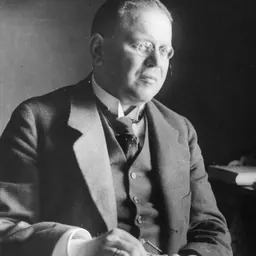



Contemporaries
People whose lives overlapped Heinrich Tillessen's
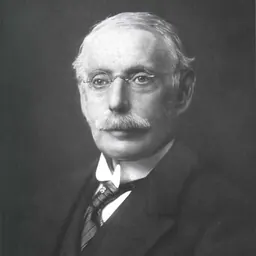

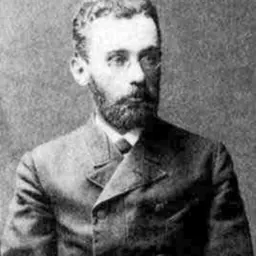
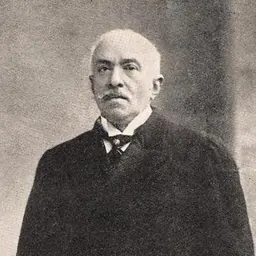

Frequently asked questions
Who was Heinrich Tillessen?
German assassin (1894–1984)
When was Heinrich Tillessen born?
Heinrich Tillessen was born on 27 November 1894 in Cologne.
When did Heinrich Tillessen die?
Heinrich Tillessen died on 12 November 1984 in Koblenz.
What nationality was Heinrich Tillessen?
Heinrich Tillessen was German.
Sources & further reading
· Wikipedia: Heinrich Tillessen
Cite this page
APA: Biography.guide. (2026). Heinrich Tillessen. https://biography.guide/heinrich-tillessen/
MLA: "Heinrich Tillessen." Biography.guide, https://biography.guide/heinrich-tillessen/.
Chicago: "Heinrich Tillessen." Biography.guide. https://biography.guide/heinrich-tillessen/.
Data last updated: 2026-09-20 · Spot an error? Report a correction.
Page generated 2026-09-27 05:27 UTC