
About Heinrich Seeling
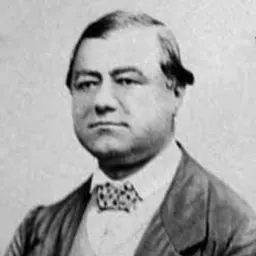
Lived 1852 – 1932 (aged 79). Heinrich Seeling was a German architect and university teacher.
Heinrich Seeling (October 1, 1852 – February 15, 1932) was a German architect.
Life He was born the son of a bricklayer in the Thuringian town of Zeulenroda, then part of the sovereign Principality of Reuss within the German Confederation. He received further academic training upon his apprenticeship at the college for civil engineering in Holzminden in the Duchy of Brunswick. He studied at the Prussian Bauakademie in Berlin, which was the capital of the German Empire since 1871.thumb After studies in Vienna and Italy, Seeling began his career working as an assistant in the studios of Hugo Licht, Hermann Ende and Wilhelm Böckmann in Berlin. In 1882/83 he unsuccessfully competed with Paul Wallot in an architectural contest to erect the new Reichstag building. Nevertheless, he soon acquired renown as an architect of numerous lavish theatre buildings throughout Germany, starting with the construction of the Stadttheater Halle in 1886. He also designed two Protestant churches and several residential and commercial buildings in Bromberg in the Prussian Province of Posen, today Bydgoszcz in Poland.
In 1907 he was appointed director of the building authority in the then independent city of Charlottenburg (incorporated into Berlin in 1920), where he designed the Deutsches Opernhaus, as well as several municipal buildings together with his co-worker Richard Ermisch. Since 1896, Seeling was a member of the Prussian Academy of Arts.
Work
Many of Seeling's buildings were destroyed by strategic bombing during World War II, though some were rebuilt either in a Modern style, in a simplified style or in the original style: 1880 Rathaus Calau 1886 Stadttheater Halle 1892 Theater am Schiffbauerdamm, Berlin 1892 Grillo-Theater, Essen (destroyed during World War II) 1895 Stadttheater Rostock (destroyed during World War II) 1896 Theater Bromberg (from 1919 Teatr Miejski, Bydgoszcz, destroyed during World War II) 1897 Christuskirche, Bromberg (present-day Kościół Zbawiciela, Bydgoszcz) 1901 Theater Aachen, conversion 1902 Schauspielhaus Frankfurt (destroyed during World War II) 1902 Theater Gera 1903 Evangelische Kirche, Bromberg (present-day Kościół św. Andrzeja Boboli, Bydgoszcz) 1905 Staatstheater Nürnberg, then the most expensive theatre construction in Europe 1907 Kiel Opera House 1910 Theater Freiburg 1910 Rathaus Charlottenburg, extension 1912 Deutsche Oper, Charlottenburg (destroyed during World War II) 1914 Waldhaus Charlottenburg, Kremmen
Death Heinrich Seeling died on the 15th of February, 1932 in Berlin.
Don’t just read it —
keep it.
Full-length biographies made to live with: read them, listen on the way to work, watch them tonight.
- E-book
- Audio
- Video
Instant download · yours to keep · every purchase keeps this site free
Important facts
People in Heinrich Seeling's life
Named in this biography and alive at the same time

Related people
Same field, nearest in time


Contemporaries
People whose lives overlapped Heinrich Seeling's


Frequently asked questions
Who was Heinrich Seeling?
German architect (1852–1932)
When was Heinrich Seeling born?
Heinrich Seeling was born on 1 October 1852 in Zeulenroda.
When did Heinrich Seeling die?
Heinrich Seeling died on 15 February 1932 in Berlin.
What was Heinrich Seeling's occupation?
Heinrich Seeling was an architect and university teacher.
What nationality was Heinrich Seeling?
Heinrich Seeling was German.
Sources & further reading
Cite this page
APA: Biography.guide. (2026). Heinrich Seeling. https://biography.guide/heinrich-seeling/
MLA: "Heinrich Seeling." Biography.guide, https://biography.guide/heinrich-seeling/.
Chicago: "Heinrich Seeling." Biography.guide. https://biography.guide/heinrich-seeling/.
Data last updated: 2026-09-20 · Spot an error? Report a correction.
Page generated 2026-09-27 05:20 UTC