
About Hector Munro Macdonald
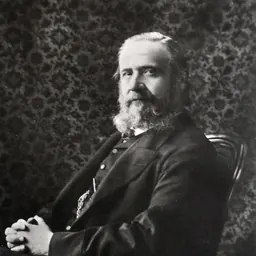
Lived 1865 – 1935 (aged 70). Hector Munro Macdonald was a British mathematician and physicist.
Hector Munro Macdonald (19 January 1865 – 16 May 1935) was a Scottish mathematician, born in Edinburgh in 1865. was awarded a fellowship at Clare in the following year and, in 1891, was awarded the second Smith's Prize.
In 1901 he received the Adams Prize and was elected a Fellow of the Royal Society of London (FRS).
Macdonald worked on electric waves and solved difficult problems regarding diffraction of these waves by summing series of Bessel functions. He corrected his 1903 solution to the problem of a perfectly conducting sphere embedded in an infinite homogeneous dielectric in 1904 after a subtle error was pointed out by Poincaré. The major problem which he tackled was that of wireless waves. About the time that Macdonald published his prize winning essay on electric waves, Guglielmo Marconi was successful in the transmission of the first wireless signals across the Atlantic. However this posed a major problem at first because wireless signals, like light, should not be capable of being bent round the surface of the earth as apparently Marconi wireless signals were. Macdonald suggested that the wireless waves were being refracted by the atmosphere. It is now known that in fact the waves are reflected by the ionosphere.
Macdonald became Professor of Mathematics at the University of Aberdeen in 1905 and remained at the university for the rest of his life, living at 33 College Bounds. In 1905 he was also elected a Fellow of the Royal Society of Edinburgh. His proposers were George Chrystal, George Alexander Gibson, Cargill Gilston Knott and James Gordon MacGregor.
He died in 1935 in Aberdeen. He is buried against the east wall of St Machar's Cathedral in Old Aberdeen.
Family
He had never married and had no children.
Publications
Electric Waves (1902)
Don’t just read it —
keep it.
Full-length biographies made to live with: read them, listen on the way to work, watch them tonight.
- E-book
- Audio
- Video
Instant download · yours to keep · every purchase keeps this site free
Important facts
People in Hector Munro Macdonald's life
Named in this biography and alive at the same time



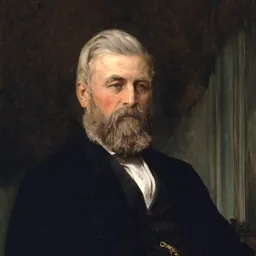
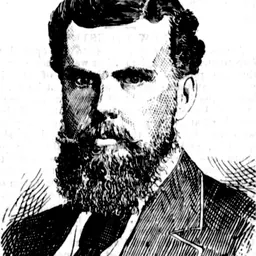

Related people
Same field, nearest in time
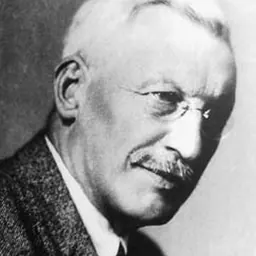
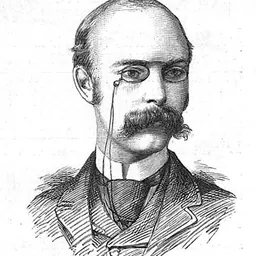


Contemporaries
People whose lives overlapped Hector Munro Macdonald's

Frequently asked questions
Who was Hector Munro Macdonald?
British mathematician (1865-1935)
When was Hector Munro Macdonald born?
Hector Munro Macdonald was born on 19 January 1865 in Edinburgh.
When did Hector Munro Macdonald die?
Hector Munro Macdonald died on 16 May 1935 in Aberdeen.
What was Hector Munro Macdonald's occupation?
Hector Munro Macdonald was a mathematician and physicist.
What nationality was Hector Munro Macdonald?
Hector Munro Macdonald was British.
Sources & further reading
· Wikipedia: Hector Munro Macdonald
· DBpedia: Hector Munro Macdonald
Cite this page
APA: Biography.guide. (2026). Hector Munro Macdonald. https://biography.guide/hector-munro-macdonald/
MLA: "Hector Munro Macdonald." Biography.guide, https://biography.guide/hector-munro-macdonald/.
Chicago: "Hector Munro Macdonald." Biography.guide. https://biography.guide/hector-munro-macdonald/.
Data last updated: 2026-09-25 · Spot an error? Report a correction.
Page generated 2026-09-27 05:11 UTC