
About Hayedeh
Lived 1942 – 1990 (aged 47). Hayedeh was an Iranian singer, musician and recording artist.
Masoumeh Dadehbala (April 10, 1942 – January 20, 1990), known professionally as Hayedeh, was an Iranian singer and media personality. She is widely considered an iconic vocalist and one of the most prominent and influential singers in Iran and the Persian world.
Born in Tehran, Hayedeh was the older sister of another prominent singer, Mahasti. Hayedeh began singing by listening to songs on radio and television and was often compared to Delkash, and learned music from several teachers. She began her professional career in 1968 by performing on the radio program Golha. Later, she began collaborating with other musicians and releasing songs such as "Soghati".
In 1978, Hayedeh moved to the United Kingdom amid the Iranian Revolution and called her immigration "a fitna". In 1982, she moved to the United States to continue her musical career. There was where she released the song "Bahar Bahar Az Omadeh Dobareh" with the theme of nostalgia for pre-revolutionary Iran.
In her final years, Hayedeh suffered from mental health problems and she died of a heart attack in 1990 at the age of 47, the day after performing at a concert in San Francisco. In April 2019, the Los Angeles City Council recognized and celebrated Hayedeh, one of the most celebrated singers in Persian culture. In this year she released another titled Raftam (1968).
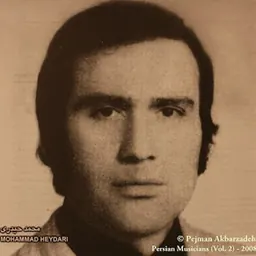
In the 1970s, Hayedeh added Persian pop music to her classical Persian repertoire. In this period Hayedeh worked with several songwriters, such as Fereydoun Khoshnoud, Jahanbakhsh Pazouki, Anoushiravan Rohani and Mohammad Heydari. "Bezan Tar", "Gol-e Sang", "Nowrouz Aamad", and "Soghati" were among her works during this period.
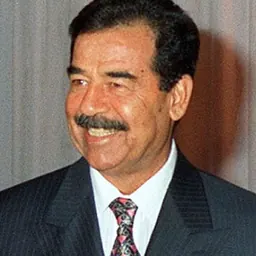
In March 1975, around the time the Algiers Agreement was signed, Saddam Hussein had traveled to Iran. One night, while he was in Tehran, a program was held in the Shah's palace where Hayedeh and Mahasti sang for Saddam. After Saddam returned to Iraq, he invited the two singers and Shahram Mirian, a close family friend of Hayedeh and the head of the news team from the National Iranian Radio and Television group, at the time to Baghdad alongside forty dancers from the Ministry of Culture and Arts. Mirian had stated "Every night when Hayedeh and Mahasti performed there, the audience would say, "Dashti, Dashti." I asked: "Do you mean the theme of our music?" I then understood that Dashti meant Hayedeh singing. Mirian went on to make a '2.5-hour' TV show, possibly Jam-e-Jaam as a returnee from Iraq, which received a lot of attention.
Legacy Hayedeh's albums are still best sellers and her songs are played on Persian TV and radio channels outside Iran. Many of her songs are sung by Iranian pop singers. Houshmand Aghili performed Hayedeh's "Sarab", Parviz Rahman Panah remixed her "Saal", Shahla Sarshar performed a tragic song called "In Memory of Hayedeh", singer Amir did a cover of Hayedeh's song "Soghati" in 2008 and Mahasti performed three songs in memory of her late sister.
According to Prof. Erik Nakhjavani in Encyclopædia Iranica: "Analogous to Delkash, before her, Hayedeh sang with technical authority and passionate energy. Her laryngeal control made it possible for her to produce a series of graceful vibrato and glissando vocalizations required by the Avaz Persian vocal music. She could smoothly pass from the upper reaches of her alto voice to the lower, fuller, and darker range of the contralto. This mixture of strong laryngeal strength and learned vocal technique gave her alto-contralto voice a rare, powerful resonance and texture in the performance of the Avaz. Furthermore an acute sense for musical timing, the rhythmic flow of vocal music, affective musical phrasing, and poetic delivery enabled her to express and interpret effectively any songs she sang." Various American universities have streamed the documentary on their server for educational purposes as well.
In April 2019, the Los Angeles City Council recognized and celebrated Hayedeh, one of the most celebrated singers in Persian culture.
Partial discography Studio albums Azadeh (1968) Raftam (1968) Nasepasi (1969) Afsaneh Shirin (1970) – with Shajarian Yaarab (1986) Hamkhooneh (1984) – with Viguen Shabeh Eshgh (1985) Shanehayat (1986) Sogand (1988) Safar (1988) – with Moein Ey Zendegi Salaam (1989) Golhayeh Ghorbat (1990) – with Moein Bezan Taar (1991) Kharabati (1991) Golvaazheh (1991) Khoda Hafez (1991) Paadeshahe Khoobaan (1992) Roozaayeh Roshan (1992) Shabeh Asheghan – with Sattar Naa Shanidehaa Faryad Bolboli Ke Khaamosh Shod Aamadanet Mahaaleh Owje Sedaa Mehmaan Hayf Taranehyeh Saal
Compilation Best of Hayedeh 40 Golden Hits of Hayedeh 40 Hayedeh Golden Songs, Vol I Hayedeh Golden Songs, Vol II Shirin Jaan, Hayedeh 4 Dashtestani, Hayedeh 5 Afsaneh Shirin, Hayedeh 8
Don’t just read it —
keep it.
Full-length biographies made to live with: read them, listen on the way to work, watch them tonight.
- E-book
- Audio
- Video
Instant download · yours to keep · every purchase keeps this site free
Important facts
People in Hayedeh's life
Named in this biography and alive at the same time


Related people
Same field, nearest in time





Contemporaries
People whose lives overlapped Hayedeh's





Frequently asked questions
Who was Hayedeh?
Iranian singer
When was Hayedeh born?
Hayedeh was born on 10 April 1942 in Tehran.
When did Hayedeh die?
Hayedeh died on 20 January 1990 in San Francisco.
What was Hayedeh's occupation?
Hayedeh was a singer, musician and recording artist.
What nationality was Hayedeh?
Hayedeh was Iranian.
Sources & further reading
Cite this page
APA: Biography.guide. (2026). Hayedeh. https://biography.guide/hayedeh/
MLA: "Hayedeh." Biography.guide, https://biography.guide/hayedeh/.
Chicago: "Hayedeh." Biography.guide. https://biography.guide/hayedeh/.
Data last updated: 2026-09-20 · Spot an error? Report a correction.
Page generated 2026-09-27 05:19 UTC