
About Hatune Doğan
Born 1970. Hatune Doğan is a Turkish nun, theologian, psychotherapist, humanitarian and nurse.
Hatune Dogan (born April 4, 1970 in Midyat in southeastern Turkey) is a religious nun of the Syriac Orthodox Church of Antioch, President of the organization Helfende Hände für die Armen (Helping Hands for the Poor). She currently lives in the Syriac Orthodox monastery of St. Jacques Sarug in Warburg, Germany.
Life Until the age of 15 Hatune Dogan lived in the eastern part of the Turkey as a member of the small minority of the Syriac Orthodox Church. Her family had to suffer many persecutions because of their faith, but finally they fled to Germany. With 18 years she became a member of the religious order Ephrem the Syrian in Glane. Hatune Dogan became deaconess studying at the Catholic University of Applied Sciences, Mainz. In 1982 she began to work in Syriac Orthodox communities in the area of Paderborn, teaching Religion and German. From 1992 on she worked on a German-Aramaic dictionary, which was published in 1997.
From 1991 to 1999 Sister Hatune Dogan worked also with free groups. In this time rose the idea to found a foundation. Since 1992, when she was in India for the first time, she collected informations and took care of the distribution of donations. To optimize this help, she founded in India in 2003 the Sister Hatune Foundation (which was internationally recognized in 2005) for to help the people to sustain themselves or capacity building, under the German slogan "Help to help yourself" Hilfe zur Selbsthilfe. In 2006, she founded the association "Helping Hands for the Poor" in Paderborn. In 2011 the "Sister-Hatune Foundation - Helping Hands for the Poor" was launched and on 22 November 2011 recognized by the district government of Detmold.
The "Sister-Hatune Foundation", Warburg, Germany, pursues non-profit, charitable and ecclesiastical-charitable purposes. These are:
Water wells and water for the poor Houses for the poor Clinical supportment Establishment of training centers for girls and boys wherever the training and future development of the renewable generation is failing. Establishment and operation of a women's monastic community . Formation of volunteers
The foundation is an international organization. It maintains sections in Europe, the Middle East, Asia, Africa and the USA. Organization teams support the work directly on site. The Foundation coordinates the work of more than 5,000 volunteers in 37 countries around the world, working as a helping hand among the poorest of the poor and sick, without pursuing religious objectives. In addition to the construction of wells for fresh water and house building projects for the homeless (about 500 each year), the foundation offers medical aid (mobile clinics, leprosy assistance) with more than 23,000 patients annually, education and vocational training (schools and institutes) for 2600 pupils and more than 1,000 completed vocational trainings, support for orphans (about 300 children), opportunities for self-help and financial support for the poor. A further focus of the work are natural disasters and displaced persons (currently mainly for the displaced christians, yazidis and other minorities from Iraq and Siria).
The great success in India in the work and in the recognition by the Indian government, lies in the use of the available resources. Sister Hatune, for example, is trying to ensure that 100% of the money donated will be spent on projects. The foundation has also managed to raise 75% of the amount spent for house and well constructions by the Indian state, regional institutions and private Indian patrons. This means that a well or house can be built for just $500.
The foundation's principal offices are in Paderborn and the state of Kerala in South India. In America, many European, African and Asian countries, sections have been set up. These are subdivided into different teams with special tasks.
Sister Hatune, who is called sometimes the new Mother Teresa, wrote that she has got eighteen death threats in seven languages.
Honours 2010: Order of Merit of the Federal Republic of Germany 2012: Stephanus-Preis für ihren weltweiten Einsatz für verfolgte Christen.
Books together with Cornelia Tomerius (Ed.): Es geht ums Überleben – Mein Einsatz für die Christen im Irak, Verlag Herder, Freiburg i.Br. 2010. Dogan, Hatune: Wörterbuch Syrisch (Aramäisch) -Deutsch, Deutsch-Syrisch (Aramäisch). 2. (verbesserte, revidierte) Auflage. Warburg 1998. Dogan, Hatune/Riedl, Tonia: Ich glaube an die Tat. Im Einsatz für Flüchtlinge aus Syrien und dem Irak, Brunnen Verlag (Gießen) 2015.
Don’t just read it —
keep it.
Full-length biographies made to live with: read them, listen on the way to work, watch them tonight.
- E-book
- Audio
- Video
Instant download · yours to keep · every purchase keeps this site free
Important facts
People in Hatune Doğan's life
Named in this biography and alive at the same time

Related people
Same field, nearest in time



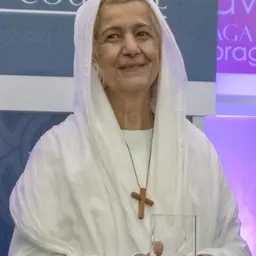
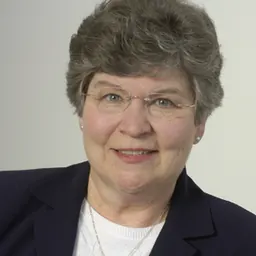
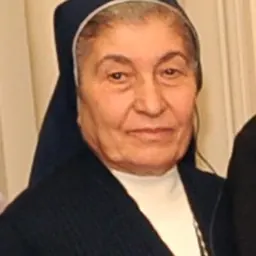
Contemporaries
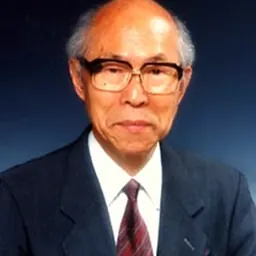
People whose lives overlapped Hatune Doğan's


Frequently asked questions
Who is Hatune Doğan?
Turkish theologian (born 1970)
When was Hatune Doğan born?
Hatune Doğan was born in 1970 in Midyat.
What is Hatune Doğan's occupation?
Hatune Doğan is a nun, theologian, psychotherapist, humanitarian and nurse.
What nationality is Hatune Doğan?
Hatune Doğan is Turkish.
Sources & further reading
Cite this page
APA: Biography.guide. (2026). Hatune Doğan. https://biography.guide/hatune-dogan/
MLA: "Hatune Doğan." Biography.guide, https://biography.guide/hatune-dogan/.
Chicago: "Hatune Doğan." Biography.guide. https://biography.guide/hatune-dogan/.
Data last updated: 2026-09-20 · Spot an error? Report a correction.
Page generated 2026-09-27 05:05 UTC