
About Hassan Ghul
Lived 1977 – 2012 (aged 34–35). Hassan Ghul was a Pakistani military leader and al-Qaeda.
Hassan Ghul , born Mustafa Hajji Muhammad Khan (1976/1977 – 1 October 2012), was a Pakistani member of al-Qaeda who revealed the kunya of Osama bin Laden's messenger, which eventually led to Operation Neptune Spear and the death of Osama Bin Laden. Ghul was an ethnic Pashtun whose family was from Waziristan. He was designated by the Al-Qaida and Taliban Sanctions Committee of the Security Council in 2012.
Captured by Kurdish Peshmerga forces in Iraqi Kurdistan and turned over to American intelligence in early 2004, Ghul was said to have served as anywhere from a courier who delivered messages for al-Qaeda members to a high-ranking associate of either Osama bin Laden, Abu Musab al-Zarqawi, or Khalid Sheikh Mohammed.
He was held at a CIA black site for two years. It was during this time of detainment in early 2004, but before he was subjected to torture, that Ghul listed al-Kuwaiti as a close associate of bin Laden. CIA records show that Ghul was not the first source of the name "al-Kuwaiti," which was also provided in 2002 by another detainee, Abu Zubair al-Ha'ili, who was being held by a foreign government.
In 2006, Ghul was transferred to the custody of Pakistan's Inter-Services Intelligence, which released him in 2007. Ghul was killed by a CIA drone strike in North Waziristan in October 2012.
He was captured on January 23, 2004 by Kurdish security forces at a border crossing to Iran near Kalar after they confirmed Hassan's identity with a photograph emailed to CIA officials. or that he was caught leaving Iran bringing al-Zarqawi's progress report on suicide bombings into Iraq.
Ghul was carrying a USB flash drive and two CDs, one allegedly including a 17-page progress report believed to have been written by al-Zarqawi, claiming responsibility for suicide attacks in Iraq. US Intelligence officials have contradicted the accepted story, stating that the progress report was instead found in an abandoned safehouse in Baghdad. In addition, the US military provided the media with "photocopies of the original handwritten Arabic letter" which were then translated, muddying the claim that it had been a computer document. A notebook in his satchel also revealed a number of names and phone numbers of suspected associates.
Kurdish forces immediately turned Ghul over to the American military, and he was interrogated while still in the country. There have been similarly unreferenced suggestions in the media that Ghul played a role in the 1998 US Embassy bombings in Africa.
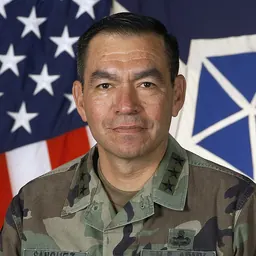
Six days after his capture, U.S. Lieutenant General Ricardo Sanchez referred to Ghul stating "the capture of Ghul is pretty strong proof that al-Qaida is trying to gain a foothold [in Iraq] to continue their murderous campaigns." CIA Director George Tenet mentioned Ghul in his testimony to the Senate Select Committee on Intelligence as an al-Qaeda member who would "never again threaten the American people", after allegedly being "sent to case Iraq for an expanded al-Qaeda presence there." Columnist William Safire claimed it was a "smoking gun" that proved a link between Iraq and al-Qaeda.
Ghul then became a ghost detainee, his very existence was unacknowledged. In June 2007, he was one of 39 people cited in a joint release by HRW, Cageprisoners, Center for Constitutional Rights and the New York University School of Law as prisoners who have not been accounted for, and are likely held in secret CIA Black sites.
Release and death In 2006, two and a half years after his capture, Ghul was transferred to a secret Pakistani prison system, where he was held alongside British suspect Rangzieb Ahmed. but Ghul was eventually killed by a US drone strike on October 1, 2012. The National Security Agency (NSA) deployed an arsenal of cyber-espionage tools, secretly seizing control of laptops, siphoning audio files and other messages, and tracking radio transmissions to find Ghul. After intercepting an e-mail from Ghul's wife, the NSA was able to locate Ghul and handed over the information to the Central Intelligence Agency which employed a drone to kill Ghul.
Don’t just read it —
keep it.
Full-length biographies made to live with: read them, listen on the way to work, watch them tonight.
- E-book
- Audio
- Video
Instant download · yours to keep · every purchase keeps this site free
Important facts
People in Hassan Ghul's life
Named in this biography and alive at the same time






Related people
Same field, nearest in time




Contemporaries
People whose lives overlapped Hassan Ghul's




Frequently asked questions
Who was Hassan Ghul?
member of al-Qaeda
When was Hassan Ghul born?
Hassan Ghul was born in 1977 in Medina.
When did Hassan Ghul die?
Hassan Ghul died on 1 October 2012 in North Waziristan.
What was Hassan Ghul's occupation?
Hassan Ghul was a military leader and al-Qaeda.
What nationality was Hassan Ghul?
Hassan Ghul was Pakistani.
Sources & further reading
Cite this page
APA: Biography.guide. (2026). Hassan Ghul. https://biography.guide/hassan-ghul/
MLA: "Hassan Ghul." Biography.guide, https://biography.guide/hassan-ghul/.
Chicago: "Hassan Ghul." Biography.guide. https://biography.guide/hassan-ghul/.
Data last updated: 2026-09-22 · Spot an error? Report a correction.
Page generated 2026-09-27 05:31 UTC