
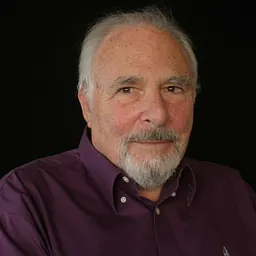
Hassan Almrei
Syrian refugee
About Hassan Almrei
Born 1974.
Hassan Ahmed Almrei ( also childhood name Abu al-Hareth) a Syrian citizen, arrived in Canada in 1999 claiming refugee status. He has been since held, and accused of terrorist connections and ideology, for his "reputation... for obtaining false documents", and his relationship with Ibn al-Khattab following time shared together during the Civil war in Tajikistan. He was ordered released under house arrest by a Federal Court judge on January 2, 2009. On December 14, 2009, he was further released and not considered a suspect anymore. The evidence against him was based on informants' tips, wiretaps, and his admission of travel to places like Afghanistan and Pakistan. The case against him was based on outdated and sketchy knowledge of Al Qaeda and other extremist Islamic groups, and loaded with information that "could only be construed as unfavourable to Almrei without any serious attempt to include information to the contrary."
Life Although born in Syria, Almrei's family moved to Dammam, Saudi Arabia when he was 7 since his paternal uncle had been sentenced to ten years' imprisonment for his role in the Muslim Brotherhood - his father was sentenced to death in absentia in Syria, as he worked as a teacher in Saudi Arabia. He memorised the Quran while he was young.
In 1994 left Sayyaf's company and traveled to Kunduz to follow Ibn al-Khattab instead, and met Nabil al-Marabh.
Almrei claims he traveled to Pakistan to investigate business possibilities selling honey and perfume. He was in Pakistan from November 1994 through March 1995, and went to Yemen in March 1995. He also claims to have traveled twice in Tajikistan during the year, where he scouted on Soviet positions for Ibn al-Khattab, and although he was willing to fight in combat, he claims he served chiefly as an Imam to the group and was never involved in any major combat, though he saw several skirmishes. When Khattab moved on to fight in the First Chechen War, he would still phone and fax Almrei with updates on the struggle.
He has stated that he closed his business from as early as 1996 to as late as January 1998, and was unemployed from thence on.
Although New York Times reporter Judith Miller claimed that he used his honey business to smuggle money for militants, analysts say there is no evidence to support that and Almrei has raised issue with Miller's history of controversy. After her story was published, he claimed that he sold chiefly perfume and oud, but later stated that he sold primarily honey, importing 500 kg from Pakistan.
He unsuccessfully tried to immigrate to Canada with his Syrian passport #3286630 on April 19, 1998, stating that he wished to visit Hisham Al Taha in Richmond, British Columbia. He later claimed to have never spoken to al Taha and that he'd just put down his name on the advice of a friend who told him it would improve his chances of being accepted for a visa.
He traveled to Thailand in August 1998, He was picked up at the airport by his "good friend" Ahmed Al Kaysee, whom he'd met while in Afghanistan.
In September 1999, Almrei and five other men had been in a restricted portion of Pearson Airport, as they "appeared to have access cards and codes". The explanation has been offered that these six men were working in the airport at temporary jobs, and their credentials were legitimate. He also maintained contact with the Thai smuggler.
Within months of arriving, he had become close friends with Hassan Ahmed, and would help him with his fruit stand, where he initially had trouble speaking to female customers due to his religious upbringing; but later began to flirt openly with them as his religious stance relaxed. The Royal Canadian Mounted Police investigated Almrei's procurement of the false passport, but opted not to press charges. Almrei also drafted a fake reference letter from his restaurant to indicate that Ishak was an employee, to help support his case for sponsoring his new wife to become a Canadian. On September 13, 2000, Almrei's residence was searched and the forged passport was discovered. In August 2000, Almrei sold the restaurant for $18,500. He was also confronted with the fact that photographs of Ibn Khattab, Osama bin Laden and Mohamed Atta were found on his computer, though he protested that agents were taking them out of context and had simply been photos from news agencies such as BBC which were included in online stories he had read, and were saved in his web cache. He was arrested on a security certificate nevertheless, and the following month judge Danièle Tremblay-Lamer found the certificate "reasonable".
While at the Toronto West Detention Centre, he staged two hunger strikes - a 39-day fast that succeeded in ensuring winter clothing and shoes in his cell during the winter, and a 73-day fast calling for an hour of exercise per day. During the first strike, guards at the prison had offered to slip him some shoes against the rules, but he refused and said he would wait until the court ruled he was legally entitled to them.
In April 2006, he was moved to a new detention facility at Millhaven Institution, specifically meant to house those held under security certificates.
Applications for release At his first application for bail release, in June 2003, it was proposed that Almrei, who has no family in Canada, could live with Dr. Diana Ralph and her partner Jean Hanson, who spent C$38,000 renovating their basement apartment to accommodate Almrei and offered C$10,000 in cash towards the bail amount. As evidence that Almrei was not an extremist, Ralph pointed out that he had accepted her, a Jewish lesbian, as a close friend and had told her that only God could judge people. He also stated that he "was not aware" of any detainees in Guantanamo or elsewhere who had not "take up terrorist activities" once they were released, even though 279 detainees had been released from Guantanamo alone, of whom between 3-30 were alleged to have taken up militant activities upon their release. Another CSIS agent identified only as J.P., the Deputy Chief of Counterterrorism and Counterproliferation in the Ottawa Regional Office as of 2005, testified against the petitions for release by Almrei, Jaballah and Charkaoui.
Almrei was ordered released under house arrest by Federal Court Justice Richard Mosley on January 2, 2009, under strict monitoring conditions including an electronic tracking leg-bracelet. This judge was a federal assistant deputy justice minister who helped draft Canada's post 9/11 anti-terror laws before being appointed in 2003.
Release On December 14, 2009, more than eight years after his arrest, the same judge who ordered his house arrest disposed the security certificate against him. The judge concluded that the evidence – both secret and public – against him did not hold up to scrutiny. While there were "reasonable grounds to believe that Hassan Almrei was a danger to the security of Canada when he was detained in 2001" he concluded that "there are no longer reasonable grounds to believe that he is a security risk today". In a comment this was paraphrased: what was reasonable in 2001 because much was unknown, was not reasonable anymore in 2009,
The court was critical of CSIS and the federal ministers of Public Safety and Immigration, who signed a new certificate in 2008 against Almrei and four others. Mosley said CSIS and the ministers "breached their duties of utmost good faith and candour to the court by not thoroughly reviewing the information in their possession, prior to the issuance of the February 2008 certificate."
Earlier in 2009, another judge threw out a security certificate against Adil Charkaoui, after the Canadian Security Intelligence Service withdrew secret evidence, fearing its disclosure would jeopardize its sources.
Don’t just read it —
keep it.
Full-length biographies made to live with: read them, listen on the way to work, watch them tonight.
- E-book
- Audio
- Video
Instant download · yours to keep · every purchase keeps this site free
Important facts
People in Hassan Almrei's life
Named in this biography and alive at the same time







Contemporaries
People whose lives overlapped Hassan Almrei's




Frequently asked questions
Who is Hassan Almrei?
Syrian refugee
When was Hassan Almrei born?
Hassan Almrei was born in 1974 in Syria.
Sources & further reading
Cite this page
APA: Biography.guide. (2026). Hassan Almrei. https://biography.guide/hassan-almrei/
MLA: "Hassan Almrei." Biography.guide, https://biography.guide/hassan-almrei/.
Chicago: "Hassan Almrei." Biography.guide. https://biography.guide/hassan-almrei/.
Data last updated: 2026-09-20 · Spot an error? Report a correction.
Page generated 2026-09-27 05:23 UTC