
About Harry Sternberg
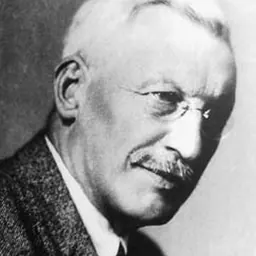
Lived 1904 – 2001 (aged 97). Harry Sternberg was an American muralist, printmaker and painter.
Harry Sternberg (1904–2001), was an American painter, printmaker and educator. He taught at the Art Students League of New York, from 1933 to c. 1966.
Biography Childhood, family life, and education Sternberg's parents had immigrated from Russia and Hungary. He was born in New York City on July 19, 1904. The family moved to Brooklyn in 1910 and Harry began orthodox Jewish religious training. At the age of nine he began to take art classes at the Brooklyn Museum of Art. From 1922 until 1926, he trained at the Art Students League of New York. He rented his first studio in Greenwich Village in 1926 and began his career in etching, printmaking and painting.
Early career In 1931, his work was exhibited at the Whitney Museum of American Art for the first time. He was appointed in 1933 to the staff of the Art Students League of New York where he would remain an instructor for the next 35 years. Among his students were Sigmund Abeles, and Charles White.
After meeting Diego Rivera, the prominent Mexican muralist, and his wife Frida Kahlo in 1934 Sternberg became more politically active in union and socialist causes. In 1935, he was appointed a technical advisor to the Graphic Art Division, Federal Art Project (FAP) of the Works Progress Administration.
As a result of the experimentation in screen printing at the FAP, by a team led by Anthony Velonis, interest in silkscreen printing, as an accessible and flexible means of artistic expression, was growing. The process was re-named 'Serigraphy'. Carl Zigrosser, then Curator of Prints, Drawings, and Rare books at the Philadelphia Museum of Art, wrote in 1941: “Harry Sternberg has done much to spread an interest in silk screen. He was one of the first to see its implications both social and aesthetic. In addition to his own production he has added serigraphy to his graphic arts curriculum at the Art Students League and has written a most stimulating handbook on the subject."
In The Early History of the Screenprint by Reba Williams and Dave Williams, the authors note that the efforts of many printmakers to achieve a 'painterly' effect in their prints has been subject to criticism for the use of conspicuous brushstrokes and overlapping or blurring colors, rather than flat planes of color which are so suited to the medium. They wrote in their 1986 article in Print Quarterly that: "Sternberg's Riveter is perhaps the most daring and successful of the painterly screen prints. It draws heavily on German Expressionism in color, composition, subject and style. A powerful workman, standing on a steel beam, constructing a New York skyscraper, wielding a heavy riveting gun, attached to a curling, treacherous air hose, surrounded by dizzying high towers -- a perfect subject for Expressionism! Here Sternberg plays on the potential for 'crudeness' in screen printing: rough edges between color planes and contrasting tonal effects. . .Overall, the colors, composition and drawing style convey power and tension, harmonious in theme and medium."
Sternberg was awarded a Guggenheim Fellowship in 1936,
He married Mary Gosney in 1939 and their family, including their baby daughter, are depicted in the Ambler, Pennsylvania post office mural, The Family, Industry and Agriculture. He was fond of self-portraits and painted his likeness into the scientist figure in his mural for the Lakeview post office.
Later career In 1966, he retired from the Art Students League of New York and the Sternbergs moved to Escondido, California, The catalog of this exhibition was researched and written by Ellen Fleurov, the museum director. Harry Sternberg died on November 27, 2001, in Escondido. He had previously written and published two books: a book on composition called Composition: The Anatomy of Picture Making, and a book on woodblock cutting and printing called Woodcut.
He died in Escondido, California, on November 27, 2001.
Publications
Don’t just read it —
keep it.
Full-length biographies made to live with: read them, listen on the way to work, watch them tonight.
- E-book
- Audio
- Video
Instant download · yours to keep · every purchase keeps this site free
Important facts
People in Harry Sternberg's life
Named in this biography and alive at the same time






Related people
Same field, nearest in time



Contemporaries
People whose lives overlapped Harry Sternberg's


Frequently asked questions
Who was Harry Sternberg?
American printmaker and painter (1904–2001)
When was Harry Sternberg born?
Harry Sternberg was born on 19 July 1904 in Lower East Side.
When did Harry Sternberg die?
Harry Sternberg died on 27 November 2001 in Escondido.
What was Harry Sternberg's occupation?
Harry Sternberg was a muralist, printmaker and painter.
What nationality was Harry Sternberg?
Harry Sternberg was American.
Sources & further reading
Cite this page
APA: Biography.guide. (2026). Harry Sternberg. https://biography.guide/harry-sternberg/
MLA: "Harry Sternberg." Biography.guide, https://biography.guide/harry-sternberg/.
Chicago: "Harry Sternberg." Biography.guide. https://biography.guide/harry-sternberg/.
Data last updated: 2026-09-20 · Spot an error? Report a correction.
Page generated 2026-09-27 05:20 UTC