
Harry Stammers
British stained-glass artist
About Harry Stammers
Lived 1902 – 1969 (aged 66).
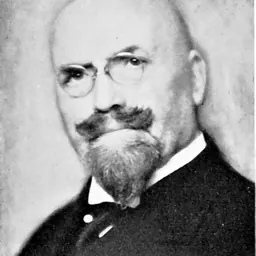
Harry Stammers (13 October 1902 – 21 August 1969) was an English stained glass artist and master glass painter whose body of work comprised more than 180 windows, primarily ecclesiastical commissions for Church of England buildings. Stammers' work combined traditional craftsmanship with a personal response to modernism and twentieth-century religious practice. Closely associated with the revival of the York School of Glass Painting, examples of Stammers' work can be found in the cathedrals of Canterbury, Hereford, Lincoln, Salisbury and York.
Career Powell & Sons Harry James Stammers was born on 13 October 1902 in Limehouse, London. At school he was said to have excelled in drawing and music. In 1917 he obtained an apprenticeship with Powell & Sons (Whitefriars) Ltd, joining their stained glass division as an apprentice draughtsman. This afforded Stammers the opportunity to attend evening classes at Saint Martin’s School of Art for several years. At Powell’s he worked alongside James Humphries Hogan, the firm’s chief window designer and a leading figure in early twentieth-century British stained glass.
In 1930 Stammers married Grace Delamere. The couple had two sons, James and Richard.
In 1945, Stammers resigned from Wippell & Co. in order to establish his own stained glass studio in Exeter and seek opportunities to express a more personal and contemporary idiom through his own independent work. Among his first commissions was a window for the Church of St Mary the Less in Cambridge. The opportunity arose thanks to Eric Milner-White, then Dean of King’s College, Cambridge, who had been impressed by a design Stammers had submitted to the Royal Academy of Arts. When the Ely Diocesan Advisory Committee sought Milner-White's advice on selecting an artist, he recommended Stammers.
Stammers lived and worked in York until 1960, which would prove to be the most productive period of his career. Undoubtedly, he benefited from the increased availability of commissions that resulted from the largescale renewal of church buildings in the years following the Second World War, including a number of windows commissioned as individual war memorials, including examples at St Helen's Church in Skipwith (1947) and St Mary's Church, Hemingbrough (1949). Stammers also developed productive working relationships with the architects W. H. Randoll Blacking and George Pace, both of whom provided commissions for newly built or restored churches on which they had been enlisted as architect.
At Broomhill, a church ruined during the Sheffield Blitz and rebuilt by George Pace from 1961 to 1963, Stammers' monumental east window is set within a rectangular concrete frame notable for its thick, branch-like window bars, draws on the traditional hymn Te Deum laudamus, and depicts the image of Christ in Majesty to the centre, interwoven among a multitude of saints, worshippers, animals and plants.
Stammers' 1963 window at the Church of St Martin le Grand in York is among his most original. It commemorates the destruction of this and other churches in the 1942 bombing of York, the form of the red flames taking hold of the buildings, and the rising smoke above, resulting in one of his most abstract works.
Final years Stammers’ would continue working at his Bradwell studio and accepting commissions up until his death on 21 August 1969 aged 66. He was buried in the churchyard of St Lawrence's Church in Bradwell, for which he had provided four windows in 1966, unusually of an entirely abstract design, save for one of them including some reset Victorian glass. His widow Grace was buried in the same plot following her death in 1977.
Stammers' designs for windows were invariably figurative, frequently depicting contemporary figures—worshippers in church, workers in their occupations, and families in domestic settings—integrated into sacred narratives. Stammers sometimes incorporated the motif of a bespectacled man within his designs, said to be a self-portrait. His compositions are often notable for their abundant representation of the natural world, including mammals, birds, fish, flowers, and celestial imagery, reflecting Stammers’ conviction that nature formed part of divine creation.
Typically, a commission began with an approach to Stammers from a donor or congregation seeking a memorial window. After consultation with the appropriate church authority from whom approval was required, Stammers would submit a design sketch based on the customer brief. Once approved, Stammers executed the full process of window making, from cartoon to painting and firing, from his own studio. Larger commissions would sometimes take him up to three years to realise. South nave memorial window with saints George, Nicholas and Michael (1949) Salisbury Cathedral Memorial window to members of the Glider Pilot Regiment killed in the Second World War (1950) Lichfield Cathedral Memorial window to members of the Staffordshire Yeomanry killed in the Second World War (1951) Hereford Cathedral RAF memorial chapel - New Zealand window (1953) RAF memorial chapel - Bomber Command window (1954) RAF memorial chapel - Flying Training Command window (1958) RAF memorial chapel - Rhodesian airman window (1966) York Minster Painted panels of astronomical clock (1955) Instruments of the Passion painted panel (1957) Glasgow Cathedral Regimental memorial window (1956) Eight windows for the Blackadder aisle (1956–1960) Cameroonian Regiment memorial window (1960) Canterbury Cathedral Window depicting five of Canterbury’s early archbishops (1959) Church of St Bartholomew, Aldborough Freedom window (1953) Church of St Mary, Scarborough East window, Christ in Majesty (1958) Seoul Anglican Cathedral East window depicting Christ in Majesty (1962) Church of St Mark, Broomhill, Sheffield Window commemorating 1942 bombing of York (1963) Church of St Michael on the Mount Without, Bristol East window, Christ in Majesty (1964) Church of St Michael and All Angels, Preston East window, Christ in Majesty (1964) Church of St Lawrence, Bradwell Two abstract panels (1966)
Gallery
Don’t just read it —
keep it.
Full-length biographies made to live with: read them, listen on the way to work, watch them tonight.
- E-book
- Audio
- Video
Instant download · yours to keep · every purchase keeps this site free
Important facts
People in Harry Stammers's life
Named in this biography and alive at the same time





Contemporaries
People whose lives overlapped Harry Stammers's




Frequently asked questions
Who was Harry Stammers?
British stained-glass artist (1902–1969)
When was Harry Stammers born?
Harry Stammers was born on 13 October 1902.
When did Harry Stammers die?
Harry Stammers died on 21 August 1969.
Sources & further reading
Cite this page
APA: Biography.guide. (2026). Harry Stammers. https://biography.guide/harry-stammers/
MLA: "Harry Stammers." Biography.guide, https://biography.guide/harry-stammers/.
Chicago: "Harry Stammers." Biography.guide. https://biography.guide/harry-stammers/.
Data last updated: 2026-09-20 · Spot an error? Report a correction.
Page generated 2026-09-27 05:10 UTC