
About Harry D. Felt
Lived 1902 – 1992 (aged 89). Harry D. Felt was an American military officer.
Admiral Harry Donald Felt (June 21, 1902 – February 25, 1992) was a naval aviator in the United States Navy who led U.S. carrier strikes during World War II and later served as commander in chief of Pacific Command (CINCPAC) from 1958 to 1964.
Early career Born in Topeka, Kansas, to Harry Victor Felt and Grace Greenwood Johnson, Felt attended public school in Goodland, Kansas before moving with his family to Washington, D.C. at the age of ten. Lacking money for college, Felt entered a cram school to prepare for the U.S. Naval Academy and was appointed in 1919.
At the Academy, Felt earned good grades but graduated in 1923 with an unremarkable class rank of 152 out of 413, having accumulated nearly as many demerits as anyone in his class.
As a junior officer, Felt served five years aboard the battleship and the destroyer Farenholt before applying for flight training out of sheer boredom. From then on, naval aviation became his career focus. While training at Naval Air Station Pensacola from 1928 to 1929, Felt met Kathryn Cowley, whom he married on August 3, 1929, after warning her that the Navy would always come first. She later remarked that even as a newlywed, Felt's life was "just fly, fly, fly".
In January 1943, Felt was assigned as the commanding officer of Naval Air Station Daytona Beach, and in February, he became the commanding officer of Naval Air Station Miami. He was promoted to captain in July of the same year. In March 1944, Felt became the first naval aviator assigned to the U.S. Military Mission to Moscow. He later commanded the escort carrier from February 1945 to January 1946, which included heavy participation in the Battle of Okinawa from March through June. Following the battle, Felt was involved in Operation Magic Carpet, ferrying servicemen home at the war's end.
Postwar After the war, Felt was assigned to the Office of the Chief of Naval Operations before attending the National War College from 1947 to 1948. He commanded the carrier Franklin D. Roosevelt in the Atlantic and Mediterranean from August 3, 1948, to July 11, 1949. He was on the staff at the Naval War College from 1949 to 1951, becoming chief of staff in the spring of 1950 and serving as acting president from October 17, 1950, to December 1, 1950. He was promoted to rear admiral in January 1951.
In March 1951, Felt was assigned to command the Middle East Force in the Persian Gulf, After returning to the Navy Department in October, Felt worked for Rear Admiral Arleigh Burke as the assistant director of the Strategic Plans Division.
Felt served as commander of Carrier Division 15 in 1953 and 1954, practicing anti-submarine warfare from the escort carrier Rendova. He commanded Carrier Division Three in the spring of 1954, operating attack carriers Essex and Philippine Sea in the South China Sea. He then served as the assistant chief of naval operations (fleet readiness) from 1954 to 1956.
Vice Admiral William P. Mack recalled the antics of the diminutive vice chief: "He would grab three-star officers by the lapels, literally shake them, and say, 'Why don't you do so and so or such and such?' They'd be thirty or forty pounds heavier than he was, but that didn't bother him at all. He was there for two years, which was probably about a year too long, because morale was getting pretty low. As I told Admiral Burke, it was just a matter of time before someone was going to slug him. You can't operate like that. Admiral Felt wasn't big enough to defend himself. I said that one of these days he's going to come at someone who's going to wipe up the corridor with him, regardless of how many stars he has."
By the end of Felt's second year as vice chief, even Burke had grown tired of him. "It isn't pleasant to fight continually with a good friend, and after a while you wonder whether he's all that good a friend." Furthermore, Burke suspected that Felt had become an automatic faultfinder, which if true would render his advice as useless as that of an automatic yes-man. When a four-star command opened up in the Pacific, Burke appointed Felt, claiming virtuously, "I couldn't hold him back just selfishly to keep him in the vice chief's job."
Commander in Chief, Pacific In 1958, Felt was offered the command of all U.S. forces in the Pacific and Far East, and he jumped at the opportunity to avoid spending the rest of his career behind a desk. Upon becoming commander in chief of Pacific Command on July 31, 1958, Felt immersed himself in the details of its operation, bombarding his staff with scribbled black pencil missives dubbed "Feltgrams" that invariably concluded, "Advise me ASAP. What do you think? No? Why? Resp'y, F." During his tenure as CINCPAC, Felt directed American military operations in three regional hotspots: Taiwan, Laos, and Vietnam.
On August 23, 1958, People's Liberation Army forces commenced shelling Republic of China forces on the islands of Quemoy and Matsu, initiating the Second Taiwan Strait Crisis. Felt immediately deployed the Seventh Fleet to help the Nationalist government defend Quemoy's supply lines. "We didn't go to war then because we were strong and moved in a deterrent force," he later concluded. During the crisis, Felt and his staff planned for the use of tactical nuclear weapons in the Taiwan Strait because they believed the use of such weapons would not trigger World War III and because "we didn't have a plan to do it any other way." Instead, after an initial buildup of ships and marines near the Laotian borders, all American forces were withdrawn in accordance with a 1962 Geneva Conference in which all parties pledged to respect Laotian sovereignty. North Vietnam continued to supply South Vietnamese insurgents via Laos along what would become the Ho Chi Minh Trail.
Nevertheless, on February 8, 1962, by order of the Joint Chiefs of Staff, Felt created the U.S. Military Assistance Command Vietnam (MACV) as a sub-unified command headed by General Paul D. Harkins. As Harkins' superior in the chain of command, Felt was criticized for exercising excessive control over MACV field operations. He denied many of Harkins' equipment requests, interfered with details of Harkins' tactical planning, forbade Harkins from communicating with the Joint Chiefs of Staff without advance permission from CINCPAC, and even bypassed Harkins to direct certain tactical operations himself from his headquarters in Hawaii. Many observers argued that reporting to CINCPAC hindered MACV operations and that MACV should be an independent command under the direct supervision of the Joint Chiefs of Staff. However, Felt and his successors as CINCPAC blocked multiple attempts to remove MACV from their control, arguing that allowing MACV to bypass the unified regional commander would violate the principle of unity of command in the region.
Felt was publicly optimistic about American intervention, declaring at a 1963 press conference that the war could be won in three years. He bristled at members of the press who did not seem sufficiently enthusiastic about ongoing American military operations. Introduced to Associated Press correspondent Malcolm W. Browne at a Saigon press conference, Felt growled, "So you're Browne. Why don't you get on the team?"
On 5 June 1964 Felt was informed that Navy reconnaissance pilot Charles Klusmann had been shot down over Laos, and that Secretary of Defense Robert McNamara ordered that no rescue attempt be made. He called McNamara and repeatedly "asked" McNamara to call President Johnson to countermand this order.
Legacy Felt retired in July 1964 upon reaching the mandatory retirement age and spent his later years in Honolulu, Hawaii. He died on February 25, 1992, and is buried beside his wife at Arlington National Cemetery. the Navy Cross for "extraordinary heroism and distinguished service" at the Battle of the Eastern Solomons; the Distinguished Flying Cross; the Legion of Merit as commander of USS Chenango (CVE-28) during operations off Okinawa, for which the ship received a Navy Unit Commendation;
Felt had a fearsome reputation as an arrogant, caustic, hard-driving perfectionist. "Many people were afraid of him... he was pretty rough," commented Vice Admiral Lawson P. Ramage. A crack poker player, Felt unapologetically summarized his philosophy as, "Trust everybody, but always cut the cards."
Dates of rank Ensign - 1923 Lieutenant, junior grade - Lieutenant - 1931 Lieutenant-commander - Commander - January 1942 Captain - July 1943 Rear admiral - January 1951 Vice admiral - April 1956 Admiral - September 1, 1956
Don’t just read it —
keep it.
Full-length biographies made to live with: read them, listen on the way to work, watch them tonight.
- E-book
- Audio
- Video
Instant download · yours to keep · every purchase keeps this site free
Important facts
People in Harry D. Felt's life
Named in this biography and alive at the same time
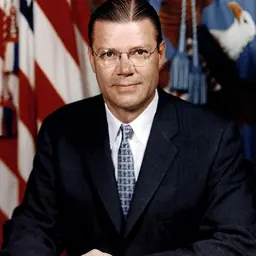
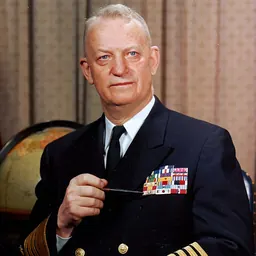
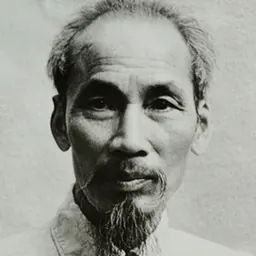

Related people
Same field, nearest in time


Contemporaries
People whose lives overlapped Harry D. Felt's




Frequently asked questions
Who was Harry D. Felt?
United States admiral (1902-1992)
When was Harry D. Felt born?
Harry D. Felt was born on 21 June 1902 in Topeka.
When did Harry D. Felt die?
Harry D. Felt died on 25 February 1992 in Honolulu.
What was Harry D. Felt's occupation?
Harry D. Felt was a military officer.
What nationality was Harry D. Felt?
Harry D. Felt was American.
Sources & further reading
Cite this page
APA: Biography.guide. (2026). Harry D. Felt. https://biography.guide/harry-d-felt/
MLA: "Harry D. Felt." Biography.guide, https://biography.guide/harry-d-felt/.
Chicago: "Harry D. Felt." Biography.guide. https://biography.guide/harry-d-felt/.
Data last updated: 2026-09-25 · Spot an error? Report a correction.
Page generated 2026-09-27 05:10 UTC