
About Harry Carpenter
Lived 1925 – 2010 (aged 84). Harry Carpenter was a British writer and sportscaster.
Harry Leonard Carpenter, OBE (17 October 1925 – 20 March 2010) He began sports reporting as a sub-editor for several national newspapers. He was an avid supporter of Crystal Palace FC, the local team in South Norwood.
Career He joined the BBC in 1949 and was the corporation's full-time boxing correspondent from 1962 until his retirement in 1994, when Jim Neilly replaced him in that capacity. He served as a boxing columnist for the Sporting Record from 1950 to 1954. He then worked for the Daily Mail as a boxing writer and sports columnist from 1954 to 1962.
While writing for the national papers, Carpenter broadcast regularly on radio and television, covering thousands of professional and amateur fights including all Olympic Games from 1956 until 1992. He wrote three books about boxing, produced the documentary, The Richest Prize in Sport, and served as the voice of the Hall of Fame series, Sports Archive and Great Moments in Sport.
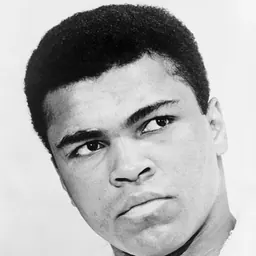
Carpenter described the end of the historic boxing fight between George Foreman and Muhammad Ali in Zaire, in 1974, a fight which became known as "The Rumble in the Jungle", as "the most extraordinary few seconds that I have ever seen in a boxing ring".
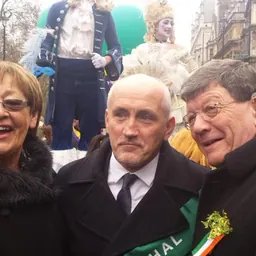
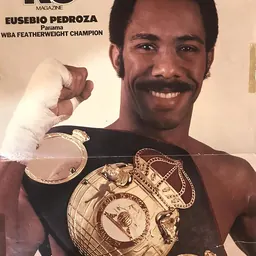
While occasionally given to raising his voice, as he did when Ali knocked out Foreman or when Barry McGuigan floored Eusebio Pedroza in 1985, Carpenter was widely regarded as unflappable and a great professional. Nowhere was this more apparent than at the fight between "Marvelous" Marvin Hagler and Alan Minter at the Empire Pool in 1980: after Hagler stopped Minter in the third round, the crowd, some of them fuelled by drink and hatred (Minter had previously said "no black man will take my title"), expressed their displeasure by hurling beer cans and bottles into the ring. While other members of the press hid under their chairs or protected themselves with typewriters, Carpenter continued to broadcast what he called "a shame and a disgrace to British boxing", even after he was struck several times with missiles.
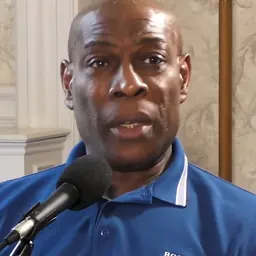
Carpenter's rapport with former WBC World Heavyweight Champion Frank Bruno was well known. Carpenter often conducted post-match interviews with Bruno, whose catchphrase was "know what I mean, 'Arry?". Bruno's agent later stated that Bruno saw Carpenter as a "real friend."
Honours and recognition Carpenter was appointed OBE in the 1991 New Year Honours.
He was the subject of This Is Your Life in 1991 when he was surprised by Michael Aspel at the Royal Oak, Canning Town, London.
Death Carpenter died in his sleep at King's College Hospital in South London in the early hours of Saturday morning, 20 March 2010, aged 84. He had been unwell since the summer of 2009 when he had a minor heart attack.
Don’t just read it —
keep it.
Full-length biographies made to live with: read them, listen on the way to work, watch them tonight.
- E-book
- Audio
- Video
Instant download · yours to keep · every purchase keeps this site free
Important facts
People in Harry Carpenter's life
Named in this biography and alive at the same time




Related people
Same field, nearest in time



Contemporaries
People whose lives overlapped Harry Carpenter's


Frequently asked questions
Who was Harry Carpenter?
sports commentator (1925-2010)
When was Harry Carpenter born?
Harry Carpenter was born on 17 October 1925 in South Norwood.
When did Harry Carpenter die?
Harry Carpenter died on 20 March 2010 in Denmark Hill.
What was Harry Carpenter's occupation?
Harry Carpenter was a writer and sportscaster.
What nationality was Harry Carpenter?
Harry Carpenter was British.
Sources & further reading
Cite this page
APA: Biography.guide. (2026). Harry Carpenter. https://biography.guide/harry-carpenter-writer/
MLA: "Harry Carpenter." Biography.guide, https://biography.guide/harry-carpenter-writer/.
Chicago: "Harry Carpenter." Biography.guide. https://biography.guide/harry-carpenter-writer/.
Data last updated: 2026-09-22 · Spot an error? Report a correction.
Page generated 2026-09-27 05:12 UTC