
About Harry Bowen
Lived 1864 – 1913 (aged 49). Harry Bowen was a British rugby union player and rugby union match official.
David Henry "Harry" Bowen (4 May 1864 – 17 August 1913) was a Welsh international rugby union player who played club rugby for Llanelli and international rugby for Wales. After his retirement from playing he became a rugby administrator and referee. He is best remembered as a popular Llanelli captain, who scored the winning dropped goal against the 1888 touring New Zealand Māori.
Playing career Bowen joined Llanelli at the age of 15 and quickly became a club favourite. He was first selected to represent Wales as part of the 1883 Home Nations Championship against England in the inaugural game of the new competition. Under the captaincy of Charles Lewis, Bowen was one of three Llanelli players chosen for the game, and along with teammates Alfred Cattell and Thomas Judson became the first player to represent Llanelli at international level. The game was a one sided affair, with England victorious, though the Welsh play was of a higher standard than the first encounter between the teams. The next game of the tournament was an away match to Scotland, and Wales experimented with one full-back player for the first time. Bowen was one of the full-backs, paired for the England game with captain Lewis, the selectors favoured Lewis, and Bowen was dropped.
In 1884 Bowen was part of the Llanelli squad which reached the final of the 1884 South Wales Challenge Cup, facing Newport. Played at Neath, Llanelli beat Newport by one try to nil. In 1886 the same two teams met each other again in the final of the same competition, this time Bowen was captain of Llanelli, having been given the position on the retirement mid-season of Frederick Margrave. When Llanelli were again victorious, their return to the town was celebrated by the locals who greeted them with thousands of rockets and coloured lights. 'Touchstone', the Western Mail's sporting correspondent suggested that Bowen should be "memorialized in a tinplate statue".
1884 also saw Bowen move North for a short period, when he signed for Dewsbury; but after playing "only a handful of games", he returned to play in Wales.
In 1886 Bowen found himself back in the Welsh squad after Newport's Arthur 'Monkey' Gould, who had taken Charles Lewis' position, switched from full-back into the three-quarters. This gave Bowen three more caps, both games in the 1886 Championship and the opener in 1887. After losing to England in the first game of the 1886 tournament, Wales and Cardiff captain Frank Hancock famously decided to trial the four three-quarter system. Although Wales were strong in their fast moving back-play, the power of the Scottish pack, now with a man advantage, began to dominate the forward play. The Welsh forwards appeared loath to give the backs the ball, so during the game the four three-quarter tactic was abandoned and it was decided that Bowen would move into the pack to provide reinforcement, while Gould dropped to full-back. dropped goal from near the halfway line, which brought Llanelli the victory; but also charged down an on target kick at goal form the Māori that would have levelled the game. Although Bowen played a vital role in the game, he was not chosen for the Welsh team that faced the Māori three days later at Swansea.
In January 1889, Bowen left Llanelli to take up a teaching post in Bangor, North Wales, though he kept a close connection with the club. He was remembered as a diligent captain who "kept his eyes all over the field" and held the ability to secure obedience from his fellow players.
International matches played Wales (rugby union) 1882, 1886, 1887 1886
As an administrator After retiring from playing rugby, Bowen retained his links with rugby union. On returning to West Wales in 1891 he became an administrator for Llanelli RFC, taking on the role of club secretary. The next year he extended his duties by becoming the club's treasurer, holding both positions until 1897 when the duties were passed to Rhys Harry. He refereed just one international, the 1905 Home Nations Championship encounter between England and Scotland.
Don’t just read it —
keep it.
Full-length biographies made to live with: read them, listen on the way to work, watch them tonight.
- E-book
- Audio
- Video
Instant download · yours to keep · every purchase keeps this site free
Important facts
People in Harry Bowen's life
Named in this biography and alive at the same time



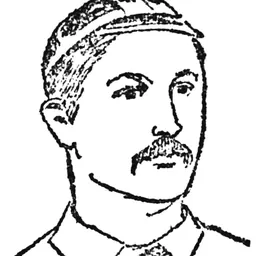


Related people
Same field, nearest in time
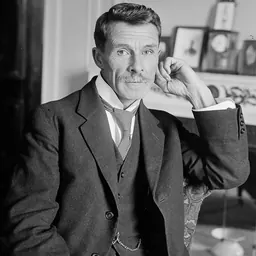


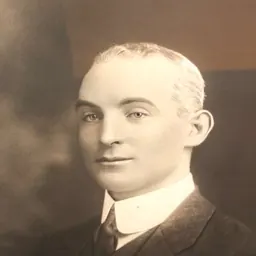
Contemporaries
People whose lives overlapped Harry Bowen's


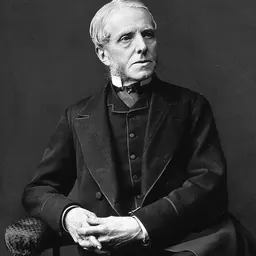
Frequently asked questions
Who was Harry Bowen?
Welsh rugby union player (1864-1913)
When was Harry Bowen born?
Harry Bowen was born on 4 May 1864 in Llanelli.
When did Harry Bowen die?
Harry Bowen died on 17 August 1913 in Bynea.
What was Harry Bowen's occupation?
Harry Bowen was a rugby union player and rugby union match official.
What nationality was Harry Bowen?
Harry Bowen was British.
Sources & further reading
· DBpedia: Harry Bowen (rugby union)
Cite this page
APA: Biography.guide. (2026). Harry Bowen. https://biography.guide/harry-bowen/
MLA: "Harry Bowen." Biography.guide, https://biography.guide/harry-bowen/.
Chicago: "Harry Bowen." Biography.guide. https://biography.guide/harry-bowen/.
Data last updated: 2026-09-20 · Spot an error? Report a correction.
Page generated 2026-09-27 05:28 UTC