
About Harry Barton
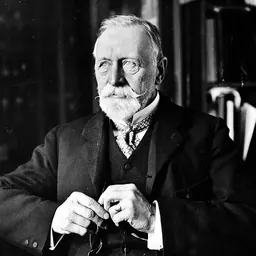
Lived 1876 – 1937 (aged 60). Harry Barton was an American architect.
Galen L. Stone Hall of the former Palmer Memorial Institute, designed in the Colonial Revival style
Harry Barton (June 17, 1876 – May 9, 1937) was an American architect in practice in Greensboro, North Carolina, from 1912 until his death in 1937.
Life and career Harry Barton was born June 17, 1876, in Philadelphia to Edmund Barton, a contractor and builder, and Emma Barton, née Goodwin. He was educated in the Philadelphia public schools and at the Williamson Free School of Mechanical Trades before going on to Temple University and George Washington University. He worked for several architects in Philadelphia and Washington, DC, and spent a decade working as a draftsman and architect in the office of the Supervising Architect. In 1912 he relocated to Greensboro, North Carolina, which he regarded as a "city with a future." After a brief partnership with architect Frank A. Weston he established an independent office. Within a few years Barton was awarded the commission to design the Guilford County Courthouse (1920, NRHP-listed) and in the 1920s emerged as the city's leading architect.
As an architect Barton designed courthouses, city halls, public schools, churches and other buildings. He designed the majority of the buildings built on the campus of what is now the University of North Carolina at Greensboro in the 1920s. During the Great Depression, Barton maintained his practice with a focus on public projects, such as the Alleghany County Courthouse (1933, NRHP-listed) in Sparta. By this time Barton's chief local competition was Charles C. Hartmann. As the leading local architect Barton was the collaborator of choice for outside architects working in the area; for Hobart Upjohn he supervised construction of the First Presbyterian Church (1929). Barton practiced architecture until his death in 1937. Designed by Raleigh James Hughes and Harry Barton, joint architects; NRHP-listed 1919: Church of the Covenant, Presbyterian (former), Greensboro, North Carolina Contributes to the NRHP-listed College Hill Historic District 1919: John Marion Galloway House, Greensboro, North Carolina NRHP-listed and contributes to the NRHP-listed Fisher Park Historic District 1920: Buffalo Presbyterian Church, Greensboro, North Carolina Additions and alterations to an 1827-built church; NRHP-listed 1920: Guilford County Courthouse, Greensboro, North Carolina NRHP-listed 1921: Johnston County Courthouse, Smithfield, North Carolina NRHP-listed 1923: Chancellor's House, University of North Carolina at Greensboro, Greensboro, North Carolina As of 2026, used by UNCG Undergraduate Admissions 1924: Alamance County Courthouse, Graham, North Carolina NRHP-listed 1924: Brown Building, University of North Carolina at Greensboro, Greensboro, North Carolina 1924: Cone Export and Commission Company Building, Greensboro, North Carolina As of 2026, an office building known as Foundation Place 1924: First United Methodist Church, Asheboro, North Carolina 1924: Greensboro Municipal Building, Greensboro, North Carolina Demolished 1926: Asbury United Methodist Church, Durham, North Carolina Contributes to the NRHP-listed Trinity Historic District 1926: Cumberland County Courthouse, Fayetteville, North Carolina NRHP-listed and contributes to the NRHP-listed Fayetteville Downtown Historic District 1926: Curry Building, University of North Carolina at Greensboro, Greensboro, North Carolina 1926: Reidsville Municipal Building (former), Reidsville, North Carolina As of 2026, home to the Reidsville Police Department 1926: Sigmund Sternberger House, Greensboro, North Carolina NRHP-listed and contributes to the NRHP-listed Summit Avenue Historic District 1926: World War Memorial Stadium, Greensboro, North Carolina NRHP-listed 1927: Auditorium, University of North Carolina at Greensboro, Greensboro, North Carolina Formerly named for Charles Brantley Aycock 1927: High Point Central High School, High Point, North Carolina 1927: Piedmont Building, Greensboro, North Carolina 1927: Galen L. Stone Hall, Palmer Memorial Institute (former), Sedalia, North Carolina Contributes to the NRHP-listed Palmer Memorial Institute Historic District 1928: First Presbyterian Church, High Point, North Carolina Designed by Harry Barton and Hobart Upjohn, joint architects 1929: First Presbyterian Church, Greensboro, North Carolina Designed by Hobart Upjohn, architect, with Harry Barton, associate architect; contributes to the NRHP-listed Fisher Park Historic District 1930: First Baptist Church, Siler City, North Carolina Contributes to the NRHP-listed North Third Avenue Historic District 1931: Masonic Temple, Mount Airy, North Carolina 1933: Alleghany County Courthouse, Sparta, North Carolina NRHP-listed
Don’t just read it —
keep it.
Full-length biographies made to live with: read them, listen on the way to work, watch them tonight.
- E-book
- Audio
- Video
Instant download · yours to keep · every purchase keeps this site free
Important facts
People in Harry Barton's life
Named in this biography and alive at the same time





Related people
Same field, nearest in time


Contemporaries
People whose lives overlapped Harry Barton's
Frequently asked questions
Who was Harry Barton?
American architect (1876–1937)
When was Harry Barton born?
Harry Barton was born on 17 June 1876.
When did Harry Barton die?
Harry Barton died on 9 May 1937.
What was Harry Barton's occupation?
Harry Barton was an architect.
What nationality was Harry Barton?
Harry Barton was American.
Sources & further reading
· DBpedia: Harry Barton (architect)
Cite this page
APA: Biography.guide. (2026). Harry Barton. https://biography.guide/harry-barton/
MLA: "Harry Barton." Biography.guide, https://biography.guide/harry-barton/.
Chicago: "Harry Barton." Biography.guide. https://biography.guide/harry-barton/.
Data last updated: 2026-09-20 · Spot an error? Report a correction.
Page generated 2026-09-27 05:21 UTC