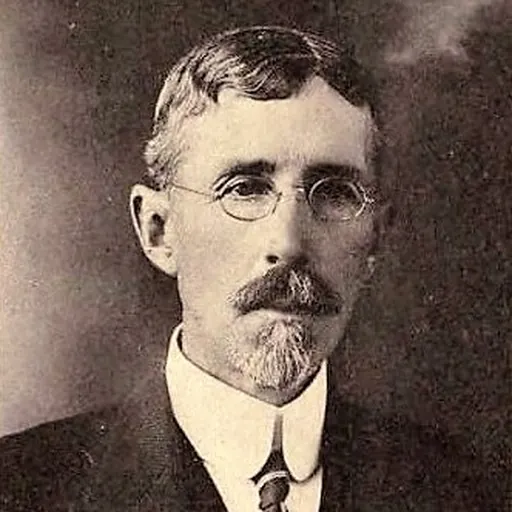
About Harry Ashland Greene
Lived 1852 – 1933 (aged 81). Harry Ashland Greene was an American horticulturist.
Harry Ashland Greene (January 12, 1852 – November 13, 1933) was an American businessman and philanthropist. A native of San Francisco, he founded the stockbrokerage firm Greene and Co. there but spent the last 43 years of his life in Monterey, California. He became an influential figure in the development of Monterey and the preservation of its historical landmarks. Among his initiatives were the creation of the city's first electricity company, the construction of the Monterey harbor breakwater, and the preservation of Colton Hall where California's first constitutional convention was held. A keen horticulturalist by avocation, he was the founder and first president of the Federation of Tree-Growing Clubs of America.
Life and career Harry Ashland Greene was born on January 12, 1852, in San Francisco. He was the second of five children born to William Greene and Anne Elizabeth (née Fisk) who had settled in California in 1849. His boyhood home in Ashland Place, which his parents had imported from China and re-assembled in San Francisco, was known as "The Chinese House".
Greene began his career in mining in Placer County. On his return to San Francisco he briefly held a clerical position at George Babcock & Co., large dealers in produce and grain. He then became a stock broker and in 1874 formed a brokerage firm with his older brother Clay M. Greene. However his brother retired after a few months to pursue his career as a playwright. Greene continued with Greene & Co until ill-health forced his retirement in 1890. He left with the record of being the oldest commission stock broker to have not gone under because of financial disaster.
Greene's civic activism also extended to the preservation of Monterey's history. In 1896, he was Director General of the California Jubilee and in 1899 led the campaign by the Native Sons of the Golden West to save Colton Hall, the site of California's first constitutional convention, from demolition. Greene found more desirable land for the new school which the city had wanted to build on the site of Colton Hall and organized a public subscription to raise money for its purchase.
In his later years Greene devoted much of his time and money to promoting better forestry and improving home gardens in Monterey. On Arbor Day 1925, the city honored his work with the planting of a Sequoia sempervirens in the park surrounding Colton Hall.Greene died at his home in Monterey on November 13, 1933, at the age of 81. His ashes were buried in the El Encinal Cemetery. After his death, the city named the island in the middle of Lake El Estero in his honor.
Horticulture Greene's interest in horticulture began in boyhood when the English botanist Thomas Bridges was a resident in his parents' house in Ashland Place. Greene would help Bridges to package the seeds he had collected for dispatch to Kew Gardens. When Greene took up residence at his house in Monterey, he set about developing the extensive gardens there. By the end of his life, the gardens contained one of the state's largest private collections of trees and shrubs—over 400 varieties—all of which Greene had marked and scientifically classified.
In the early 1900s California Governor George C. Pardee introduced Greene to an audience of foresters as "Tin Can Greene". Also known as "Tin Can Harry", Greene was the original promoter of the Tin Can Club which distributed tree seedlings in tin cans. His idea was to encourage Monterey's children to take a part in the reforestation movement by taking care of the seedlings until they were mature enough for transplantation to gardens, streets, and parks. The Monterey Tree Growing Club grew out of this idea and Greene became its first president. Greene later became the founder and president of the Federation of Tree Growing Clubs of America. Although the Federation foundered in 1912 through lack of funds, the Monterey club prospered with support from the University of California.
Personal life While in San Francisco, Greene was a leading member of the Olympic Club and the San Francisco Bicycle Club. He was also one of the pioneers in introducing the sports of roller skating and roller polo on the Pacific Coast. Greene's second son, Harry Ashland Greene Jr. (1898–1972) was born from his marriage to Oda May Greene which ended in divorce in 1904. His third wife, Isabel (née Higgins) Greene, was a Monterey school teacher who had been the Greene children's governess. At his death, Greene was survived by Isabel and the three children from his previous marriages. Isabel lived on in the Greene Mansion until 1945 when she sold it and moved to Redwood City to live with Harry Ashland Greene Jr. and his family.
Don’t just read it —
keep it.
Full-length biographies made to live with: read them, listen on the way to work, watch them tonight.
- E-book
- Audio
- Video
Instant download · yours to keep · every purchase keeps this site free
Important facts
People in Harry Ashland Greene's life
Named in this biography and alive at the same time


Related people
Same field, nearest in time

Contemporaries
People whose lives overlapped Harry Ashland Greene's


Frequently asked questions
Who was Harry Ashland Greene?
American businessman and philanthropist
When was Harry Ashland Greene born?
Harry Ashland Greene was born on 12 January 1852 in San Francisco.
When did Harry Ashland Greene die?
Harry Ashland Greene died on 13 November 1933 in Monterey.
What was Harry Ashland Greene's occupation?
Harry Ashland Greene was a horticulturist.
What nationality was Harry Ashland Greene?
Harry Ashland Greene was American.
Sources & further reading
· Wikipedia: Harry Ashland Greene
· DBpedia: Harry Ashland Greene
Cite this page
APA: Biography.guide. (2026). Harry Ashland Greene. https://biography.guide/harry-ashland-greene/
MLA: "Harry Ashland Greene." Biography.guide, https://biography.guide/harry-ashland-greene/.
Chicago: "Harry Ashland Greene." Biography.guide. https://biography.guide/harry-ashland-greene/.
Data last updated: 2026-09-22 · Spot an error? Report a correction.
Portrait: Wikimedia Commons · author & licence
Page generated 2026-09-27 04:59 UTC