
Harper Twelvetrees
British businessman
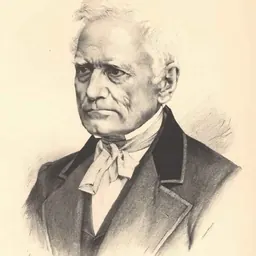
About Harper Twelvetrees
Lived 1823 – 1881 (aged 57). Harper Twelvetrees was a British.
Harper Twelvetrees (1823–1881) was an industrialist, philanthropist and anti-slavery campaigner.
Biography
He was born on 17 December 1823 in Biggleswade, the third of ten children of William, carpenter and builder, and Anna (née Harris). He was named after his paternal grandmother, Mary Harper.
Business and philanthropy
By 1841, age 17, he was an apprentice in nearby Potton. Twelvetrees was learning about the printing and book-selling trade and set up his own business in Dunstable. In 1848 he moved it to Holborn, where he also sold laundry materials made by other manufacturers. His apprenticeship had introduced him to chemistry, which was of great interest.
In 1849 he published The Science of Washing, an eight-page booklet which gave his formula for making a paste from soap, soda and quicklime. This, he claimed, would enable the household laundry to be done every week, quickly and at minimal cost, rather than on 'the old system of once a month'.
In 1859 Twelvetrees moved his manufactory to a site on the west side of the Lea at Bromley-by-Bow, just over the river from the Three Mills distillery. He wasted no time before advertising “in newspapers and magazines the length and breadth of the British Isles and throughout the Empire”. with the immortal lines:
Business in the factory he had named Imperial Works grew steadily and, by 1865, the product range included harness blacking, writing and other inks, washing powder, soap and other laundry items and, curiously, baking powder, egg and custard powders.
Twelvetrees then ventured into mechanical devices, styling himself “Laundry Engineer and Machinist”. In the 1870s-90s his most famous machine was the “Villa” which Mrs Beeton praised in her Book of Household Management as being "excellent for family use...very easy to work without being cumbersome... strong and very durable".
At its peak, the works employed some 400 people. Twelvetrees took a close interest in the welfare of his employees. Cottages were built for employees and their families, and the works operated a system of sickness insurance, as well as a clothing club. A sports club, concerts and lectures were also provided. His philanthropy was lauded by the Stratford Times in 1861,
Anti-slavery campaigner
Harper Twelvetrees was strongly averse to slavery, and was particularly involved in the case of John Anderson, an African-American who escaped to Canada to avoid capture by bounty hunters, but who killed a farmer, Seneca Diggs, while on the run. The Canadian courts were intent on extraditing Anderson and the case caused much controversy on both sides of the Atlantic. After Anderson had arrived in London in 1861, Twelvetrees organised a nationwide speaking tour for Anderson to raise funds for his cause, which was supported by Lord Shaftesbury. He set up and chaired the John Anderson Committee and wrote a book about the ex-slave. He styled himself “Harper Twelvetrees, MA” but there is no evidence that he ever went to university.
The case ended successfully. At the end of his speaking tour, Anderson spent a year in Corby furthering his education, with financial support from Twelvetrees. A grant of land and free passage to the Republic of Liberia was obtained for him, to which he sailed in December 1862.
The man and his family
Harper Twelvetrees married Mary Hubbard in 1848. They had one child, William Harper, born that year. Mary died in 1849.
Twelvetrees' second marriage was to Isabella Noble in Boston in 1851. Isabella (born 1829) was a daughter John Noble of Boston, a printer, stationer, bookseller and reporter. He was a leader of the reform movement in the town, serving as mayor in 1847 and 1851. Harper and Isabella had four children, three sons and a daughter.
He died at home, 223 Evering Road, Clapton, on 30 November 1881. Isabella died on 21 June 1897; probate was handled by their youngest child, Herbert, an accountant.
Julia Lafferty summarises Twelvetrees’ life thus: “Having set up his business with a combination of philanthropy and humanity, he was able to change radically the social and economic conditions in an impoverished part of east London, and through his campaigning against the pernicious system of slavery that operated in the southern states of America, played a key role in influencing British public opinion during the American Civil War."
Don’t just read it —
keep it.
Full-length biographies made to live with: read them, listen on the way to work, watch them tonight.
- E-book
- Audio
- Video
Instant download · yours to keep · every purchase keeps this site free
Important facts
Family & relationships
People in Harper Twelvetrees's life
Named in this biography and alive at the same time


Contemporaries
People whose lives overlapped Harper Twelvetrees's




Frequently asked questions
Who was Harper Twelvetrees?
British businessman
When was Harper Twelvetrees born?
Harper Twelvetrees was born on 17 December 1823 in Biggleswade.
When did Harper Twelvetrees die?
Harper Twelvetrees died on 30 November 1881 in Clapton, London.
What nationality was Harper Twelvetrees?
Harper Twelvetrees was British.
Sources & further reading
· Wikipedia: Harper Twelvetrees
Cite this page
APA: Biography.guide. (2026). Harper Twelvetrees. https://biography.guide/harper-twelvetrees/
MLA: "Harper Twelvetrees." Biography.guide, https://biography.guide/harper-twelvetrees/.
Chicago: "Harper Twelvetrees." Biography.guide. https://biography.guide/harper-twelvetrees/.
Data last updated: 2026-09-20 · Spot an error? Report a correction.
Page generated 2026-09-27 05:23 UTC