
About Harold Strachan
Lived 1925 – 2020 (aged 94). Harold Strachan was a South African writer and internal resistance to apartheid.
Robert Harold Lundie "Jock" Strachan (1 December 1925 – 7 February 2020) was a white South African writer and anti-apartheid activist. He flew for the South African Air Force during the Second World War, trained as an artist, then became Umkhonto we Sizwe's first explosives expert. He was imprisoned for sabotage, and after his release served another sentence for telling a journalist about poor prison conditions. He wrote two semi-autobiographical books, and completed the Comrades Marathon twice, winning a medal once. He married twice and had three children.
Early life, art and running Harold Strachan was born in Pretoria on 1 December 1925. His father had been a metalworker in the Clyde shipyards who had emigrated from Scotland to South Africa in 1902, and his mother was a teacher from an Afrikaner family. When Harold was three his mother left his father for another Scotsman, Jimmy Brown. Brown died in 1931 from the effects of poison gas in the First World War, and his mother moved with Harold and his two sisters to Pietermaritzburg in Natal. He attended Merchiston Preparatory School then Maritzburg College, where he began to develop his political consciousness. alt=A low-winged monoplane pointing from left to right. Both of its tandem canopy places are open, showing the two aircrew, and its two-bladed propeller is still. It is bare-metal with high-visibility orange markings, and the symbols of the SAAF. Strachan joined the South African Air Force straight from school, and served as a pilot towards the end of the Second World War with the rank of lieutenant. He trained on the Tiger Moth and did advanced training on the Airspeed Oxford. From 1946 to 1949 he studied for a Fine Arts degree at Natal University College in Pietermaritzburg. In 1949 Strachan completed the Comrades Marathon, an ultramarathon run between Pietermaritzburg and Durban. For a period after he left the air force, as a reservist he used to enjoy spending a month of each year flying the Harvard to keep his proficiency.
In 1950 Strachan won a scholarship to study at the Camberwell School of Arts and Crafts in London, In 1951 he took a course in painting restoration at the State Academy of Fine Arts in Stuttgart. In 1952 he returned to London and worked as a security guard, and in 1953 he managed his brother-in-law's painting and decorating business in Chingola in Northern Rhodesia (now Zambia), where he encouraged the black workers to unionise. During the 1950s he worked with the artist Selby Mvusi. Before he ran the 1954 Comrades Marathon, Strachan is supposed to have prepared for the race by drinking gin and vermouth with his wife. He finished sixth in 7 h 48 min and earned a gold medal. He was friendly with the English satirist Tom Sharpe until they fell out over a woman. Strachan worked as a lecturer and teacher from 1955 to 1960. In 1959 he married Maggie von Lier, his former student. In 1960, during the protests after the Sharpeville massacre, he and Maggie stood between armed police and black protesters, preventing the police from firing. |group=nb |group=nb and experimented with substances such as nitric acid, potassium permanganate, magnesium, glycerol and icing sugar.
alt=A black African man wearing overalls looks seriously at the camera. Strachan, who was MK's first explosives expert, designed a simple incendiary device based on petrol and initiated by glycerol filtering through beach sand onto potassium permanganate. He later researched and created an explosive device based on a form of ammonal, inspired by his reading of Robert Graves. He trained other operatives, who then disseminated the expertise through a clandestine cell system. His home-made bombs were planted at strategic infrastructure targets like electrical substations and railway lines. As far as is known, there were no deaths in these attacks.
He was caught when one of his trainees planted an improperly constructed incendiary device in the magistrate's court in Butterworth. It failed to go off, was discovered, and the operative was traced by fingerprint evidence. When tortured by the police he revealed Strachan's address. Strachan was arrested at gunpoint and tried under the Explosives Act. He was found guilty of sabotage on 8 May 1962, and sentenced to six years' imprisonment, with three years suspended. He served thirteen months of his sentence in solitary confinement in Pretoria Central Prison, and had his teeth removed. He passed the time in solitary constructing a Tiger Moth in his imagination then preparing an aerobatics routine for it. When Strachan was named as a conspirator in the Rivonia Trial in 1963–64, he refused to give evidence against Mbeki and Denis Goldberg, even when he was threatened with hanging. Most of the accused at Rivonia (including Nelson Mandela) got life imprisonment as the law had been strengthened after Strachan's trial. in the longer term they led to a process of prison reform which helped the next generation of political prisoners such as Mandela.
Following his second release Strachan was banned from public gatherings until 1975 under the Suppression of Communism Act, 1950, and was also placed under house arrest for the last five years. Ben Turok wrote in his autobiography that in the 1973 Durban strikes he had channelled funds via Strachan to support trade unions without the permission of the SACP, and that Turok had been expelled from the party for refusing to reveal his contact. Strachan was unusual among white activists in that he did not go into exile following his release but stayed on in South Africa. He acknowledged the support of his wife over the decades when he was unable to work. and separated in the mid-1990s. Maggie Strachan went on to become a well-known local artist. Harold Strachan had a third child in France who he never met.
In 1997, after his wife left him, a friend persuaded him to get a computer and to learn to type. He wrote an original manuscript, titled So It Goes, in six weeks. He made a link between the protagonist's "call to arms" in the Second World War and the author's motivation in his struggle against apartheid. Strachan was disappointed with the edited version that was published. |group=nb is about his time in MK and in prison. He describes his involvement as a "boys' own armed struggle"; one passage depicts a successful demonstration of a bomb to a senior comrade (Yoshke, based on Joe Slovo) by blowing up a beach toilet: Yoshke grips my left arm and cries 'Power, Comrade!' and Max on my right grips the arm on that side and declares 'Comrade, if we're going to conquer all South Africa one shithouse at a time we'll all be in the grave before liberation ...' Both books are autobiographical fiction and were based on anecdotes he told. In June 2011 he underwent triple coronary artery bypass surgery after suffering chest pains.
Strachan moved to a care home in September 2019, and died from complications of liver disease on 7 February 2020, aged 94. He was cremated, and there was no funeral according to his wishes.
Don’t just read it —
keep it.
Full-length biographies made to live with: read them, listen on the way to work, watch them tonight.
- E-book
- Audio
- Video
Instant download · yours to keep · every purchase keeps this site free
Important facts
Family & relationships
People in Harold Strachan's life
Named in this biography and alive at the same time
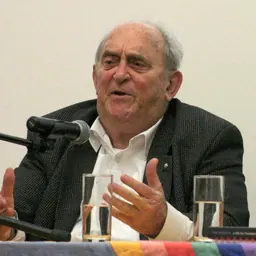




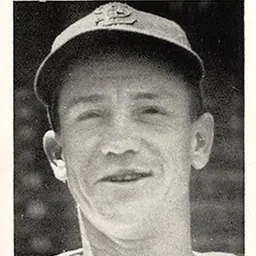


Related people
Same field, nearest in time
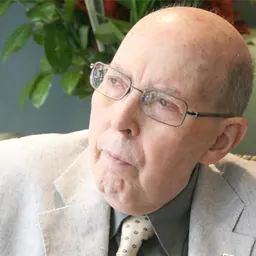

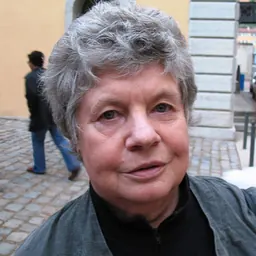
Contemporaries
People whose lives overlapped Harold Strachan's



Frequently asked questions
Who was Harold Strachan?
South African writer (1925-2020)
When was Harold Strachan born?
Harold Strachan was born on 1 December 1925 in Pretoria.
When did Harold Strachan die?
Harold Strachan died on 7 February 2020.
What was Harold Strachan's occupation?
Harold Strachan was a writer and internal resistance to apartheid.
What nationality was Harold Strachan?
Harold Strachan was South African.
Sources & further reading
Cite this page
APA: Biography.guide. (2026). Harold Strachan. https://biography.guide/harold-strachan/
MLA: "Harold Strachan." Biography.guide, https://biography.guide/harold-strachan/.
Chicago: "Harold Strachan." Biography.guide. https://biography.guide/harold-strachan/.
Data last updated: 2026-09-20 · Spot an error? Report a correction.
Page generated 2026-09-27 05:26 UTC