
About Harold Rutland
Lived 1900 – 1977 (aged 76). Harold Rutland was a British pianist, composer, music critic, musicologist and musicographer.
Harold Rutland (August 21, 1900 – July 23, 1977) was a British pianist, music critic and composer. He began studying at the Guildhall School of Music, became organ scholar at Queens' College, Cambridge, and completed his studies at the Royal College of Music with Herbert Fryer, Arthur Bliss and Adrian Boult. A contemporary at the RCM in the early 1920s was Constant Lambert. Earning his living as an organist, choirmaster and pianist, he lived in Cheyne Walk, Chelsea during the late 1920s.
In the early part of the war he toured the provinces with Lambert, playing the piano for the Sadler's Wells Ballet (then known as the Vic Wells Ballet), substituting for an orchestra.
Through E J Moeran, Rutland met John Ireland in 1926, and became a long-standing advocate of his music. He chaired the John Ireland Society from 1960 until his death. Kaikhosru Sorabji was also a friend of Rutland's and dedicated some of his works to him, including the Fourth Symphony for Piano Alone. Rutland became a champion of Sorabji’s music, describing him as "one of the very few I would unhesitatingly describe as a genius […] I will only add that I have always felt honoured by your friendship, and not a little unworthy of it; indeterminate dabbler that I am." He gave the first performance of Sorabji's Fragment for Harold Rutland at the Aeolian Hall in London on 12 October 1927. Eric Blom in the Manchester Guardian reported that it was "received with a mixture of derision, indignation, and bewilderment".
His compositions include a Siciliana and a Toccata, both for piano, published by the Oxford University Press, and songs such as To the Moon (setting Shelley), published by Curwen. Mark Hambourg recorded his arrangements of Two Sea Shanties in 1928.
Rutland lived at 27, Eccleston Square in London. After his death in July 1977 he bequeathed has collection of books, scores and musical materials to the Central Music Library, Westminster. There is a sketch of him by the artist Juliet Pannett.
Don’t just read it —
keep it.
Full-length biographies made to live with: read them, listen on the way to work, watch them tonight.
- E-book
- Audio
- Video
Instant download · yours to keep · every purchase keeps this site free
Important facts
People in Harold Rutland's life
Named in this biography and alive at the same time



Related people
Same field, nearest in time
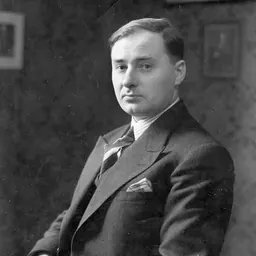
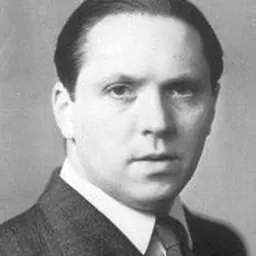

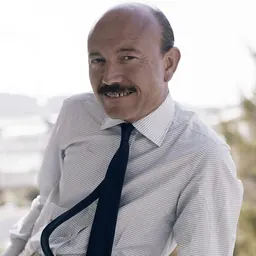
Contemporaries
People whose lives overlapped Harold Rutland's



Frequently asked questions
Who was Harold Rutland?
British composer, pianist and music critic (1900-1977)
When was Harold Rutland born?
Harold Rutland was born on 21 August 1900 in London.
When did Harold Rutland die?
Harold Rutland died on 23 July 1977 in London.
What was Harold Rutland's occupation?
Harold Rutland was a pianist, composer, music critic, musicologist and musicographer.
What nationality was Harold Rutland?
Harold Rutland was British.
Sources & further reading
Cite this page
APA: Biography.guide. (2026). Harold Rutland. https://biography.guide/harold-rutland/
MLA: "Harold Rutland." Biography.guide, https://biography.guide/harold-rutland/.
Chicago: "Harold Rutland." Biography.guide. https://biography.guide/harold-rutland/.
Data last updated: 2026-09-20 · Spot an error? Report a correction.
Page generated 2026-09-27 05:26 UTC