
About Harold Clurman
Lived 1901 – 1980 (aged 78). Harold Clurman was an American theatre director, theatre critic, screenwriter, film director and director.
Harold Edgar Clurman (September 18, 1901 – September 9, 1980) was an American theatre director and drama critic. In 2003, he was named one of the most influential figures in U.S. theater by PBS. He was one of the three founders of New York City's Group Theatre (1931–1941). He directed more than 40 plays in his career Samuel, a doctor, and Bertha Clurman. He had three older brothers, Morris, Albert, and William.
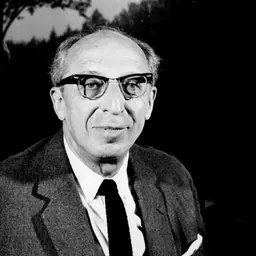
He attended Columbia and, at the age of 20, moved to France to study at the University of Paris. There he shared an apartment with the young composer Aaron Copland. In Paris, he saw all sorts of theatrical productions. He was influenced especially by the work of Jacques Copeau and the Moscow Art Theatre, whose permanent company built a strong creative force. He wrote his thesis on the history of French drama from 1890 to 1914. and became Jacques Copeau's translator/assistant on his production of The Brothers Karamazov, based on the novel by the Russian writer Fyodor Dostoevsky.
Career Clurman began work as an actor in New York. He felt that the standard American theater, though successful at the box office, was not culturally significant. He said, "I was interested in what the theater was going to say [...]. The theater must say something. It must relate to society. It must relate to the world we live in."
The first play which Clurman directed for the Group Theatre was Awake and Sing! by Clifford Odets in 1935. The play's success led Clurman to develop his directing style. He believed that all the elements of a play—text, acting, lighting, scenery and direction—needed to work together to convey a unified message. Clurman would read the script over and over, each time focusing on a different element or character. He tried to inspire, guide and constructively critique his designers rather than dictate to them. He also used Richard Boleslavsky's technique of identifying the "spine," or main action, of each character, then using those to determine the spine of the play. He encouraged his actors to find "active verbs" to describe what their characters were trying to accomplish.
In 1937, tensions among Clurman, Crawford and Strasberg caused the latter two to resign from the Group; four years later, the Group Theatre permanently disbanded. Clurman went on to direct plays on Broadway, more than 40 in all, and write as a newspaper theatre critic.
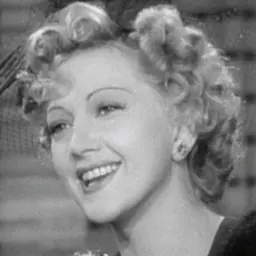
Marriage and family In 1943 Clurman married Stella Adler, a charismatic theatre actress and later a renowned New York acting coach. A member of the Group Theatre since its founding, Adler was the daughter of the notable Yiddish actor Jacob Adler. Clurman was her second husband. They divorced in 1960. Clurman's second marriage was to the independent filmmaker Juleen Compton.
Director and drama critic Clurman had an active career as a director, over the decades leading more than 40 productions, and helping bring many new works to the stage. He is considered "one of the most influential theater directors in America". He encouraged new styles of production, such as that of the Living Theater, and championed contemporary plays and playwrights.
Author He wrote a memoir about the Group Theatre's beginning and their making art within American culture, called The Fervent Years: The Group Theatre and the Thirties. His six other books about the theater include On Directing (1972); his autobiography, All People are Famous (1974); The Divine Pastime (1974); Ibsen (1977); and Nine Plays of the Modern Theater (1981). Most of his essays and reviews can be found in The Collected Works of Harold Clurman.
On acting Uta Hagen in Respect for Acting credits Clurman with a new perspective on acting. She summarized his approach as demanding the human being within the character:
In 1947, I worked in a play under the direction of Harold Clurman. He opened a new world in the professional theatre for me. He took away my 'tricks.' He imposed no line readings, no gestures, no positions on the actors. At first I floundered badly because for many years I had become accustomed to using specific outer directions as the material from which to construct the mask for my character, the mask behind which I would hide throughout the performance. Mr. Clurman refused to accept a mask. He demanded ME in the role. My love of acting was slowly reawakened as I began to deal with a strange new technique of evolving in the character. I was not allowed to begin with, or concern myself at any time with, a preconceived form. I was assured that a form would result from the work we were doing.
Clurman died a week before what would have been his 79th birthday, on September 9, 1980, in New York City of cancer. He is buried in Mt. Carmel Cemetery, Glendale, Queens.
Works on Broadway Note: All works are plays and are the original productions unless otherwise noted. Caesar and Cleopatra (1925) (revival) - actor The Goat Song (1926) - actor The Chief Thing (1926) - actor Juarez and Maximilian (1926) - actor Night Over Taos (1932) - produced by the Group Theater Big Night (1933) - produced by the Group Theater Men in White (1934) - produced by the Group Theater Awake and Sing! (1935) - director, produced by the Group Theater Waiting for Lefty (1935) - produced by the Group Theater Till the Day I Die (1935) - produced by the Group Theater Weep for the Virgins (1935) - produced by the Group Theater Paradise Lost (1935) - director, produced by the Group Theater Case of Clyde Griffiths (1936) - co-produced by the Group Theater Johnny Johnson (1936) - produced by the Group Theater Golden Boy (1937) - director, produced by the Group Theater Casey Jones (1938) - produced by the Group Theater Rocket to the Moon (1938) - director, produced by the Group Theater The Gentle People (1939) - director, produced by the Group Theater Awake and Sing! (1939) (revival) - director, produced by the Group Theater My Heart's in the Highlands (1939) - produced by the Group Theater Thunder Rock (1939) - produced by the Group Theater Night Music (1940) - director, produced by the Group Theater Retreat to Pleasure (1940) - director The Russian People (1942) - director Deadline at Dawn (1945) - movie, director Beggars Are Coming to Town (1945) - director Truckline Cafe (1946) - director and co-producer All My Sons (1947) - co-producer The Whole World Over (1947) - director The Young and Fair (1948) - director The Member of the Wedding (1950) - director The Bird Cage (1950) - director The Autumn Garden (1951) - director Desire Under the Elms (1952) (revival) - director The Time of the Cuckoo (1953) - director The Emperor's Clothes (1953) - director The Ladies of the Corridor (1953) - director Mademoiselle Colombe (1954) - director Bus Stop (1955) - director, Tony nomination for Best Director Tiger at the Gates (1955) - director, Tony nomination for Best Director Pipe Dream (1955) - director, Tony nomination for Best Director The Waltz of the Toreadors (1957) - director, Tony nomination for Best Director Orpheus Descending (1957) - director The Day the Money Stopped (1958) - director The Waltz of the Toreadors (1958) (revival) - director A Touch of the Poet (1958) - director The Cold Wind And The Warm (1958) - director Heartbreak House (1959) (revival) - director A Shot in the Dark (1961) - director After the Fall, The Changeling, Incident at Vichy - director, and Tartuffe (all played in repertory) (1964–1965) - executive consultant to the producer, Repertory Theater of Lincoln Center Where's Daddy? (1966) - director
Legacy and honors Clurman's legacy is his contribution to the creation of a uniquely American theater. Harold Clurman was awarded the Republic of France's Legion d'Honneur.
The Stella Adler and Harold Clurman Collection came to the Harry Ransom Center at the University of Texas at Austin in 2003. The collection includes original and reproduced materials gathered by Marjorie Loggia. Of particular interest are a handwritten draft of The Fervent Years, a photocopy typescript of "Plans for a First Studio," handwritten and typescript drafts of Lies Like Truth, and an edited typescript of Reminiscences: An Oral History. Among other noteworthy Clurman material are his correspondence (with Stella Adler and others), contracts and royalties, a diary, and theater programs he collected from 1926 to 1930.
Clurman is a character in Names, Mark Kemble's play about former Group Theatre members' struggles with the House Un-American Activities Committee.
Don’t just read it —
keep it.
Full-length biographies made to live with: read them, listen on the way to work, watch them tonight.
- E-book
- Audio
- Video
Instant download · yours to keep · every purchase keeps this site free
Important facts
People in Harold Clurman's life
Named in this biography and alive at the same time



Related people
Same field, nearest in time

Contemporaries
People whose lives overlapped Harold Clurman's


Frequently asked questions
Who was Harold Clurman?
American theatre director (1901–1980)
When was Harold Clurman born?
Harold Clurman was born on 18 September 1901 in New York City.
When did Harold Clurman die?
Harold Clurman died on 9 September 1980 in New York City.
What was Harold Clurman's occupation?
Harold Clurman was a theatre director, theatre critic, screenwriter, film director and director.
What nationality was Harold Clurman?
Harold Clurman was American.
Sources & further reading
Cite this page
APA: Biography.guide. (2026). Harold Clurman. https://biography.guide/harold-clurman/
MLA: "Harold Clurman." Biography.guide, https://biography.guide/harold-clurman/.
Chicago: "Harold Clurman." Biography.guide. https://biography.guide/harold-clurman/.
Data last updated: 2026-09-20 · Spot an error? Report a correction.
Page generated 2026-09-27 05:26 UTC