
About Harold Byrns
Lived 1903 – 1977 (aged 73). Harold Byrns was a German conductor, music arranger, composer and musician.
Harold Byrns (13 September 1903 – 22 February 1977 He studied with Walter Gieseking, Erich Kleiber and Leo Blech at the Stern Conservatory in Berlin, and became assistant to Kleiber and Blech. While living in Los Angeles he wrote and orchestrated music for various films.
He arranged the music for Adolphe Adam's ballet Giselle for a February 1941 production by Anton Dolin at the Ballet Theatre on Broadway. In 1945 he orchestrated Lerner and Loewe's musical The Day Before Spring for Broadway. He was accepted for the role on the recommendation of Maurice Abravanel, who considered him a great orchestrator.
After the war he returned to Berlin, and he conducted at the Deutsche Oper, Komische Oper, and was a guest with various symphony orchestras, particularly the Hanover and Turin (RAI) Radio orchestras. He gave Mahler concerts with the Vienna Symphony and on Italian Radio. In 1950 he premiered George Antheil's Serenade No. 2.
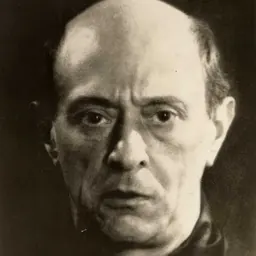
He was associated with performances of the works of Arnold Schoenberg and to an extent made his reputation with that composer. He gave the first Los Angeles performance of Schoenberg's Chamber Symphony, Op. 9. In 1949 he conducted the Los Angeles Chamber Symphony in a concert to celebrate Schoenberg's 75th birthday. He performed Moses und Aron in 1971 with the Deutsche Oper. That year he also conducted the first performance of Berthold Goldschmidt's Sinfonietta with the Suisse Romande Orchestra.
He orchestrated various early works by Gustav Mahler, including six songs from Lieder und Gesänge, which were recorded as part of Giuseppe Sinopoli's complete Mahler cycle, and which have been described as "skillful and idiomatic". He was a personal friend of Mahler's widow Alma, and he played an important role in making her agree to public performances of Deryck Cooke's realisation of the 10th Symphony. She felt it was "a private love letter" from Gustav to her, and refused to even listen to a private studio recording made for her. Byrns persuaded her to listen to the tape, and she gave her immediate approval. For his devotion to Mahler, Byrns was awarded the Kilenyi Mahler Medal of Honor by the Bruckner Society of America. He had a commission from Herbert von Karajan to orchestrate some piano pieces by Robert Schumann, and from Dietrich Fischer-Dieskau for some Mahler songs for which he also made the English translation. (Fischer-Dieskau and his son, Dr. Martin Fischer-Dieskau, later Chief Conductor in Canada and Taiwan, both studied conducting with Harold Byrns.) He was responsible for the complete orchestration of Nicolas Nabokov's opera Love's Labour's Lost, premiered in Brussels in 1973. and Igor Stravinsky's Violin Concerto with Ivry Gitlis.
Harold Byrns died in Berlin in 1977, and is buried there.
His son was Peter Salm
Don’t just read it —
keep it.
Full-length biographies made to live with: read them, listen on the way to work, watch them tonight.
- E-book
- Audio
- Video
Instant download · yours to keep · every purchase keeps this site free
Important facts
People in Harold Byrns's life
Named in this biography and alive at the same time





Related people
Same field, nearest in time


Contemporaries
People whose lives overlapped Harold Byrns's

Frequently asked questions
Who was Harold Byrns?
American conductor (1903-1977)
When was Harold Byrns born?
Harold Byrns was born on 13 September 1903 in Hanover.
When did Harold Byrns die?
Harold Byrns died on 22 February 1977 in West Berlin.
What was Harold Byrns's occupation?
Harold Byrns was a conductor, music arranger, composer and musician.
What nationality was Harold Byrns?
Harold Byrns was German.
Sources & further reading
Cite this page
APA: Biography.guide. (2026). Harold Byrns. https://biography.guide/harold-byrns/
MLA: "Harold Byrns." Biography.guide, https://biography.guide/harold-byrns/.
Chicago: "Harold Byrns." Biography.guide. https://biography.guide/harold-byrns/.
Data last updated: 2026-09-20 · Spot an error? Report a correction.
Page generated 2026-09-27 04:59 UTC