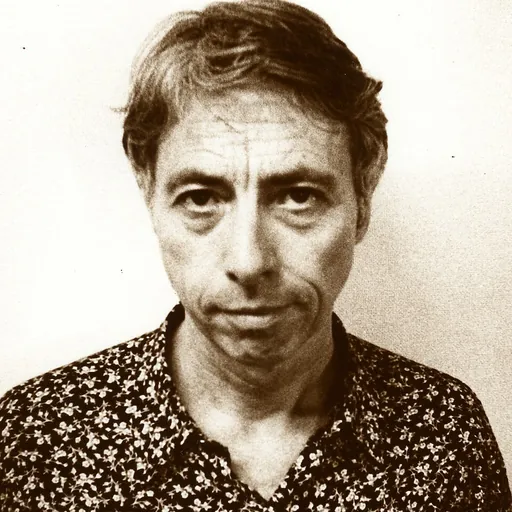
About Harold Budd
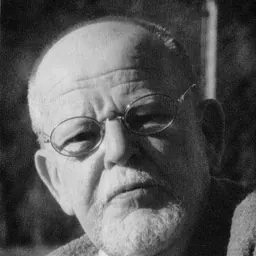
Lived 1936 – 2020 (aged 84). Harold Budd was an American composer, poet, pianist, record producer and musician.
Early life Budd was born on May 24, 1936, in Los Angeles, California, and grew up in Victorville, on the southwestern edge of the Mojave Desert. Jazz saxophonist Albert Ayler was drafted at the same time and was also a member of the band. Budd's experience of the Army made him determined to get an education. He switched to a course in harmony and renaissance counterpoint and his musical talent was spotted by a teacher who encouraged him to compose. Budd studied music at California State University, Northridge, under Gerald Strang (a protégé of Arnold Schoenberg) and Aurelio de la Vega. He graduated from California State University, Northridge, and then went on full scholarship to the University of Southern California, under the tutelage of Ingolf Dahl, graduating in 1966. Budd's work of this period was primarily minimalist drone music influenced by John Cage and Morton Feldman, as well as the abstract expressionist painter Mark Rothko,
After completing his degree in composition in 1969, Budd took up a teaching position at the California Institute of the Arts. In London, he found his composing community of Eno, Gavin Bryars, Michael Nyman, and the members of the Cocteau Twins.
In 2004, Budd and his wife moved to Monument House in Joshua Tree, California.
Composer and recording artist The road from my first colored graph piece in 1962 to my renunciation of composing in 1970 to my resurfacing as a composer in 1972 was a process of trying out an idea and when it was obviously successful abandoning it. The early graph piece was followed by the Rothko orchestra work, the pieces for Source Magazine, the Feldman-derived chamber works, the pieces typed out or written in longhand, the out-and-out conceptual works among other things, and the model drone works (which include the sax and organ Coeur d'Orr and The Oak of the Golden Dreams, the latter based on the Balinese 'Slendro' scale which scale I used again 18 years later on 'The Real Dream of Sails'). — Harold Budd
The work with Eno led Budd to shift his focus to studio-led projects, characterised by use of synthesisers and electronic treatments, often collaborating with other musicians. Budd developed a style of piano playing he deemed "soft pedal," which can be described as slow and sustained.
His two collaborations with Eno, Ambient 2: The Plateaux of Mirror in 1980 and The Pearl in 1984, established his trademark atmospheric piano style. On Lovely Thunder, he introduced subtle electronic textures. His thematic 2000 release The Room saw a return to a more minimalist approach. In 2003, Daniel Lanois, a producer for U2 and Bob Dylan, and occasional collaborator with Brian Eno, recorded an impromptu performance of Budd playing the piano in his Los Angeles living room, unaware; it was released in 2005 as the album La Bella Vista.
He had a long-running collaboration with guitarist Robin Guthrie. They worked together initially when Budd worked with Guthrie's band Cocteau Twins on their 1985 collaboration The Moon and the Melodies. The record was released by 4AD under all the collaborator's names (rather than being a Cocteau Twins/Harold Budd record), with Budd being listed first as it was an alphabetical listing. In November 1986, the record charted on the UK Top 75 album chart, spending a week at number 46. Budd and Guthrie subsequently released several albums together, including two soundtracks to the Gregg Araki films Mysterious Skin (2004) and White Bird in a Blizzard (2014), with the last, 2020's Another Flower, recorded in 2013 but only released four days before Budd's death.
Budd also collaborated with Andy Partridge of XTC on the album Through the Hill (1994), John Foxx on the album Translucence/Drift Music (2003) and work with Jah Wobble on the Solaris concert and live album in 2002.
He composed music for the score of the 2020 miniseries I Know This Much Is True.
Reception Brian Eno called Budd "a great abstract painter trapped in the body of a musician".
The Guardian said, "The core Budd sound of yearning piano motifs and reverberation-laden impressionism is often called minimalism, but compared with the cyclical craft of Steve Reich and early Philip Glass, his low-key, expansive forays felt deftly maximalist. This has made Budd's craft synonymous with the dreamworld. An heir to Satie and Debussy, his music was treated and poetic, never kneejerk nor incautious."
Death Budd was undergoing therapy at a short-term rehabilitation facility after suffering a stroke on November 11, 2020. It was there he contracted COVID-19 amidst the COVID-19 pandemic in California. He died from complications of the virus at a hospital in Arcadia on December 8, 2020. He was 84.
Selected discography
Albums The Pavilion of Dreams (1978) The Serpent (In Quicksilver) (1981) Abandoned Cities (1984) Lovely Thunder (1986) The White Arcades (1988) Agua (1995) (Live) Luxa (1996) The Room (2000) La Bella Vista (2003) Avalon Sutra / As Long as I Can Hold My Breath (2004) Perhaps (2007) (Live) In The Mist (2011) Bandits of Stature (2012) Jane 1-11 (2013) Jane 12-21 (2014) I Know This Much Is True (2020) (Film score)
Collaborations Ambient 2: The Plateaux of Mirror (1980) (with Brian Eno) The Pearl (1984) (with Brian Eno) The Moon and the Melodies (1986) (with Cocteau Twins) By the Dawn's Early Light (1991) (with Bill Nelson, B. J. Cole, Susan Allen) Music for 3 Pianos (1992) (with Ruben Garcia and Daniel Lentz. ) Through the Hill (1994) (with Andy Partridge) She is a Phantom (1994) (with Zeitgeist) (Live) Translucence/Drift Music (2003) (with John Foxx) Mysterious Skin – Music from the Film (2005) (with Robin Guthrie) White Bird in a Blizzard (2014) (with Robin Guthrie) Another Flower (2020) (with Robin Guthrie)
Don’t just read it —
keep it.
Full-length biographies made to live with: read them, listen on the way to work, watch them tonight.
- E-book
- Audio
- Video
Instant download · yours to keep · every purchase keeps this site free
Important facts
People in Harold Budd's life
Named in this biography and alive at the same time






Related people
Same field, nearest in time



Contemporaries
People whose lives overlapped Harold Budd's





Frequently asked questions
Who was Harold Budd?
American musician (1936–2020)
When was Harold Budd born?
Harold Budd was born on 24 May 1936 in Los Angeles.
When did Harold Budd die?
Harold Budd died on 8 December 2020 in Arcadia.
What was Harold Budd's occupation?
Harold Budd was a composer, poet, pianist, record producer and musician.
What nationality was Harold Budd?
Harold Budd was American.
Sources & further reading
Cite this page
APA: Biography.guide. (2026). Harold Budd. https://biography.guide/harold-budd/
MLA: "Harold Budd." Biography.guide, https://biography.guide/harold-budd/.
Chicago: "Harold Budd." Biography.guide. https://biography.guide/harold-budd/.
Data last updated: 2026-09-23 · Spot an error? Report a correction.
Portrait: Wikimedia Commons · author & licence
Page generated 2026-09-27 05:05 UTC