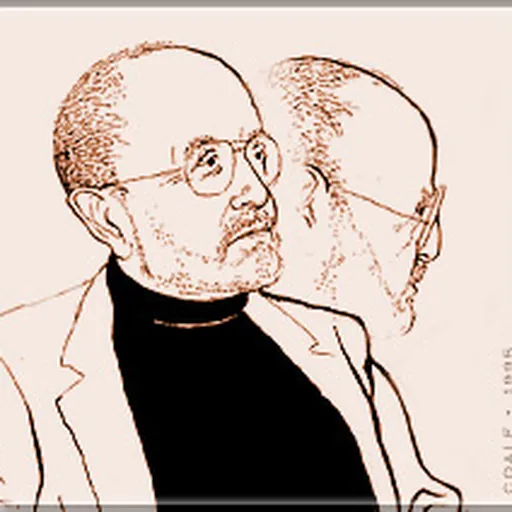
About Harold Brodkey
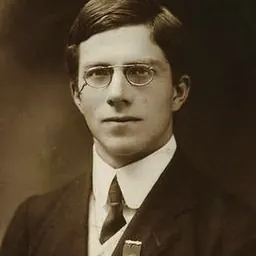
Lived 1930 – 1996 (aged 65). Harold Brodkey was an American writer, journalist and novelist.
Harold Brodkey (October 25, 1930 – January 26, 1996), born Aaron Roy Weintraub, was an American short-story writer and novelist.
Life Aaron Weintraub was the second child to his Jewish parents Max Weintraub and Celia Glazer Weintraub (1899–1932), born in Staunton, Illinois. Samuel Weintraub (1928–2017) was their oldest child. When their mother died, Samuel was four and old enough to remain with his father, but Aaron, only two years old, was adopted by his father's cousin, Doris Rubenstein Brodkey (1896–1949) and her husband, Joseph Brodkey (1896–1946) and renamed Harold Roy Brodkey. Doris and Joseph lived in University City, Missouri, with their daughter, Marilyn Ruth Brodkey (1923–2011). Brodkey would chronicle his life with his adoptive parents and sister in his short stories and his novel, The Runaway Soul.
After graduating from Harvard University with an A.B. cum laude in 1952, Brodkey married his first wife, Joanna Brown, a Radcliffe graduate, and their only child, Ann Emily Brodkey, was born in 1953. With the aid of his editor, William Maxwell, a childhood friend of his wife, Brodkey began his writing career by contributing short stories to The New Yorker and other magazines. His stories received two first-place O. Henry Awards. Brodkey was a staff writer for The New Yorker until the end of his life.
In 1993, Weintraub announced in The New Yorker that he had contracted AIDS; he later wrote This Wild Darkness: The Story of My Death (1996), about his battle with the disease. At the time of his death in 1996, he was living in New York City with his second wife, novelist Ellen Brodkey (née Schwamm). Brodkey contracted the HIV virus from a homosexual relationship, though he reportedly did not consider himself to be gay.
Literary career Brodkey's career began with the short-story collection First Love and Other Sorrows.
Six years later, he signed a book contract with Random House for his first novel, tentatively titled A Party of Animals (it was also referred to as The Animal Corner). The unfinished novel was subsequently resold to Farrar, Straus & Giroux in 1970, then to Knopf in 1979. As a Paris Review interview noted, "The work became something of an object of desire for editors; it was moved among publishing houses for what were rumored to be ever-increasing advances, advertised as a forthcoming title (Party of Animals) in book catalogs, expanded and ceaselessly revised, until its publication seemed an event longer awaited than anything without theological implications." In 1983, the Saturday Review referred to A Party of Animals as "now reportedly comprising 4,000 pages and announced as forthcoming 'next year' every year since 1973."
During this period, Brodkey published a number of stories, most of them in The New Yorker, that dealt with a set of recurring characters—the evidently autobiographical Wiley Silenowicz and his adoptive family—and which were announced as fragments of the novel. Critics who disliked Brodkey's work described his tone as too talkative and overly focused on his own childhood. Several weeks after Brodkey announced in The New Yorker in 1993 that he was suffering from AIDS, the Pulitzer Prize-winning poet Richard Howard wrote in The New Republic that the disclosure was "a matter of manipulative hucksterism, of mendacious self-propaganda and cruel assertion of artistic privilege, whereby death is made a matter of public relations."
In addition to publishing, Brodkey earned a living during this period by writing television pilot scripts for NBC, and teaching at Cornell University. Three long stories from A Party of Animals were collected in Women and Angels (1985), and a larger number, including those three, appeared in 1988's Stories in an Almost Classical Mode. Brodkey had apparently decided to omit them from the novel, for when, in 1991, he published The Runaway Soul, a very long novel (835 pages) dramatizing Wiley's early life, no material from Stories in an Almost Classical Mode was included. The novel seems to be either A Party of Animals under a new title or the first volume of an eventual multivolume work. Brodkey made some comments that suggested the latter.
Brodkey's second novel, Profane Friendship, appeared in 1994.
Don’t just read it —
keep it.
Full-length biographies made to live with: read them, listen on the way to work, watch them tonight.
- E-book
- Audio
- Video
Instant download · yours to keep · every purchase keeps this site free
Important facts
People in Harold Brodkey's life
Named in this biography and alive at the same time




Related people
Same field, nearest in time

Contemporaries
People whose lives overlapped Harold Brodkey's
Frequently asked questions
Who was Harold Brodkey?
writer (1930–1996)
When was Harold Brodkey born?
Harold Brodkey was born on 25 October 1930 in Staunton.
When did Harold Brodkey die?
Harold Brodkey died on 26 January 1996 in Manhattan.
What was Harold Brodkey's occupation?
Harold Brodkey was a writer, journalist and novelist.
What nationality was Harold Brodkey?
Harold Brodkey was American.
Sources & further reading
Cite this page
APA: Biography.guide. (2026). Harold Brodkey. https://biography.guide/harold-brodkey/
MLA: "Harold Brodkey." Biography.guide, https://biography.guide/harold-brodkey/.
Chicago: "Harold Brodkey." Biography.guide. https://biography.guide/harold-brodkey/.
Data last updated: 2026-09-22 · Spot an error? Report a correction.
Portrait: Wikimedia Commons · author & licence
Page generated 2026-09-27 05:00 UTC